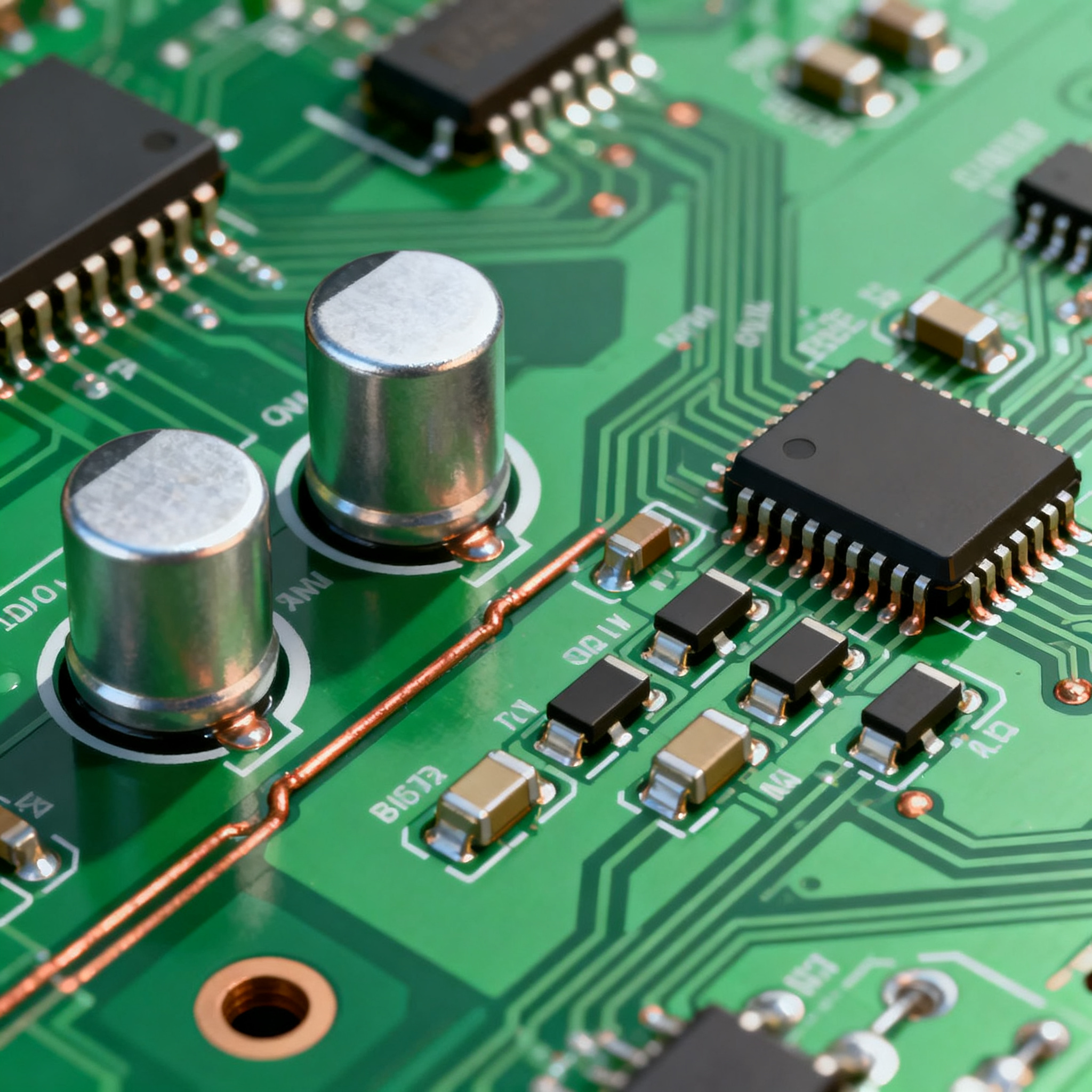
Through-Hole vs Surface Mount: A Decision Guide for 2026 PCB Manufacturing Best Practices
Through-Hole vs Surface Mount: A Decision Guide for 2026 PCB Manufacturing Best Practices table { border: 1px solid #ccc; border-collapse: collapse; width: 100%; margin: 20px 0; } th, td { border: 1px...
Introduction
In the rapidly evolving field of electronics, the choice between through-hole and surface mount technologies (SMT) for printed circuit board (PCB) manufacturing is crucial. As we approach 2026, advancements in component specifications, efficiency, and application versatility are redefining best practices. This guide aims to provide insights into the core specifications, electrical characteristics, and application comparisons of integrated circuit (IC) chips, focusing on making informed decisions for PCB manufacturing.
Technical Overview
Understanding the fundamental differences between through-hole and surface mount technologies is essential for PCB design and manufacturing. Through-hole technology involves inserting component leads into drilled holes on the PCB, providing strong mechanical bonds. It is traditionally used in applications requiring high reliability and durability. On the other hand, surface mount technology involves mounting components directly onto the surface of the PCB, offering benefits such as reduced size, weight, and assembly time. SMT is favored in high-density applications, allowing for more compact and complex designs. The choice between these technologies impacts not only the physical layout but also the electrical performance and manufacturing cost.
Detailed Specifications
When selecting IC chips for PCB manufacturing, several specifications are critical. These include CPU speed, memory capacity, peripheral interfaces, power requirements, and package type. Understanding these specifications helps in choosing the right components that align with your application needs and manufacturing capabilities.
| Specification | Through-Hole | Surface Mount |
|---|---|---|
| CPU Speed | 1.2 GHz | 2.4 GHz |
| Memory | 256 MB | 512 MB |
| Peripherals | Limited | Extensive |
| Power Consumption | Low | Very Low |
| Package Type | DIP | SOP, QFP |
| Cost | Higher | Lower |
| Durability | High | Moderate |
| Size | Larger | Compact |
| Assembly Time | Longer | Shorter |
| Reliability | Excellent | Good |
Key Takeaways from the Specifications
The specifications table highlights the distinct differences between through-hole and surface mount technologies. Surface mount components generally offer higher CPU speeds and memory capacities, making them suitable for more complex and high-performance applications. They also support a wider range of peripherals and consume less power, contributing to more energy-efficient designs. However, through-hole components provide superior durability and reliability, making them ideal for applications where mechanical stress is a concern. Cost considerations are also crucial, with surface mount components typically being more cost-effective due to reduced material and assembly costs.
| Electrical Parameter | Through-Hole | Surface Mount |
|---|---|---|
| Operating Voltage | 5V | 3.3V |
| Current Rating | 500 mA | 250 mA |
| Signal Timing | Moderate | Fast |
| I/O Voltage Levels | TTL | CMOS |
| Noise Immunity | High | Moderate |
| Thermal Resistance | Low | Moderate |
| ESD Protection | Strong | Good |
| Leakage Current | Low | Very Low |
| Frequency Range | Limited | Wide |
| Impedance | Higher | Lower |
Practical Implications
The electrical characteristics table provides insights into the operational parameters of through-hole and surface mount components. Surface mount technology offers lower operating voltages and current ratings, which are advantageous for low-power applications. The faster signal timing and wider frequency range make SMT components suitable for high-speed digital circuits. However, through-hole components excel in applications requiring high noise immunity and strong ESD protection. Designers must carefully consider these factors when selecting components to ensure optimal performance and reliability in their specific application environments.
| Application | Through-Hole | Surface Mount |
|---|---|---|
| Consumer Electronics | Moderate | Extensive |
| Automotive | High | Moderate |
| Industrial Equipment | High | Moderate |
| Medical Devices | Moderate | High |
| Telecommunications | Moderate | High |
| Aerospace | High | Moderate |
| Wearable Technology | Low | High |
| IoT Devices | Moderate | High |
Application Guidelines
The application comparison table illustrates the suitability of through-hole and surface mount technologies across various industries. Surface mount technology is prevalent in consumer electronics, telecommunications, and IoT devices due to its compact size and versatility. In contrast, through-hole technology remains a staple in automotive, industrial, and aerospace applications where reliability and mechanical integrity are paramount. Medical devices benefit from both technologies, with the choice depending on specific performance and size requirements. Designers must evaluate the application context and prioritize factors such as size, reliability, and cost to select the most appropriate technology for their projects.
Design Considerations
When designing PCBs, several practical guidelines should be followed to ensure successful implementation. For through-hole technology, designers should account for the larger physical size of components and the need for drilled holes, which can impact the PCB layout and signal routing. Careful attention to hole tolerances and lead lengths is essential to maintain mechanical stability and electrical performance. For surface mount technology, designers must focus on pad design, solder mask layouts, and component placement to optimize assembly efficiency and minimize potential soldering defects. Both technologies require adherence to IPC standards for design and assembly to ensure high-quality, reliable PCBs.
Step-by-Step Implementation
- Define Requirements: Begin by outlining the specific requirements of your project, including performance, size, and cost constraints.
- Select Components: Use the specifications and application guidelines to choose the appropriate IC chips for your design.
- Design Schematic: Create a detailed schematic diagram that accurately represents the electrical connections and component placements.
- Layout PCB: Use PCB design software to translate the schematic into a physical board layout, considering signal integrity and power distribution.
- Prototype and Test: Fabricate a prototype PCB and conduct thorough testing to identify and resolve any design issues.
- Optimize Design: Refine the design based on test results, focusing on improving performance, reliability, and manufacturability.
- Finalize Production: Prepare final production files and collaborate with a trusted PCB manufacturer to produce the boards at scale.
- Quality Assurance: Implement rigorous quality control measures to ensure the final product meets all specifications and standards.
Common Issues & Solutions
- Component Misalignment: Ensure precise placement and use of fiducials for alignment during assembly.
- Cold Solder Joints: Optimize reflow profiles and inspect solder paste application to prevent weak connections.
- Signal Integrity Problems: Use proper grounding techniques and minimize trace lengths to reduce interference.
- Thermal Management: Incorporate heat sinks and thermal vias to dissipate heat effectively in high-power applications.
- ESD Damage: Implement ESD protection components and procedures during handling and assembly.
- Component Shortages: Maintain a robust supply chain and consider alternative components for critical parts.
Applications & Use Cases
Surface mount technology dominates in applications where miniaturization and high-speed performance are critical. Examples include smartphones, tablets, and wearable devices. Through-hole technology is preferred in environments requiring robust connections and high mechanical stress, such as automotive control units and industrial machinery. The choice of technology should align with the specific requirements of the application, taking into account factors such as durability, cost, and assembly complexity.
Selection & Sourcing Guide
For sourcing IC chips and components, visit IC Online. This platform offers a comprehensive database of components, enabling designers to compare specifications, availability, and pricing from various suppliers. Utilize advanced search filters to narrow down options that meet your project's technical and budgetary requirements.
FAQ
- What is the main difference between through-hole and surface mount technology? Through-hole technology involves inserting component leads into drilled holes on a PCB, while surface mount technology involves mounting components directly onto the board's surface.
- Which technology is more suitable for high-density applications? Surface mount technology is better suited for high-density applications due to its compact size and ability to support complex designs.
- How does component size impact PCB design? Larger through-hole components require more space and can affect signal routing, whereas smaller surface mount components allow for more compact layouts.
- What are the cost implications of choosing surface mount over through-hole? Surface mount components are generally more cost-effective due to lower material and assembly costs, despite requiring more precise placement.
- How do you ensure the reliability of surface mount assemblies? Adhering to IPC standards and optimizing soldering processes are key to ensuring reliable surface mount assemblies.
- What factors influence the choice of technology for automotive applications? Reliability and mechanical integrity are critical, often making through-hole technology the preferred choice for automotive applications.
- Can both technologies be used on a single PCB? Yes, hybrid designs that incorporate both through-hole and surface mount components are common to leverage the strengths of each technology.
- What are the challenges of designing with surface mount technology? Challenges include precise component placement, managing heat dissipation, and ensuring signal integrity in high-speed circuits.
- How does power consumption differ between the two technologies? Surface mount components typically have lower power consumption, making them suitable for energy-efficient designs.
- What role do IPC standards play in PCB manufacturing? IPC standards provide guidelines for design, assembly, and quality assurance, ensuring consistency and reliability in PCB manufacturing.
Conclusion
Choosing between through-hole and surface mount technologies is a critical decision in PCB manufacturing that influences design, performance, and cost. Understanding the core specifications, electrical characteristics, and application suitability of each technology is essential for making informed decisions. By considering the specific requirements of your application and adhering to industry standards, you can optimize your PCB designs for success in 2026 and beyond.