Hydrogen Fuel Cell Controller PCBA
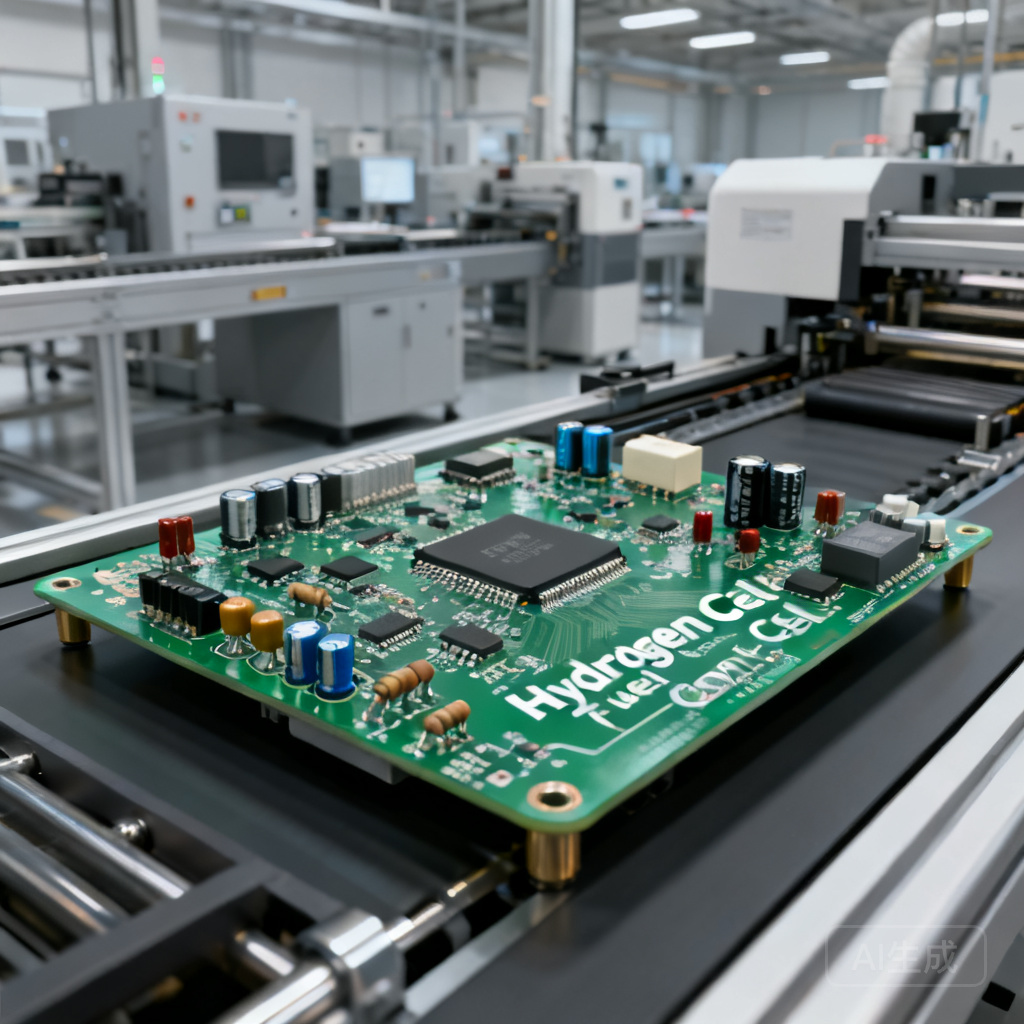
Optimize clean energy performance with a precision-engineered Hydrogen Fuel Cell Controller PCBA. NovaPCBA delivers robust, high-reliability circuit boards that manage voltage, current, and thermal dynamics for demanding fuel cell applications, ensuring safe, efficient power conversion in automotive and stationary systems.
Overview
Hydrogen Fuel Cell Controller PCBA — NovaPCBA's Specialized Service
When a coolant leak can short-circuit a fuel cell stack and strand 388 vehicles—as in the recent Honda CR-V e:FCEV recall—the controller PCBA is the first line of defense. Yet over 70% of electronic failures trace back to assembly quality, not component defects. For hydrogen system integrators, yield loss from latent solder opens, dendrite growth under conformal coating, or impedance drift in high-current gate-drive loops isn’t a yield curve—it’s a safety recall waiting to happen. NovaPCBA’s dedicated Hydrogen Fuel Cell Controller PCBA service eliminates these risks with IPC-A-610 Class 2/3 processes, 100% automated optical inspection (AOI) at every stage, and a turnkey supply chain that keeps your BOM off allocation.
What's Included in Our Hydrogen Fuel Cell Controller PCBA Assembly
- SMT + THT hybrid assembly with controlled-impedance profiling: We handle the dense mixed-technology boards typical of fuel cell control units (FCCU)—fine-pitch QFPs, 0201 passives, high-current IGBT/MOSFET gate drivers, and press-fit connectors—with layer-stackup-aware reflow profiles that maintain ±10% impedance on critical sense lines.
- 100% AOI and 2D/3D X-ray at every build stage: Post-print solder paste inspection (SPI), pre-reflow AOI, post-reflow AOI, and automated X-ray of all BGA, QFN, and press-fit joints catch voids, head-in-pillow, and insufficient hole fill before they become field failures.
- Thermal management integration: We apply thermally conductive gap-filler pads, aluminum-backed PCBs, and heavy copper (up to 6 oz) for current-carrying layers, ensuring the controller survives the 85°C+ ambient inside a fuel cell enclosure without delamination.
- Conformal coating and environmental sealing: Parylene, acrylic, or silicone coating with automated selective coating robots protects against hydrogen embrittlement, humidity, and salt spray—validated per IEC 60068-2 environmental testing.
- Full traceability and CoC documentation: Every reel, lot, and operator action is logged in our MES. You receive a Certificate of Conformance with serialized build data, paste viscosity logs, and oven profiles—ready for your PPAP or homologation package.
Assembly Service Model Comparison
| In-House Assembly (NovaPCBA) | Offshore-Only Assembly | Turnkey (Consolidated) | |
|---|---|---|---|
| Lead Time | 5–15 days for prototypes; 3–4 weeks for production runs (BOM in-house) | 8–12 weeks (ocean freight, customs, rework loops) | 4–6 weeks (single-source, but often gated by long-lead ICs) |
| Defect Catch | AOI/SPI/X-ray at every step; <1% post-rework DPPM | Sample-based visual; latent opens/shorts often escape to field | Varies; rarely includes X-ray unless specified |
| Cost Driver | Engineering support, test development, IPC Class 3 labor | Low labor rate, but high rework and scrap cost from no-communication | Middle labor rate; markup on components and logistics |
| Failure Boundary | Functional test + HALT before ship; hydrogen-safe design rules enforced | Typically only ICT; no hydrogen-specific screening | Functional test at final assembly; controller may not see full stack load |
Industry context: As New Eagle notes, the FCCU is the vehicle’s personal electrical power plant, orchestrating supply, storage, and stack health. Off-the-shelf controllers from Hyfindr’s marketplace often require custom interface boards—making the PCBA the critical integration point. Marine integrators like SEA-KIT rely on bespoke PCBAs to tailor membrane electrode assembly (MEA) performance, underscoring why a generic offshore build can’t meet the application-specific impedance and isolation demands.
Industries & Applications
Automotive fuel cell electric vehicles (FCEV): The FCCU must manage stack voltage, current, and humidification with automotive-grade reliability. Our PCBA processes align with IATF 16949 traceability expectations, using AEC-Q100 qualified components and 3,000-cycle thermal shock testing to prevent the kind of coolant ingress short-circuit documented in the Honda recall.
Stationary power and backup systems: Telecom and data center fuel cells run 24/7. Controller boards need heavy copper (4–6 oz) for continuous high current, and conformal coating to withstand condensing humidity. We build to IPC-A-610 Class 3 for high-reliability stationary applications.
Marine and off-highway hydrogen propulsion: Salt fog, vibration, and shock demand ruggedized PCBAs with press-fit connectors and underfill on large BGAs. We’ve supported integrators adapting MEA-based systems for maritime use, where a single controller failure can disable an autonomous vessel.
Hydrogen refueling station controls: Compressor drives, dispensing logic, and safety interlocks require intrinsically safe design and galvanic isolation. Our PCBA service includes creepage/clearance analysis per IEC 60664 and functional test of isolation barriers.
Our Manufacturing Process
- DFM & stackup review: We analyze your Gerber and BOM for hydrogen-specific risks—creepage distances for high-voltage sense lines, thermal relief on heavy copper planes, and component spacing for conformal coating coverage. Feedback provided within 24 hours.
- SMT assembly with SPI: Solder paste is printed on a fully automatic printer, inspected by 3D SPI to catch volume deviations >5 µm. Fine-pitch components placed with 01005-capable pick-and-place machines, then reflowed in a 10-zone oven with nitrogen atmosphere to prevent oxidation on high-temperature alloys.
- THT and selective soldering: Through-hole connectors, relays, and high-current terminals are assembled using selective wave solder or robotic soldering to avoid thermal shock to nearby SMDs. Press-fit components are inserted with force-monitored presses to ensure gas-tight connections.
- AOI, X-ray, and ICT: Every board passes post-reflow AOI and automated 2D/3D X-ray for hidden joints. In-circuit test verifies component values, polarity, and opens/shorts. Functional test simulates stack voltage inputs and CAN communication to validate the controller’s logic before ship.
- Conformal coating and final QC: Automated selective coating robot applies a uniform 50–100 µm layer, with UV inspection to detect bubbles or voids. Final visual per IPC-A-610, electrical safety test (hipot), and serialized labeling complete the build.
Quality Assurance
We build every Hydrogen Fuel Cell Controller PCBA to IPC-A-610 Class 2 or Class 3, as specified. Class 3 criteria—where less than 25% voiding in BGA balls and zero lifted pads are allowed—are mandatory for any board that can’t be serviced in the field. Our QA sequence catches defects at the origin: 3D SPI prevents insufficient paste from becoming opens; post-reflow AOI flags tombstoning, bridging, and component shift; 2D/3D X-ray quantifies void percentage and verifies barrel fill in plated through-holes; and ICT/flying probe tests catch value mismatches before power is applied. For functional validation, we use a custom test bench that emulates the fuel cell stack’s voltage-current characteristic and CAN bus traffic. This end-of-line screening is informed by field failure analysis methodologies described in the PCBA root cause analysis guide, ensuring that no latent defect reaches your integration floor. Our ISO 9001-certified facility and RoHS-compliant materials provide the documented assurance that hydrogen safety audits demand, with reference to the Hydrogen Incident Reporting Database as a continuous improvement driver.
Frequently Asked Questions
- Q: What should we look for when auditing a PCBA supplier for hydrogen fuel cell controllers?
- A: Verify IPC-A-610 Class 3 experience with mixed-technology boards, in-house X-ray capability (not outsourced), and documented conformal coating process control. Ask to see a process failure mode effects analysis (PFMEA) that covers hydrogen-specific risks like dendritic growth under coating and thermal runaway of high-current traces. A supplier should also be able to provide full material traceability down to the solder paste lot.
- Q: How do you ensure traceability and provide a Certificate of Conformance (CoC)?
- A: Every component reel is scanned into our MES at setup, linking manufacturer lot codes to the specific board serial number. We record oven profiles, AOI images, and test logs for each board. The CoC package includes a build report, paste viscosity data, X-ray void analysis summary, and functional test results—suitable for your homologation or PPAP submission.
- Q: What is the typical lead time for Hydrogen Fuel Cell Controller PCBA?
- A: Prototype runs of 5–20 units typically ship in 10–15 business days, assuming all BOM items are in our stock or available from franchised distributors. Production volumes (100–1,000+ units) ship in 3–4 weeks. If you need faster turnaround, we offer an express service with dedicated SMT line allocation and 24-hour DFM review—contact us for current capacity.
Get a Quote for Hydrogen Fuel Cell Controller PCBA
Send your Gerber files, BOM, and any test specifications to our engineering team for a free, no-obligation quote. We’ll return a DFM report and lead time estimate within one business day. With zero-minimum-order prototypes and dedicated hydrogen application support, NovaPCBA ensures your controller PCBA meets the reliability your system demands.
References & Further Reading
- Hydrogen and Fuel Cell Safety – Technical Resources (Hydrogen Incident Reporting Database)
- Common PCBA Defect Analysis and Prevention (86PCB)
- Honda Recalls Hydrogen-Powered CR-V – Kelley Blue Book
- From Failure to Fix: A Practical Guide to PCBA Field Failure Analysis (AllPCB)
- Fuel Cell Controllers – Hyfindr Marketplace
- Marine Fuel Cells from Printed Circuit Boards – Sea Technology
- Choosing the Right Hydrogen Fuel Cell Controller – New Eagle
- Hydrogen Fuel Cell System – an overview (ScienceDirect)
- Fuel Cell Handbook (Seventh Edition) – EG&G Technical Services / NETL
- Fuel Cell Standards – H2tools
- H2 Core Systems Fuel Cell Datasheet (draft)