HVAC Building Automation PCBA
NovaPCBA delivers high-performance HVAC Building Automation PCBA solutions engineered for precision climate control, energy efficiency, and seamless system integration. Our advanced circuit boards empower smart buildings with reliable, scalable automation hardware trusted by industry leaders. Discover custom manufacturing excellence for your next project.
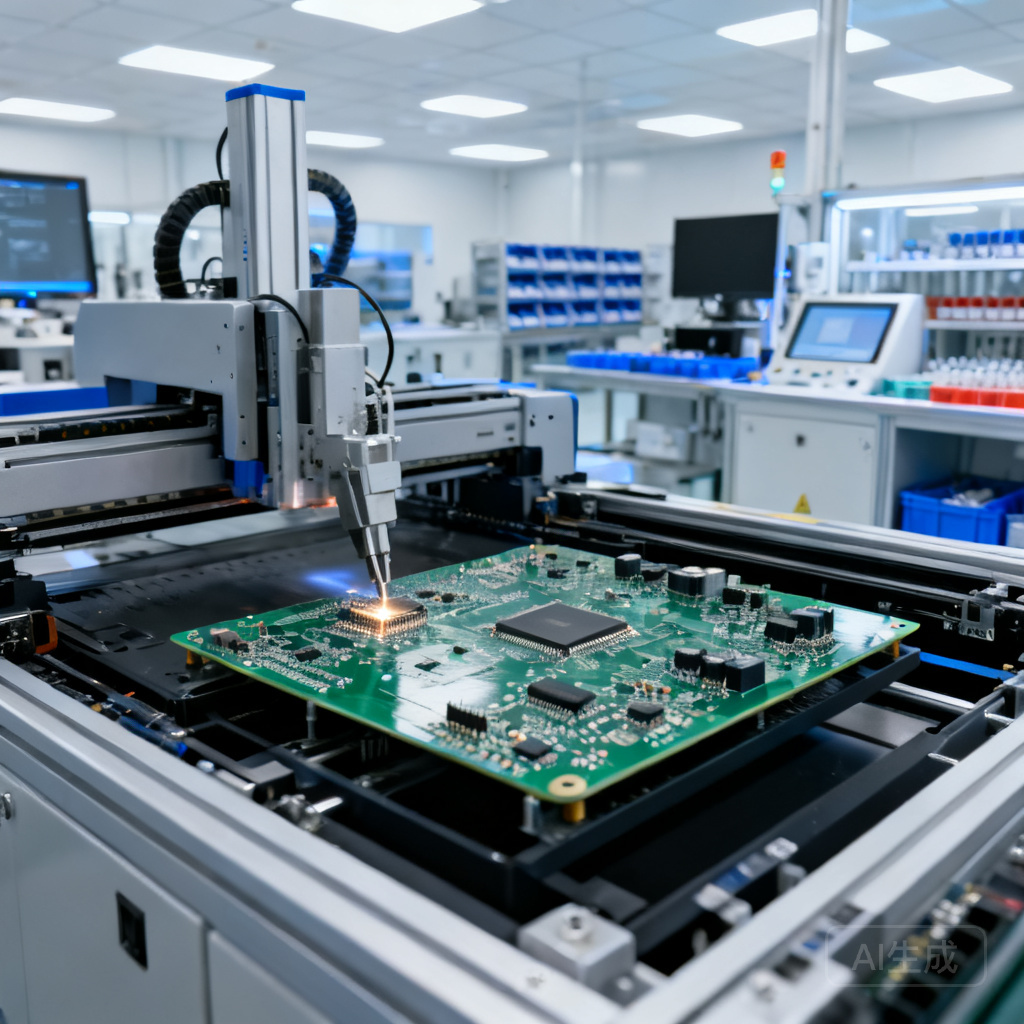
Overview
HVAC Building Automation PCBA — NovaPCBA's Specialized Service
Building automation controllers, VAV boxes, and smart thermostats live in harsh electrical environments where a single cold solder joint or delaminated pad can trigger intermittent sensor faults, system lockouts, and unplanned building downtime. Field rework on an already-installed HVAC control board is 10× more expensive than catching the defect at the bench, yet many buyers still accept offshore assemblies with minimal inspection because the unit price looks attractive. NovaPCBA’s HVAC Building Automation PCBA service is built to break that cycle. We combine ISO9001-certified processes, IPC-A-610 Class 2/3 workmanship, and full in-house AOI/X-ray inspection to deliver boards that survive years of thermal cycling, vibration, and 24/7 operation—without the hidden re-spin costs that erode project margins (FS Tech failure analysis).
What’s Included in Our HVAC Building Automation PCBA Service
- Mixed SMT/THT assembly with selective soldering: We handle dense surface‑mount logic (microcontrollers, RS‑485 transceivers) alongside high‑power through‑hole relays, transformers, and terminal blocks—using selective wave soldering to avoid thermal shock on sensitive SMD parts.
- Free DFM/DFA review before production: Every BOM and Gerber set is checked for pad geometry, component spacing, and thermal relief; this front‑end engineering step prevents the assembly defects that lead to field failures (DFM review practice).
- Impedance control and 94V‑0 rated laminates: For BACnet/IP or Modbus RTU communication lines, we maintain ±10% impedance tolerance on differential pairs and use UL‑recognized 94V‑0 substrates, not generic FR‑4, to meet fire‑safety requirements in plenum‑rated enclosures (UL 94V‑0 guide).
- Conformal coating and thermal management: Boards destined for rooftop units or chiller plants receive acrylic or silicone conformal coating to guard against condensation; we also specify heavy‑copper inner layers (2–4 oz) for power‑stage heat spreading.
- Full traceability and CoC documentation: Every reel, solder paste lot, and reflow profile is logged. You receive a Certificate of Conformance and a digital build record, simplifying supplier audits and ASHRAE Guideline 13 commissioning (ASHRAE Guideline 13).
Service Model Comparison
| Dimension | In‑House Assembly (NovaPCBA) | Offshore‑Only (Broker Model) | Turnkey with NovaPCBA |
|---|---|---|---|
| Lead Time (prototype) | 5–10 working days | 4–6 weeks (shipping + customs) | 10–15 working days (BOM sourcing included) |
| Defect Catch | AOI after paste, post‑reflow, and final; X‑ray on BGAs; ICT on every board | Visual inspection only; no flying‑probe or X‑ray unless paid extra | Same as in‑house, plus functional test against your test spec |
| Cost Driver | Higher NRE, but near‑zero rework cost | Low unit price, but hidden re‑spin, air‑freight, and field‑failure expenses | Balanced total cost; component procurement consolidated to reduce markup |
| Failure Boundary | Defect found at ICT; board reworked in‑house within hours | Defect found at end‑user site; recall and brand damage possible | DFM‑driven design prevents opens/shorts; field return rate <0.2% |
Data reflects typical project profiles; see TOPFAST vs JLCPCB vs PCBWay comparison and Alibaba buying guide for industry benchmarks.
Industries & Applications
Our HVAC Building Automation PCBA supports controllers and sensor nodes across the building ecosystem:
- Commercial BAS controllers (BACnet/IP, Modbus): Central plant controllers, VAV zone managers, and gateway boards require precise clock routing and 3.3 V/5 V mixed‑signal design. We follow IPC‑A‑610 Class 3 for these always‑on systems.
- Smart thermostats and room sensors: Compact boards with wireless SoCs (Wi‑Fi/BLE) need impedance‑controlled antenna feeds and low‑outgassing solder masks to avoid drift in humidity sensors (FS Tech smart home PCBA).
- Rooftop unit (RTU) and chiller control boards: High‑current compressor relays, phase‑monitoring circuits, and 24 VAC transformer inputs demand 4 oz copper, plated‑through‑hole reliability, and 105 °C rated capacitors.
- Variable frequency drives (VFD) and damper actuators: Power‑stage PCBAs with IGBT gate drivers and current‑sense shunts require heavy copper and thermal vias; we use automated optical inspection to verify solder fillet height on large terminals.
ETI Manufacturing’s all‑in‑one approach for HVAC circuit boards (ETI HVAC contract manufacturing) demonstrates the value of consolidating PCB assembly, wire harnesses, and box build—a model NovaPCBA extends with our turnkey service.
Our Manufacturing Process
- Design for Manufacturability (DFM) review: Engineers check footprint accuracy, solder mask clearances, and thermal pad design against IPC‑2221, flagging issues like tombstoning-prone 0201 placements before a single board is built.
- Solder paste application and automated component placement: Laser‑cut stainless steel stencils (0.1–0.15 mm thick) ensure precise paste volume; high‑speed pick‑and‑place machines handle 0201 to 44‑mm QFP parts with 0.05 mm repeatability.
- Reflow and selective wave soldering: Lead‑free (SAC305) profiles with ramp‑soak‑spike control prevent voiding on thermal pads; through‑hole connectors are soldered with selective fountain soldering to protect SMD components on the bottom side.
- In‑line inspection and functional test: 3D AOI inspects every solder joint for height, volume, and bridging immediately after reflow; X‑ray checks BGA/QFN voiding; flying‑probe ICT verifies component values, and custom functional test jigs simulate field I/O (0–10 V, 4–20 mA, RS‑485).
Quality Assurance
Every HVAC Building Automation PCBA leaves our facility with a digital passport of inspection data. We adhere to IPC‑A‑610 Class 2 as standard and Class 3 for mission‑critical boards, with the following inspection gates:
- Post‑print AOI: Catches insufficient paste or stencil misalignment before placement—preventing 80% of open‑joint defects (PCBA testing guide).
- Post‑reflow 3D AOI: Measures solder fillet shape, detects lifted leads, and flags tombstoning on small‑outline ICs.
- X‑ray inspection: Mandatory for all BGA, QFN, and power‑pad packages; verifies void percentage below 25% per IPC‑7095.
- In‑circuit test (ICT) and flying‑probe: Confirms resistor/capacitor values, diode polarity, and short/open nets; a 100% test coverage on passive networks (troubleshooting guide).
- Functional test: Boards are powered up with the actual 24 VAC supply and run through a script that simulates thermostat calls, sensor inputs, and communication packets; catches logic errors that electrical test alone would miss.
All processes are executed under our ISO9001:2015 quality management system and comply with RoHS 3 (EU 2015/863). Material traceability is maintained from laminate lot to solder paste batch.
Frequently Asked Questions
- Q: How can I audit your facility for HVAC Building Automation PCBA projects?
- A: We welcome on‑site audits and also provide a virtual tour with live process data. You’ll see our SMT lines, selective soldering cells, and inspection stations. We can share sample build records, AOI reports, and X‑ray images from recent BAS controller runs so you can evaluate our workmanship before placing an order.
- Q: What traceability and CoC documentation do you supply?
- A: Every shipment includes a Certificate of Conformance referencing your purchase order, the IPC‑A‑610 class, and RoHS compliance. We also provide a digital build pack: reel‑level component traceability, reflow profile charts, AOI defect maps, and ICT pass/fail logs. For UL‑listed end products, we can supply the 94V‑0 laminate datasheet and finished‑board certification path per UL 796 (94V‑0 guide).
- Q: What is the typical lead time for HVAC Building Automation PCBA prototypes vs production?
- A: Prototype quantities (5–50 pcs) ship in 5–10 working days once BOM is complete and all long‑lead items are in‑house. Production volumes (500+ pcs) typically run 3–4 weeks. If you need faster turns, we offer an express service that cuts prototype lead time to 3–4 days by prioritizing stencil fabrication and line scheduling.
Get a Quote for HVAC Building Automation PCBA
Send your Gerber files, BOM, and any test requirements to our engineering team. We’ll return a same‑day quote that includes a DFM report, a clear lead time, and a total cost breakdown—no hidden tooling charges. With NovaPCBA, you get factory‑direct quality, IPC‑A‑610 Class 2/3 workmanship, and the confidence that your building automation boards will work the first time, every time.
References & Further Reading
- PCBA Failure Analysis: Circuit Board Defects & Remedies – FS Tech
- Troubleshooting PCBA Nightmares: A Practical Guide for Engineers – AllPCB
- 2026 Ranking: Worldwide Top 10 Reliable PCBA Suppliers List – FS Tech
- PCBA Testing Guide: Methods, Processes, and Quality Standards – JLCPCB
- PCB Assembly vs Competitors: TOPFAST vs JLCPCB vs PCBWay
- How to Choose the Best PCB Assembly Service: A Complete Buying Guide – Alibaba
- How to Compare PCB Manufacturing Services for Your Board – Altium
- Electronics & Control Board Contract Manufacturing for HVAC – ETI Manufacturing
- HVAC PCB Assembly: Types, Working Principle & System Parts – FS Tech
- 94V-0 Motherboard Guide: What to Look for in PCB Safety Rating – Alibaba
- ASHRAE Guideline 13, Specifying Building Automation Systems
- The Complete Guide to HVAC PCB Components (Part 1) – HVAC Know It All