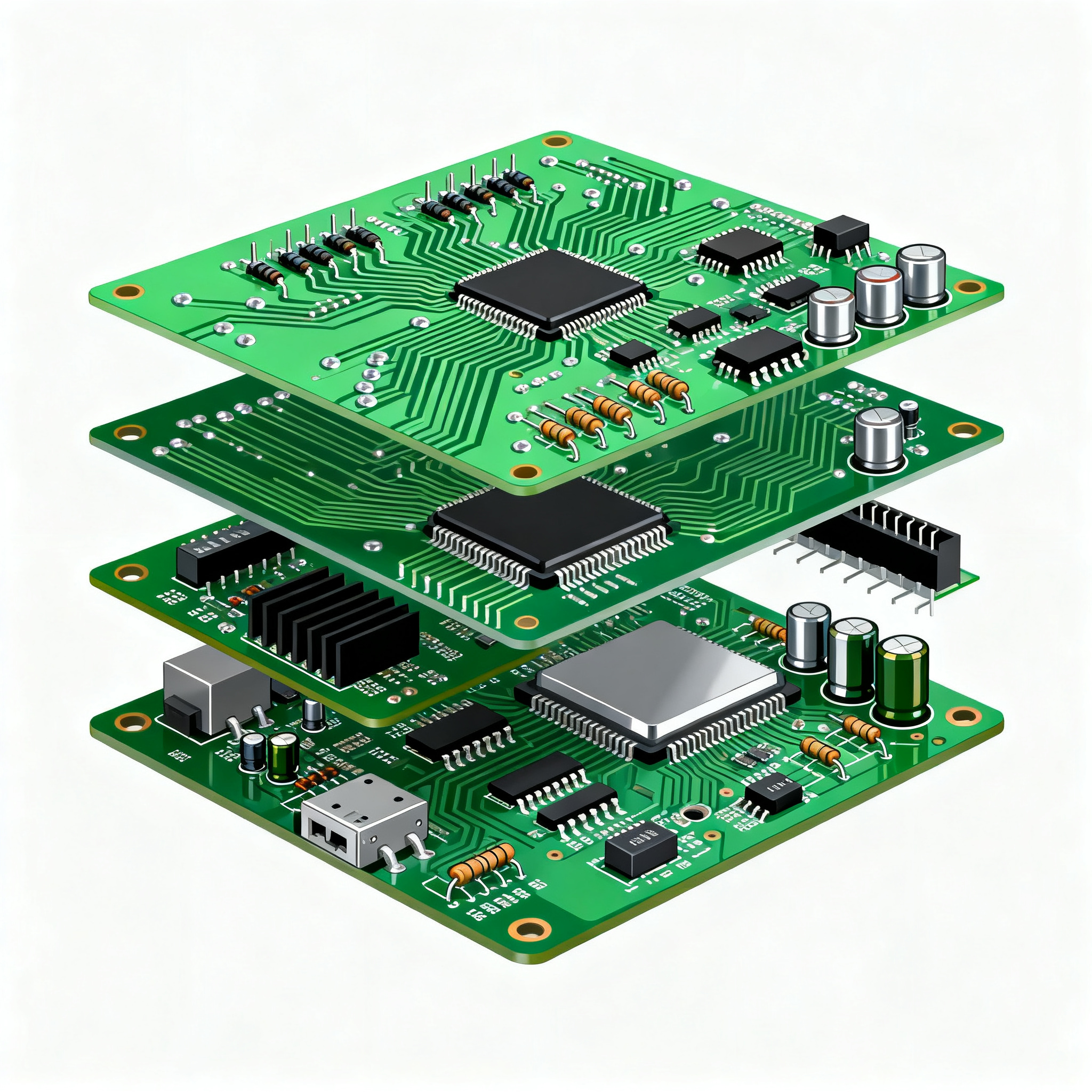
The Complete Process of PCB Manufacturing and Assembly: A Practical Engineer’s Field Guide
The Complete Process of PCB Manufacturing and Assembly: A Practical Engineer’s Field Guide Introduction The world of electronics is ever-evolving, with printed circuit boards (PCBs) playing a pivotal ...
Introduction
The world of electronics is ever-evolving, with printed circuit boards (PCBs) playing a pivotal role in the functionality of modern devices. Understanding the complete process of PCB manufacturing and assembly is crucial for engineers looking to optimize design, enhance performance, and reduce costs. This guide delves into the intricate details of PCB production, focusing on integrated circuit (IC) chips, which are essential components in electronic systems. By exploring component specifications, datasheets, selection criteria, and application circuits, engineers can make informed decisions to ensure the success of their projects.
Technical Overview
At the heart of any electronic device is the PCB, which serves as the backbone for electrical connections and component placement. The design and assembly of PCBs involve several critical steps, including schematic design, layout, fabrication, and testing. IC chips are central to these processes, providing the necessary logic, processing capabilities, and memory functions. Understanding the architecture and principles of IC chips, such as CPU speed, memory capacity, and peripheral support, enables engineers to design efficient and reliable circuits. Key standards, such as those from the IPC, provide guidelines for ensuring quality and consistency throughout the manufacturing process.
Detailed Specifications
When selecting IC chips for a PCB design, several specifications must be considered to ensure optimal performance. Core specifications like CPU speed, memory size, and peripheral interfaces determine the chip's capabilities and compatibility with other components. Datasheets provide critical information about power requirements, package types, and environmental conditions, enabling engineers to make informed choices. Below is a table summarizing the core specifications of a typical IC chip.
| Specification | Details | Notes |
|---|---|---|
| CPU Speed | 1.8 GHz | High-performance applications |
| Memory | 4 GB DDR4 | Supports multitasking |
| Peripherals | USB, SPI, I2C | Flexible interface options |
| Power Supply | 3.3V, 5V | Dual power options |
| Package Type | LQFP-64 | Compact form factor |
| Temperature Range | -40°C to 85°C | Industrial applications |
| EEPROM | 256 KB | Non-volatile storage |
| Flash Memory | 32 MB | Program storage |
| ADC Channels | 8 | Analog input options |
| PWM Outputs | 4 | Motor control |
| Clock Frequency | 50 MHz | System timing |
Key Takeaways from the Specifications
The core specifications of an IC chip provide a snapshot of its capabilities and limitations. CPU speed and memory size are critical for determining the processing power and multitasking ability of the chip. Peripherals like USB, SPI, and I2C offer flexibility for connecting various devices, while power supply options ensure compatibility with different system voltages. The package type and temperature range are essential for determining the chip's suitability for specific applications, such as industrial environments. By understanding these specifications, engineers can select components that meet their design requirements and optimize performance.
| Characteristic | Value | Notes |
|---|---|---|
| Operating Voltage | 1.8V - 3.6V | Low power consumption |
| Maximum Current | 500 mA | Peak current handling |
| Input Leakage Current | 1 μA | Minimal leakage |
| Output Drive Current | 25 mA | Supports multiple outputs |
| Propagation Delay | 5 ns | Fast signal processing |
| Input Capacitance | 10 pF | Low capacitance |
| Output Rise Time | 10 ns | Quick response |
| Output Fall Time | 8 ns | Rapid transition |
| ESD Protection | 2 kV | Enhanced reliability |
| Thermal Resistance | 30°C/W | Efficient heat dissipation |
| Power Dissipation | 0.5 W | Heat management |
Practical Implications
The electrical characteristics of IC chips impact their performance and integration into a PCB design. Operating voltage and maximum current define the power requirements and limits of the chip, affecting battery life and thermal management. Parameters like propagation delay and output rise/fall times influence signal integrity and timing accuracy, which are crucial for high-speed applications. ESD protection and thermal resistance enhance the chip's reliability and durability in harsh environments. By analyzing these characteristics, engineers can design circuits that are both efficient and robust.
| Application | Configuration | Benefits |
|---|---|---|
| Embedded Systems | Single-core, low power | Energy-efficient, compact design |
| Consumer Electronics | Multi-core, high performance | Enhanced user experience |
| Industrial Automation | Ruggedized, wide temp range | Reliable in harsh conditions |
| Automotive | High-speed, real-time processing | Improved safety and efficiency |
| IoT Devices | Wireless connectivity, low power | Remote monitoring and control |
| Medical Devices | Precision, low noise | Accurate diagnostics |
| Telecommunications | High bandwidth, low latency | Seamless communication |
| Robotics | Real-time control, high torque | Advanced automation capabilities |
Application Guidelines
IC chips are versatile components used in a wide range of applications, each with specific requirements. Embedded systems benefit from low-power, single-core configurations that extend battery life and reduce size. Consumer electronics demand multi-core, high-performance chips to deliver a seamless user experience. Industrial and automotive applications require ruggedized chips with a wide temperature range for reliability in challenging environments. IoT devices prioritize wireless connectivity and low power consumption for efficient remote operation. By understanding the unique needs of each application, engineers can select the appropriate IC chips to optimize performance and functionality.
Design Considerations
Designing a PCB with IC chips requires careful consideration of several factors to ensure optimal performance. Here are some practical guidelines:
- Component Placement: Position IC chips to minimize trace lengths and reduce electromagnetic interference (EMI). Place decoupling capacitors close to power pins to stabilize voltage levels.
- Thermal Management: Implement adequate heat dissipation techniques, such as heat sinks or thermal vias, to prevent overheating and maintain chip reliability.
- Signal Integrity: Use controlled impedance traces and minimize crosstalk by maintaining adequate spacing between signal lines. Consider using differential pairs for high-speed signals.
- Power Distribution: Design a robust power distribution network with wide traces and multiple ground planes to ensure stable voltage levels across the PCB.
- Test Points: Include test points for critical signals to facilitate debugging and testing during prototyping and production stages.
- Compliance with Standards: Adhere to IPC standards, such as IPC-A-610 and IPC-2221, to ensure quality and reliability in the final product.
- Design for Manufacturability (DFM): Collaborate with PCB manufacturers to optimize the design for cost-effective production and assembly processes.
Step-by-Step Implementation
The implementation of a PCB design with IC chips involves several detailed steps:
- Schematic Design: Create a schematic diagram using EDA tools, defining connections between IC chips and other components. Ensure all components have accurate part numbers and footprints.
- Component Selection: Choose IC chips and other components based on the specifications and application requirements. Refer to datasheets for detailed information.
- PCB Layout: Design the PCB layout, focusing on component placement, trace routing, and layer stack-up. Prioritize signal integrity and power distribution.
- Design Rule Check (DRC): Run a DRC to identify and correct any layout errors or violations of design rules, ensuring manufacturability and performance.
- Prototype Fabrication: Send the design files to a PCB manufacturer, such as PCBWay, for prototype fabrication. Choose the appropriate materials and finishes based on the application.
- Assembly: Assemble the PCB by placing and soldering components, including IC chips, onto the board. Ensure proper alignment and orientation.
- Testing and Validation: Perform functional testing to verify the performance of the assembled PCB. Use test points and measurement equipment to troubleshoot any issues.
- Design Iteration: Based on test results, make necessary design adjustments and repeat the fabrication and assembly process to achieve the desired performance.
Common Issues & Solutions
During PCB manufacturing and assembly, engineers may encounter several common issues. Here are some problems and their solutions:
- Issue: Signal Integrity Problems
- Solution: Optimize trace routing and use controlled impedance traces to reduce reflections and crosstalk.
- Issue: Thermal Overheating
- Solution: Implement thermal vias, heat sinks, and proper ventilation to manage heat dissipation effectively.
- Issue: Power Supply Instability
- Solution: Use decoupling capacitors close to power pins and design a robust power distribution network.
- Issue: Component Misalignment
- Solution: Use automated pick-and-place machines for accurate component placement and alignment.
- Issue: Soldering Defects
- Solution: Ensure proper solder paste application and reflow profile during the soldering process.
- Issue: Electromagnetic Interference (EMI)
- Solution: Implement shielding techniques and maintain adequate spacing between high-frequency components.
Applications & Use Cases
IC chips are integral to a variety of applications, each with unique requirements. In consumer electronics, they enable advanced features and seamless connectivity. Industrial automation relies on IC chips for precise control and monitoring of machinery. In the automotive sector, IC chips enhance safety and efficiency through real-time data processing. The rise of IoT devices has further expanded the use of IC chips, allowing for smart, connected solutions in home automation and healthcare. By understanding these applications, engineers can design PCBs that meet the specific needs of each industry.
Selection & Sourcing Guide
Selecting the right IC chips involves evaluating specifications, compatibility, and cost. Engineers should consult datasheets and manufacturer resources to ensure that the chosen components meet design requirements. For sourcing, platforms like IC Online offer a wide range of IC chips from reputable manufacturers, providing detailed information and competitive pricing to facilitate the selection process.
FAQ
Here are some frequently asked questions related to PCB manufacturing and assembly:
- What is the role of IC chips in PCB design?
- IC chips provide the processing power and logic functions necessary for the operation of electronic devices.
- How can I ensure signal integrity in my PCB design?
- Use controlled impedance traces, minimize trace lengths, and implement proper grounding techniques.
- What are the common package types for IC chips?
- Common package types include QFN, LQFP, BGA, and DIP, each with specific advantages and applications.
- How do I choose the right power supply for my IC chip?
- Refer to the datasheet for the operating voltage range and ensure the power supply can deliver the required current.
- What is the significance of thermal management in PCB design?
- Effective thermal management prevents overheating, ensuring the reliability and longevity of components.
- How can I reduce electromagnetic interference (EMI) in my design?
- Use shielding, maintain spacing between components, and implement filtering techniques.
- What are the benefits of using automated assembly techniques?
- Automated assembly ensures precise component placement, reduces errors, and speeds up production.
- How do I test my assembled PCB for functionality?
- Use test points and measurement equipment to verify signal integrity, power levels, and overall performance.
- Why is compliance with IPC standards important?
- IPC standards ensure quality, reliability, and consistency in PCB design and manufacturing processes.
- Where can I find reliable IC chip suppliers?
- Platforms like IC Online offer a wide selection of IC chips from reputable manufacturers.
Conclusion
Understanding the complete process of PCB manufacturing and assembly is essential for engineers aiming to design reliable and efficient electronic systems. By focusing on component specifications, datasheets, and application circuits, engineers can make informed decisions that enhance performance and reduce costs. Adhering to industry standards and best practices ensures quality and consistency, paving the way for successful product development and innovation.