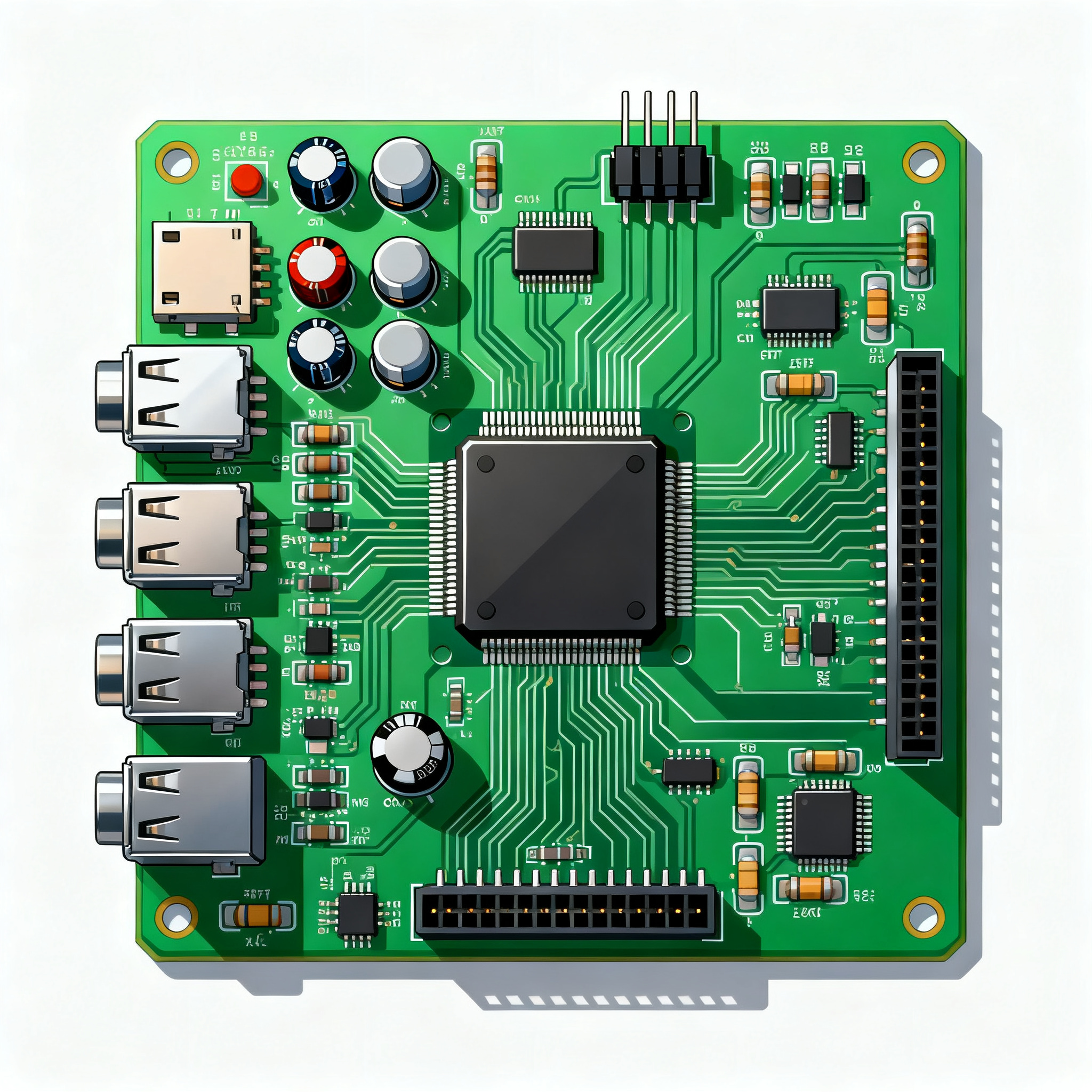
Selecting the Right Robotics Control PCB Assembly: A Comparison of Technologies and Techniques
Introduction In the rapidly evolving field of robotics, selecting the right control PCB assembly is crucial for ensuring optimal performance and reliability. This selection impacts everything from pro...
Introduction
In the rapidly evolving field of robotics, selecting the right control PCB assembly is crucial for ensuring optimal performance and reliability. This selection impacts everything from processing speed to power efficiency and peripheral integration. Understanding the intricate specifications of IC chips and their applications in robotics can significantly enhance the design and functionality of robotic systems. With advancements in PCB technology, engineers now have access to a variety of sophisticated IC components that cater to diverse robotics applications. This article provides a comprehensive guide to selecting the right robotics control PCB assembly, focusing on component specifications, datasheets, selection criteria, and application circuits.
Technical Overview
Robotics control PCBs serve as the brain of modern robotic systems, integrating various components such as microcontrollers, sensors, actuators, and communication interfaces. The architecture of these boards is designed to handle complex tasks, ensuring seamless operation and communication among different parts of the robot. Key concepts include CPU speed, memory capacity, and the availability of peripherals, which dictate the board's ability to process data and execute commands efficiently. Additionally, power management and package type are critical factors influencing the board's performance and compatibility with robotic systems.
Understanding the principles of PCB design and manufacturing is essential for selecting the right components. IPC standards, such as IPC-A-610 and IPC-2221, provide guidelines for ensuring high-quality PCB design and assembly. These standards cover aspects like component placement, soldering quality, and inspection criteria, which are vital for achieving reliable and durable PCB assemblies in robotics applications.
Detailed Specifications
When selecting a robotics control PCB assembly, several specifications are critical to consider. These include CPU speed, memory capacity, peripheral interfaces, power requirements, and package type. Each specification plays a vital role in determining the board's suitability for specific applications. For instance, a higher CPU speed enables faster data processing, while ample memory capacity allows for more complex algorithms and data storage. Peripheral interfaces facilitate communication with various sensors and actuators, enhancing the robot's capabilities. Understanding these specifications is key to making informed decisions during the selection process.
| Specification | Description | Example Value |
|---|---|---|
| CPU Speed | Processing speed of the microcontroller | 1.2 GHz |
| Memory | RAM capacity for data storage | 512 MB |
| Flash Storage | Non-volatile memory for firmware | 64 MB |
| Peripherals | Available interfaces such as UART, SPI, I2C | UART, SPI, I2C |
| Power Supply | Input voltage range for the board | 3.3V - 5V |
| Package Type | Physical format of the IC | LQFP-64 |
| Operating Temperature | Temperature range for safe operation | -40°C to 85°C |
| Dimensions | Physical size of the PCB | 50mm x 50mm |
| Weight | Mass of the PCB assembly | 15 grams |
| Compliance | Adherence to industry standards | IPC-A-610 |
Key Takeaways from the Specifications
The core specifications table highlights the essential factors to consider when selecting a robotics control PCB assembly. CPU speed and memory capacity are critical for processing power and data handling, directly affecting the robot's performance. Peripherals determine the board's ability to communicate with external devices, while power supply requirements ensure compatibility with existing systems. The package type and dimensions influence the integration into the robot's design, while operating temperature and compliance ensure reliability and adherence to industry standards. Understanding these specifications allows engineers to match the PCB assembly with their specific application needs effectively.
| Characteristic | Description | Example Value |
|---|---|---|
| Operating Voltage | Nominal voltage for operation | 3.3 V |
| Max Current | Maximum current draw | 500 mA |
| Idle Power | Power consumption in idle state | 50 mW |
| Active Power | Power consumption during operation | 200 mW |
| Input Impedance | Resistance to input signals | 50 Ohms |
| Output Impedance | Resistance to output signals | 10 Ohms |
| Signal Rise Time | Time taken for signal to rise | 5 ns |
| Signal Fall Time | Time taken for signal to fall | 5 ns |
| I/O Voltage Levels | Voltage levels for input/output operations | 0V - 3.3V |
| Thermal Resistance | Resistance to heat dissipation | 15°C/W |
| ESD Protection | Electrostatic discharge protection level | 2 kV |
| EMI Shielding | Electromagnetic interference shielding | Yes |
Practical Implications
The electrical characteristics table provides insights into the operational parameters of the PCB assembly. Operating voltage and max current are critical for ensuring the board functions within its specified limits. Power consumption metrics, such as idle and active power, are essential for energy-efficient designs. Signal rise and fall times, along with I/O voltage levels, influence the board's communication speed and compatibility with other components. Thermal resistance and ESD protection are vital for maintaining board reliability under varying environmental conditions. Understanding these characteristics helps engineers design robust and efficient robotic systems.
| Use Case | Configuration | Benefits |
|---|---|---|
| Industrial Automation | Multi-core CPU, High RAM | Fast processing, Efficient multitasking |
| Autonomous Vehicles | Low Power Consumption, High ESD Protection | Extended battery life, Enhanced safety |
| Medical Robotics | High Precision Peripherals | Accurate control, Reliable performance |
| Consumer Robotics | Compact Size, Low Cost | Easy integration, Affordable solutions |
| Research Prototypes | Flexible I/O, High Customizability | Adaptability, Versatile applications |
| Military Drones | High EMI Shielding, Robust Design | Secure communications, Durability |
| Agricultural Robotics | Weather-resistant Package | Outdoor reliability, Long lifespan |
Application Guidelines
The application comparison table highlights how different configurations of PCB assemblies cater to various use cases. In industrial automation, multi-core CPUs and high RAM capacities enable efficient multitasking and fast data processing. Autonomous vehicles benefit from low power consumption and high ESD protection, enhancing battery life and safety. Medical robotics require high-precision peripherals for accurate control, while consumer robotics prioritize compact size and cost-effectiveness. Research prototypes demand flexible I/O and customizability for versatile applications. Military drones require robust designs with high EMI shielding for secure communications. Understanding these configurations helps engineers select the right PCB assembly for their specific applications.
Design Considerations
When designing a robotics control PCB assembly, several factors must be considered to ensure optimal performance and reliability. First, the choice of microcontroller or processor is crucial, as it dictates the processing power and capabilities of the board. Selecting a processor with the appropriate CPU speed and memory capacity is essential for handling the robot's tasks efficiently. Additionally, the availability of peripheral interfaces, such as UART, SPI, and I2C, determines the board's ability to communicate with sensors, actuators, and other components.
Power management is another critical consideration. Ensuring that the board operates within its specified voltage and current limits is vital for preventing damage and ensuring energy efficiency. Designers must also consider the board's thermal management, as excessive heat can lead to component failure. Implementing adequate heat dissipation mechanisms, such as heat sinks or thermal vias, can help maintain safe operating temperatures.
Compliance with industry standards, such as IPC-A-610 and IPC-2221, is essential for ensuring high-quality PCB design and assembly. These standards provide guidelines for component placement, soldering quality, and inspection criteria, ensuring the board's reliability and durability. Additionally, designers should consider the board's physical dimensions and package type, as these factors influence the ease of integration into the robot's design.
Finally, designers should consider the board's environmental conditions, such as operating temperature and humidity levels. Selecting components with appropriate temperature and humidity ratings ensures the board's reliability in various environments. By considering these design factors, engineers can create robust and efficient robotics control PCB assemblies that meet their specific application requirements.
Step-by-Step Implementation
- Define the Application Requirements: Identify the specific tasks and functions the robot will perform, and determine the necessary processing power, memory capacity, and peripheral interfaces.
- Select the Microcontroller or Processor: Based on the application requirements, choose a microcontroller or processor with the appropriate CPU speed, memory capacity, and peripheral interfaces.
- Design the Schematic: Create a schematic diagram that outlines the connections between the microcontroller, peripherals, and other components. Ensure compliance with IPC standards for component placement and signal routing.
- Choose the PCB Layout: Design the PCB layout, considering factors such as trace width, layer stack-up, and thermal management. Ensure the layout adheres to IPC-2221 design rules for reliability and manufacturability.
- Select Components: Choose components that meet the specified electrical characteristics, such as operating voltage, current, and thermal resistance. Ensure compatibility with the selected microcontroller or processor.
- Prototype the Design: Fabricate a prototype of the PCB assembly and conduct thorough testing to verify functionality and performance. Perform inspections based on IPC-A-610 standards to ensure quality.
- Optimize the Design: Based on prototype testing results, make necessary adjustments to the design, such as optimizing power consumption, signal integrity, and thermal management.
- Finalize the Design: Once optimization is complete, finalize the design and prepare for mass production. Ensure all documentation, including schematics, BOM, and assembly instructions, is complete and accurate.
Common Issues & Solutions
- Issue: Excessive Heat Generation
Solution: Implement heat sinks or thermal vias to improve heat dissipation and maintain safe operating temperatures. - Issue: Signal Integrity Problems
Solution: Optimize trace routing and use impedance matching techniques to enhance signal integrity and reduce noise. - Issue: Power Supply Instability
Solution: Use bypass capacitors and voltage regulators to stabilize the power supply and prevent voltage fluctuations. - Issue: Component Failure Due to ESD
Solution: Implement ESD protection measures, such as TVS diodes and proper grounding, to prevent damage from electrostatic discharge. - Issue: Interference from EMI
Solution: Use EMI shielding techniques, such as metal enclosures and ferrite beads, to reduce electromagnetic interference and improve reliability. - Issue: Inadequate Compliance with Standards
Solution: Ensure adherence to IPC standards during design and assembly to maintain quality and reliability.
Applications & Use Cases
Robotics control PCB assemblies find applications in various fields, each with unique requirements and challenges. In industrial automation, these assemblies enable precise control and efficient data processing, facilitating tasks such as assembly line operations and quality inspection. Autonomous vehicles rely on advanced PCB assemblies for navigation, obstacle detection, and communication, enhancing safety and performance.
In the medical field, robotics control PCBs are used in surgical robots and diagnostic machines, providing high precision and reliability. Consumer robotics, such as home assistants and educational robots, benefit from compact and cost-effective PCB designs, enabling widespread adoption and accessibility. Military and aerospace applications demand robust and secure PCB assemblies capable of withstanding harsh environments and ensuring reliable performance.
Selection & Sourcing Guide
When selecting a robotics control PCB assembly, engineers should consider factors such as processing power, memory capacity, peripheral interfaces, and power requirements. It's essential to source components from reputable suppliers that adhere to industry standards and provide comprehensive datasheets and technical support. For sourcing IC components, engineers can refer to IC Online, a trusted platform offering a wide range of electronic components and resources.
FAQ
- What is the importance of CPU speed in a robotics control PCB assembly?
CPU speed determines the processing power of the microcontroller, affecting the robot's ability to execute tasks efficiently and handle complex algorithms. - How does memory capacity impact the performance of a robotics control PCB?
Memory capacity influences data storage and processing capabilities, allowing for more complex operations and algorithms in robotic systems. - What role do peripheral interfaces play in a robotics control PCB?
Peripheral interfaces enable communication with external devices such as sensors and actuators, expanding the robot's capabilities and functionality. - Why is power management critical in PCB design?
Proper power management ensures the board operates within safe voltage and current limits, preventing damage and ensuring energy efficiency. - What are the benefits of adhering to IPC standards in PCB design?
IPC standards ensure high-quality design and assembly, enhancing reliability, durability, and compliance with industry regulations. - How can thermal management be improved in a PCB assembly?
Thermal management can be improved using heat sinks, thermal vias, and proper trace routing to dissipate heat effectively. - What measures can be taken to protect against ESD?
Implementing ESD protection measures, such as TVS diodes and proper grounding, can prevent damage from electrostatic discharge. - Why is EMI shielding important in PCB design?
EMI shielding reduces electromagnetic interference, improving signal integrity and reliability in electronic systems. - How can engineers ensure compliance with industry standards?
Engineers can ensure compliance by following IPC standards during design and assembly, conducting thorough inspections, and sourcing components from reputable suppliers. - What factors should be considered when sourcing components for a robotics control PCB?
Engineers should consider factors such as component specifications, supplier reputation, compliance with standards, and availability of technical support and documentation.
Conclusion
Selecting the right robotics control PCB assembly is a critical step in designing efficient and reliable robotic systems. By understanding the core specifications, electrical characteristics, and application requirements, engineers can make informed decisions that enhance the performance and functionality of their robots. Adhering to industry standards and considering factors such as power management, thermal resistance, and EMI shielding ensures the design's success and longevity. By leveraging resources like IC Online, engineers can source high-quality components that meet their specific needs and contribute to the advancement of robotics technology.