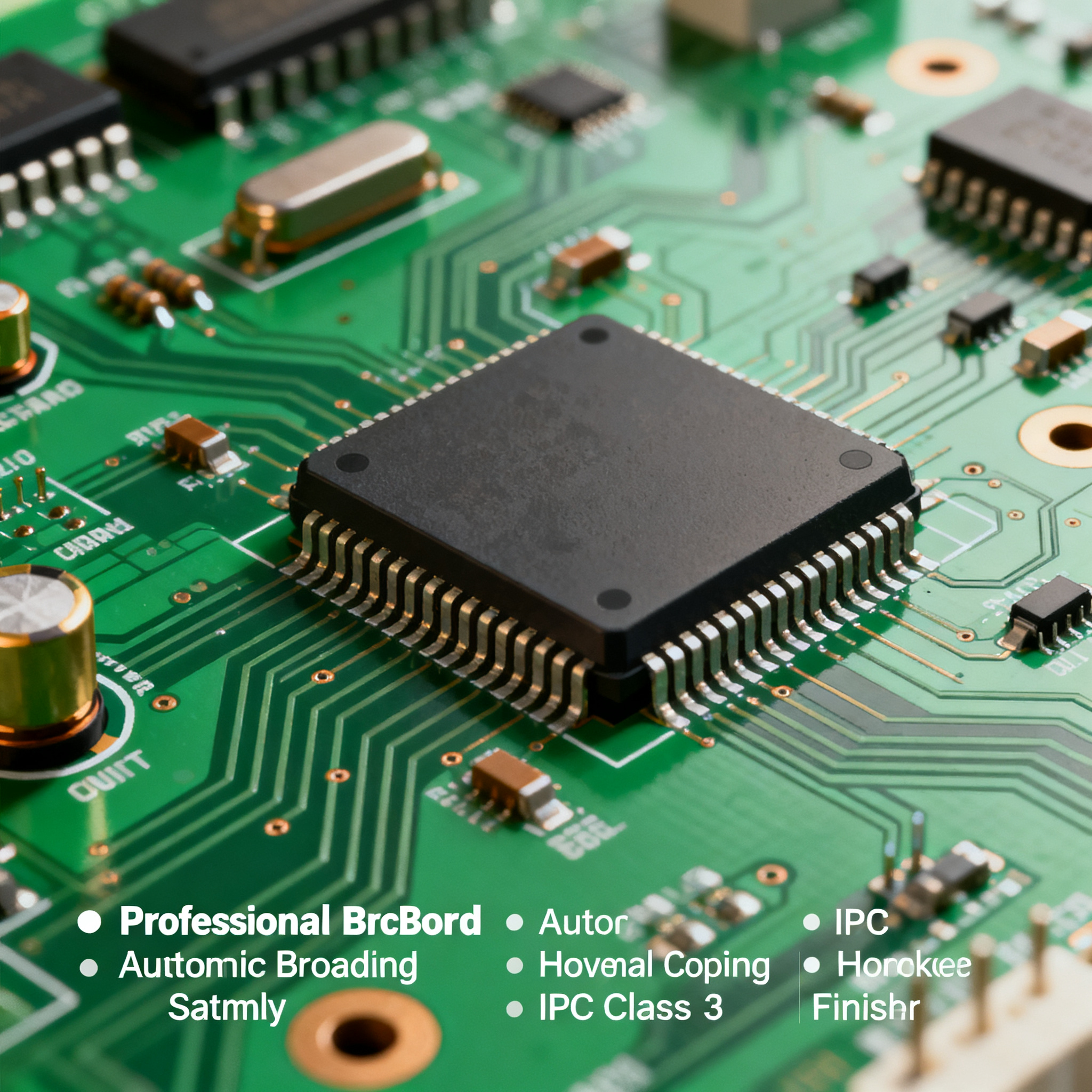
Reliability Automotive PCB Assembly: A Comparison Guide to Conformal Coating, Heavy Copper, and IPC Class 3 Finishes
Reliability Automotive PCB Assembly: Comparing Conformal Coating, Heavy Copper, and IPC Class 3 Finishes When Automotive PCBs Fail: The Real Cost of Skipping Protection Automotive electronics operate ...
Reliability Automotive PCB Assembly: Comparing Conformal Coating, Heavy Copper, and IPC Class 3 Finishes
When Automotive PCBs Fail: The Real Cost of Skipping Protection
Automotive electronics operate in an environment that punishes every design shortcut. A battery management system (BMS) that works flawlessly on the bench can develop dendritic growth after 18 months of humidity cycling, leading to a short that triggers thermal runaway. An engine control unit (ECU) with marginal solder joints may pass final test but fail intermittently on a rough road, causing a no-start condition that strands the driver. These are not hypothetical scenarios—they are the root causes behind a growing number of warranty claims and safety recalls. Technotronix notes that harsh environmental conditions and soldering defects directly lead to PCB failures, resulting in costly recalls and lasting damage to brand reputation. Star Engineering reinforces the point, identifying semiconductor and material shortages that compound the risk when assemblies lack robust protection.
The industry’s answer is not a single silver bullet but a triad of reliability levers: conformal coating, heavy copper, and IPC Class 3 finishes. Each addresses a distinct failure mechanism. Conformal coating seals out moisture, dust, and chemical contaminants. Heavy copper handles high current densities and dissipates heat, preventing trace burnout and delamination. IPC Class 3 soldering and inspection criteria ensure that every joint can survive the thermal and mechanical stresses of a 15-year vehicle life. When these three are combined intelligently, the probability of field failure drops by an order of magnitude. Yet many procurement teams still treat them as optional cost adders, not as insurance against the multi-million-dollar expense of a recall. This article compares the three approaches side by side, so you can specify the right protection for each automotive module—and demand it from your assembly partner.
Three Reliability Levers: What Conformal Coating, Heavy Copper, and Class 3 Finishes Actually Do
Before choosing a protection strategy, it’s essential to understand the physics each lever controls.
Conformal coating is a thin polymeric film applied to the assembled PCB. It acts as a barrier against moisture, dust, corrosive gases, and conductive debris. In automotive applications, coating is not a cosmetic extra; it is often a mandatory IATF 16949 control point. GNS describes how an uncoated failure in a BMS can lead directly to thermal runaway, making the coating the final insulation layer that prevents catastrophic outcomes. Accelerated Assemblies emphasizes that standards like IPC-A-610 and IPC-CC-830 define acceptable coverage, thickness, and defect levels, so inspection is as critical as application.
Heavy copper refers to inner and outer layer copper weights of 4 oz/ft² and above, sometimes reaching 10 oz or more. The extra copper mass serves two purposes: it dramatically lowers the current density in power traces, reducing I²R heating, and it acts as a heat spreader, pulling thermal energy away from hot components. In motor inverters, DC-DC converters, and battery disconnect modules, heavy copper prevents the trace necking and pad lifting that plague standard 1‑oz designs after thousands of thermal cycles.
IPC Class 3 finishes are not a coating or a material but a set of acceptance criteria for solder joints, hole fill, and surface finish integrity. Class 3 demands tighter annular ring requirements, minimal voiding, and a higher degree of wetting than the commercial Class 2. The goal is long-term interfacial reliability: the joint must remain mechanically sound and electrically stable through the entire product life, even under continuous vibration and thermal extremes. For safety-critical systems like steering, braking, and ADAS, Class 3 is the baseline, not an upgrade.
To put the conformal coating options into perspective, the table below compares the four dominant chemistries used in automotive assembly. Data is drawn from AllPCB’s material selection guide and Chemtronics’ silicone coating evaluation.
| Coating Type | Dielectric Strength (V/mil) | Temperature Range (°C) | Repairability | Typical Automotive Application |
|---|---|---|---|---|
| Acrylic | 1,000 – 1,200 | -55 to +125 | Easy – solvent removable | Cabin infotainment, body control modules |
| Silicone | 1,100 – 1,300 | -65 to +200 | Difficult – requires mechanical abrasion | Under‑hood ECUs, sensors, BMS |
| Polyurethane | 1,200 – 1,500 | -40 to +150 | Moderate – chemical strippers available | Transmission controllers, fuel system electronics |
| Parylene | 5,000 – 7,000 | Up to 200 (Type C) | Very difficult – must be micro‑abraded | ADAS cameras, radar modules, high‑voltage isolation |
Silicone stands out for high-temperature flexibility and remains the go‑to for engine‑compartment electronics. Parylene offers unmatched dielectric protection in an ultra‑thin, pinhole‑free layer but demands vapor deposition and is nearly impossible to rework without damaging the board. Acrylic and polyurethane are cost‑effective for cabin and moderately harsh environments, with acrylic being the easiest to strip for rework. The choice is never purely technical; it must account for production volume, rework expectations, and the specific contaminant profile the board will face.
Conformal Coating vs. Heavy Copper vs. IPC Class 3 Finishes: A Decision Matrix
No single lever solves every reliability challenge. The matrix below evaluates each approach against the five stress factors that dominate automotive electronics: vibration, thermal cycling, humidity, chemical exposure, and current density. The goal is to show where each lever excels and where it falls short, so you can combine them for a complete defense. The insights are grounded in AllPCB’s reliability overview and the Automotive PCBA Conformal Coating Standards reference.
| Stress Factor | Conformal Coating | Heavy Copper | IPC Class 3 Finishes | Selection Note |
|---|---|---|---|---|
| Vibration / mechanical shock | Minimal direct benefit; may dampen high‑frequency resonance slightly | Increases board stiffness, reduces pad lifting risk | Strongest solder joints; minimizes barrel cracking and pad cratering | Combine heavy copper and Class 3 for mounting‑prone modules |
| Thermal cycling (-40°C to +150°C) | Protects against condensation but not CTE mismatch stress | Lowers hot‑spot temperature; reduces ΔT across the board | Class 3 joint integrity withstands repeated expansion/contraction | Heavy copper + Class 3 is the foundation; add coating for moisture |
| Humidity / condensation | Primary defense; prevents dendritic growth and leakage currents | No protection; moisture can still cause corrosion | No direct moisture barrier; relies on coating for sealing | Coating is mandatory for any module exposed to condensing humidity |
| Chemical exposure (oils, fuels, salt spray) | Excellent barrier with proper chemistry selection (polyurethane or parylene) | No protection; copper corrodes rapidly under salt spray | No chemical barrier; surface finish may degrade | Match coating chemistry to the chemical environment |
| High current density (>10 A per trace) | No effect; coating is an insulator | Primary solution; 4‑oz copper handles 4× the current of 1‑oz | No direct influence on ampacity; ensures joint integrity at high temps | Heavy copper is non‑negotiable for power electronics |
The matrix makes clear that these three levers are complementary, not competitive. An engine‑mounted ECU, for example, needs heavy copper to manage the current to injectors and ignition coils, IPC Class 3 to survive the vibration and thermal shock, and a silicone or parylene coating to seal out road salt and moisture. Skipping any one of them shifts the failure risk to the weakest link. In cost‑sensitive cabin electronics, you might forego heavy copper but still demand Class 3 for long‑term reliability and an acrylic coating to handle occasional humidity. The key is to map the actual environmental and electrical stresses, then layer the protections accordingly.
How to Specify the Right Protection for Your Automotive PCBA
Translating reliability requirements into a clear specification is where many projects stumble. The following framework helps you decide what to demand from your design and your assembly partner.
1. Characterize the operating environment. Under‑hood modules see continuous temperatures above 125°C, aggressive chemicals, and severe vibration. Cabin electronics experience milder thermal swings but still face humidity and condensation, especially in door modules and sunroof controls. Exterior sensors (ADAS cameras, radar) must handle salt spray and stone impact. Write down the worst‑case temperature, humidity, and chemical exposure, not the average.
2. Map the electrical demands. Any trace carrying more than 5 A continuously should be evaluated for heavy copper. For motor drives and battery disconnect units, 4‑oz copper is often the starting point. If the design includes press‑fit connectors or large surface‑mount power devices, heavy copper also reduces the risk of pad lifting during thermal cycling.
3. Choose the coating coverage strategy. Full‑board coating is the safest choice for harsh environments, but it requires masking connectors, switches, and any component that needs electrical contact or heat dissipation. Selective coating using robotic dispensers can protect only the critical areas, reducing material cost and rework headaches. Chase Corporation’s coating datasheets are a good reminder that every coating has specific application thickness and curing requirements; deviating from them voids the protection. Always validate coverage with automated optical inspection (AOI) tuned for coating fluorescence.
4. Pair heavy copper with Class 3 finishes. When you specify 4‑oz or thicker copper, also mandate IPC-A-610 Class 3 acceptance. The thermal mass of heavy copper makes soldering more challenging, and Class 3 inspection ensures that the larger thermal sinks are fully wetted and void‑free. This combination is standard for power electronics, but it must be explicitly called out on the fabrication and assembly drawings.
5. Qualify your assembly partner. Not every EMS provider can execute all three levers under one roof. Look for IATF 16949 certification as a baseline. Then dig deeper: ask for evidence of in‑house conformal coating lines with automated thickness control, experience laminating heavy copper multilayer boards (≥4 oz), and a documented Class 3 inspection process per IPC-A-610. AllPCB’s mass production quality guide highlights UL 746E certification for coatings and the importance of HALT/HASS testing to validate the entire assembly. Request HALT/HASS reports from previous automotive programs—they reveal whether the supplier truly understands the failure modes you are trying to prevent.
Common pitfalls to avoid:
- Coating incompatibility with connectors: Even a thin film of silicone can creep into a connector and cause intermittent opens. Masking must be precise, and the coating process must be validated with actual connector samples.
- Heavy copper delamination: The high Z‑axis expansion of thick copper can separate from the prepreg during reflow or thermal cycling. Use high‑Tg materials (≥170°C) and specify a resin‑rich prepreg to improve bonding.
- Class 3 rework limitations: Class 3 criteria allow fewer rework cycles and demand near‑perfect fillets. If your design is likely to need field repairs, discuss repairability with the supplier upfront and consider selective coating that can be locally stripped.
The table below matches typical automotive subsystems with a recommended protection stack, based on the framework above.
| Automotive Subsystem | Conformal Coating | Heavy Copper | IPC Class 3 | Rationale |
|---|---|---|---|---|
| Engine ECU (under‑hood) | Silicone, full board | 4‑oz on power layers | Yes | High temp, vibration, chemical exposure; current to injectors/coils |
| Battery Management System | Silicone or parylene, full board | 4‑oz on sense lines | Yes | Thermal runaway prevention; high voltage isolation; moisture sensitivity |
| Motor Inverter / DC‑DC Converter | Silicone, full board | 6‑oz or thicker | Yes | Extreme currents, high ΔT, vibration |
| ADAS Camera / Radar Module | Parylene, full board | Not required | Yes | Pinhole‑free thin coating; Class 3 for signal integrity; no heavy current |
| Cabin Infotainment | Acrylic, selective | Not required | Optional (Class 2 acceptable) | Mild environment; cost‑sensitive; occasional humidity |
This stack is not theoretical. At NovaPCBA, we routinely combine these three reliability levers for Tier‑1 automotive customers. Our in‑house conformal coating lines support acrylic, silicone, and polyurethane with automated fluorescence inspection, while our heavy copper PCB manufacturing handles up to 10‑oz layers with Class 3 assembly and inspection. The result is a single‑source solution that eliminates the finger‑pointing between fabrication and coating vendors.
Questions Senior Engineers and Buyers Ask About Automotive PCB Reliability
Q: Which conformal coating type holds up best under continuous 150°C under‑hood temperatures?
Silicone coatings are the workhorse for engine‑compartment electronics. They maintain flexibility from -65°C to 200°C and do not become brittle after thousands of thermal cycles. Parylene also handles 200°C and provides superior dielectric strength, but it is applied by vapor deposition and is extremely difficult to rework—any repair requires micro‑abrasion and recoating. Acrylic and polyurethane are better suited for cabin electronics where temperatures rarely exceed 85°C. If your module includes connectors or test points that may need rework, silicone is the more practical choice despite its higher material cost.
Q: How much more does IPC Class 3 assembly cost compared to Class 2 for automotive volumes?
Expect a 15–30% premium for Class 3, driven by tighter process controls, extended visual and X‑ray inspection, and higher scrap rates due to the stricter acceptance criteria. For a safety‑critical system like electric power steering or ADAS, that premium is negligible compared to the cost of a field failure. A single recall can erase millions in brand equity, and the warranty return rate for Class 2 assemblies in harsh environments is typically 3–5× higher. The real question is not “how much more does Class 3 cost” but “what is the cost of not using it.”
Q: Can heavy copper layers replace conformal coating in high‑power automotive modules?
No. Heavy copper solves current‑carrying and thermal dissipation challenges, but it offers zero protection against moisture, dust, or chemical corrosion. In a motor inverter, the IGBT or MOSFET switching nodes generate intense heat that heavy copper spreads effectively, but condensation on the board can still cause dendritic growth and short circuits. You need both: heavy copper for electrical and thermal robustness, and a conformal coating to seal the assembly against environmental ingress. Treat them as independent layers of defense.
Q: What should I look for in a PCBA supplier to ensure reliable automotive builds with these technologies?
Start with IATF 16949 certification—it is the minimum ticket to the automotive supply chain. Then verify that the supplier has in‑house conformal coating capability with automated inspection (AOI for coating coverage and thickness), not a manual spray booth. For heavy copper, ask for evidence of successful lamination of ≥4‑oz inner layers and experience with high‑Tg materials to prevent delamination. The supplier must inspect to IPC-A-610 Class 3 as a standard offering, not a special request. Finally, demand HALT/HASS test reports from previous automotive programs and speak to their automotive customers. A supplier that cannot provide references for under‑hood or safety‑critical modules is not ready for your project. At NovaPCBA, we maintain all these capabilities under one roof, with a dedicated automotive line that has delivered millions of Class 3 assemblies to global OEMs.
Choosing the right protection for automotive PCBs is not a one‑size‑fits‑all decision. It requires a clear‑eyed assessment of the environment, the electrical loads, and the consequences of failure. By layering conformal coating, heavy copper, and IPC Class 3 finishes where each is needed, you build a reliability margin that protects both the vehicle and your company’s reputation. The upfront investment is modest compared to the cost of a recall, and the engineering confidence it provides is invaluable.
References & Further Reading
- Automotive PCB Assembly Challenges & Solutions – Technotronix
- Roadblocks in Automotive PCB Assembly – Star Engineering
- Conformal Coating Strategies for PCBA Reliability – GNS
- PCB Conformal Coating Inspection & Defect Prevention – Accelerated Assemblies
- Conformal Coating and PCBA Reliability – AllPCB
- Maximizing PCB Lifespan: Conformal Coating Material Selection – AllPCB
- How to Evaluate Silicone Conformal Coating – Chemtronics
- Automotive PCBA Conformal Coating Standards – AllPCB
- Conformal Coatings Product Line – Chase Corporation
- Conformal Coating Complete Guide – PCBSync
- PCB Mass Production for Automotive – AllPCB
- Automotive PCB Assembly Services – NovaPCBA