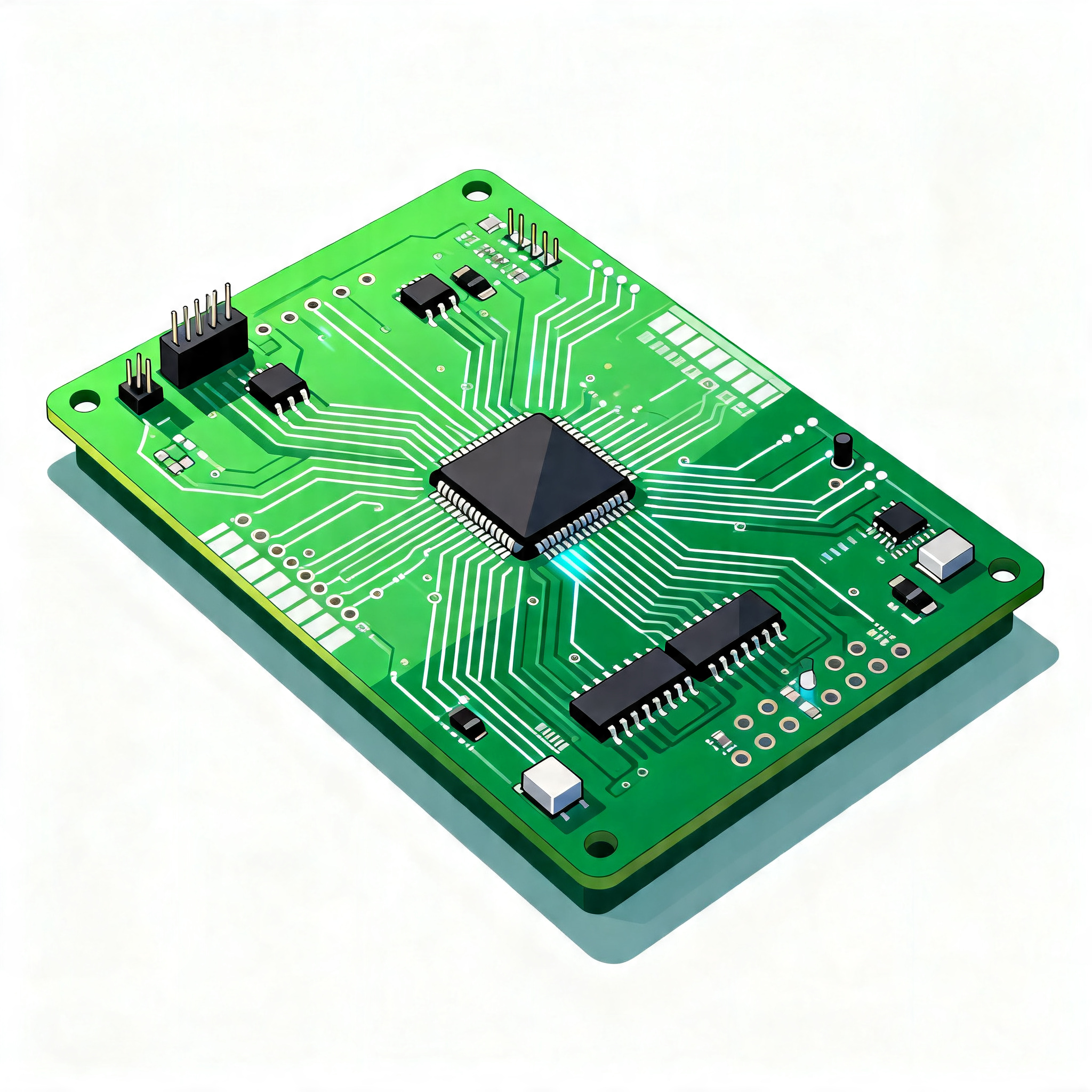
pcb testing methods
PCB Testing Methods: Design, Layout, and Manufacturing Considerations Introduction In the rapidly evolving electronics industry, designing and testing printed circuit boards (PCBs) is crucial for ensu...
Introduction
In the rapidly evolving electronics industry, designing and testing printed circuit boards (PCBs) is crucial for ensuring device reliability and performance. PCB testing methods play a significant role in identifying design flaws, ensuring manufacturing precision, and guaranteeing signal integrity. As devices become more compact and complex, adhering to precise PCB layout rules, optimizing layer stackup designs, and understanding material properties become critical. This article delves into these essential aspects, providing a comprehensive guide for engineers and designers.
Technical Overview
PCBs serve as the backbone of electronic devices, providing mechanical support and electrical connectivity for components. The core concepts of PCB design revolve around ensuring signal integrity, managing electromagnetic interference (EMI), and optimizing thermal performance. The architecture of PCBs ranges from simple single-layer designs to complex multi-layer configurations, each serving specific application needs. Principles such as trace impedance control, power distribution network (PDN) design, and thermal management are fundamental for achieving optimal PCB performance. Adhering to industry standards, like those from IPC, ensures consistency and reliability across different manufacturing processes.
Detailed Specifications
In PCB design, specifications such as trace width, spacing, via sizes, and clearances are critical parameters. These specifications directly impact the electrical performance, manufacturability, and reliability of the PCB. Understanding and applying these specifications according to industry standards is essential for successful PCB design and manufacturing.
| Design Parameter | Minimum Value | Recommended Value |
|---|---|---|
| Trace Width | 4 mils | 6 mils |
| Trace Spacing | 4 mils | 8 mils |
| Via Hole Size | 0.2 mm | 0.3 mm |
| Pad Size | 0.5 mm | 0.6 mm |
| Clearance to Edge | 0.5 mm | 1 mm |
| Silkscreen Text Height | 1 mm | 1.5 mm |
| Solder Mask Clearance | 2 mils | 3 mils |
| Annular Ring Width | 3 mils | 4 mils |
| Drill to Copper | 8 mils | 10 mils |
| Plane Clearance | 20 mils | 30 mils |
Key Takeaways from the Specifications
The data in the table outlines critical design rules that influence the manufacturability and performance of PCBs. Trace width and spacing are essential for ensuring adequate current carrying capacity and preventing short circuits. Via sizes and pad sizes affect the mechanical stability and electrical performance of the connections. Clearances, such as those to the board edge and between conductive elements, ensure that the PCB can withstand environmental stress and prevent electrical shorts. Adhering to these specifications ensures that the PCB is both manufacturable and reliable.
| Layer Configuration | Use Case | Remarks |
|---|---|---|
| Single-layer | Simple circuits | Low cost, limited functionality |
| Double-layer | Moderate complexity | Improved functionality, still cost-effective |
| 4-layer | High-speed digital | Better signal integrity, EMI control |
| 6-layer | RF applications | Enhanced signal isolation |
| 8-layer | Complex designs | Advanced signal routing, power distribution |
| 10-layer | High-density designs | Optimal for compact devices |
| 12-layer | Very high-speed designs | Superior performance, costly |
Practical Implications
Layer stackup configurations determine the PCB's ability to handle complex routing and provide adequate power distribution. Single-layer and double-layer PCBs are suitable for simple and moderate applications due to their cost-effectiveness. However, as the complexity of the design increases, multi-layer stackups become necessary to ensure signal integrity and manage EMI. High-speed and RF applications benefit from additional layers that offer improved isolation and signal routing capabilities. Selecting the right stackup configuration is crucial for balancing performance and cost.
| Material | Dielectric Constant (Dk) | Loss Tangent (Df) |
|---|---|---|
| FR-4 | 4.5 | 0.020 |
| Rogers 4350B | 3.66 | 0.0037 |
| Rogers 5880 | 2.20 | 0.0009 |
| Isola FR408 | 3.75 | 0.009 |
| Nelco N4000-13 | 3.9 | 0.016 |
| DuPont Pyralux | 3.4 | 0.004 |
| Arlon 85N | 3.5 | 0.009 |
| Megtron 6 | 3.6 | 0.005 |
| Panasonic R-1755V | 4.2 | 0.015 |
Application Guidelines
Material properties such as dielectric constant and loss tangent are fundamental in determining the electrical performance of a PCB. FR-4 is widely used due to its cost-effectiveness and adequate performance for general applications. For high-frequency applications, materials like Rogers and DuPont Pyralux offer lower loss tangents, improving signal integrity. Selecting the appropriate material involves balancing factors such as cost, frequency requirements, and thermal performance. Understanding these parameters helps in making informed decisions for specific applications.
Design Considerations
Effective PCB design hinges on several critical considerations. First, signal integrity must be maintained through proper trace routing and impedance matching, especially in high-speed applications. EMI concerns can be mitigated by strategic layer stackup design and proper grounding techniques. Thermal management is another vital aspect, requiring adequate heat dissipation through vias and thermal pads, especially in power-intensive applications. Additionally, manufacturability should always be a key consideration, ensuring that the design adheres to industry standards and is compatible with available fabrication technologies. These considerations not only enhance the performance and reliability of the PCB but also streamline the manufacturing process.
Step-by-Step Implementation
- Define Requirements: Begin by clearly defining the functional and performance requirements of the PCB. This includes electrical, mechanical, and thermal specifications.
- Choose Materials: Select appropriate materials based on the application's frequency and thermal requirements, referring to the material properties table for guidance.
- Determine Layer Stackup: Based on complexity and signal integrity needs, choose an optimal layer stackup configuration.
- Design Schematic: Create a detailed schematic that includes all components and their interconnections, ensuring compatibility with the chosen layout rules.
- Layout Design: Implement the PCB layout, adhering to design rules for trace width, spacing, and clearances, ensuring signal integrity and manufacturability.
- Simulate and Validate: Use simulation tools to validate the design against electrical and thermal performance criteria.
- Prototype Manufacturing: Send the design files to a PCB manufacturer for prototyping, ensuring they meet all fabrication specifications.
- Testing and Iteration: Perform comprehensive testing on the prototype, iterating the design as necessary to address any identified issues.
Common Issues & Solutions
- Signal Integrity Problems: Use controlled impedance traces and proper termination to prevent reflections and crosstalk.
- EMI Concerns: Implement proper grounding techniques and use shielding layers to minimize electromagnetic interference.
- Thermal Management: Incorporate thermal vias and heat sinks to dissipate excess heat efficiently.
- Manufacturing Defects: Ensure the design adheres to the manufacturer's capabilities and tolerances to minimize defects.
- Component Placement: Use logical component grouping to minimize trace lengths and improve signal routing.
- Design Rule Violations: Regularly check the design against established rules to prevent errors during manufacturing.
Applications & Use Cases
PCBs are ubiquitous in various applications, from consumer electronics like smartphones and laptops to industrial control systems and automotive electronics. High-speed PCBs are critical in networking equipment, while RF PCBs are essential in communication devices. In the medical field, PCBs are used in diagnostic and monitoring equipment. Each application demands specific design considerations, such as high reliability for automotive applications or miniaturization for portable devices. Understanding the unique requirements of each use case is crucial for designing effective PCBs.
Selection & Sourcing Guide
When sourcing PCB components and materials, it is essential to consider factors such as availability, lead times, and cost. Utilize resources like IC Online to find reliable suppliers and component information. Prioritize sourcing from vendors who provide comprehensive datasheets and support services to ensure compatibility with your design specifications.
FAQ
- What is the minimum trace width for a PCB? The minimum trace width typically starts at 4 mils, but this can vary based on current requirements and manufacturing capabilities.
- Why is dielectric constant important? The dielectric constant affects the signal speed and impedance of the PCB, impacting overall performance.
- How do I choose the right layer stackup? Consider the complexity of your design, signal integrity requirements, and EMI concerns when selecting a stackup.
- What are the common materials used in PCBs? Common materials include FR-4 for general applications and Rogers or DuPont Pyralux for high-frequency applications.
- How do I manage thermal issues on a PCB? Use thermal vias, heat sinks, and proper component placement to manage heat effectively.
- What are the benefits of multi-layer PCBs? Multi-layer PCBs offer improved signal routing, EMI control, and power distribution for complex designs.
- How can I minimize manufacturing defects? Adhere to design rules, perform thorough design reviews, and choose compatible manufacturing processes.
- What tools are used for PCB design simulation? Tools like Altium Designer, Cadence Allegro, and Mentor Graphics are commonly used for simulation and validation.
- What is the role of IPC standards in PCB design? IPC standards ensure consistency, quality, and reliability in PCB design and manufacturing processes.
- How do I ensure signal integrity in high-speed designs? Implement controlled impedance traces, proper termination, and isolation techniques to maintain signal integrity.
Conclusion
Designing and testing PCBs require a thorough understanding of layout rules, stackup configurations, and material properties. By adhering to industry standards and applying best practices, engineers can create reliable and high-performance PCBs. This comprehensive guide provides the necessary insights and resources to navigate the complexities of PCB design and manufacturing, ensuring successful implementation across various applications.