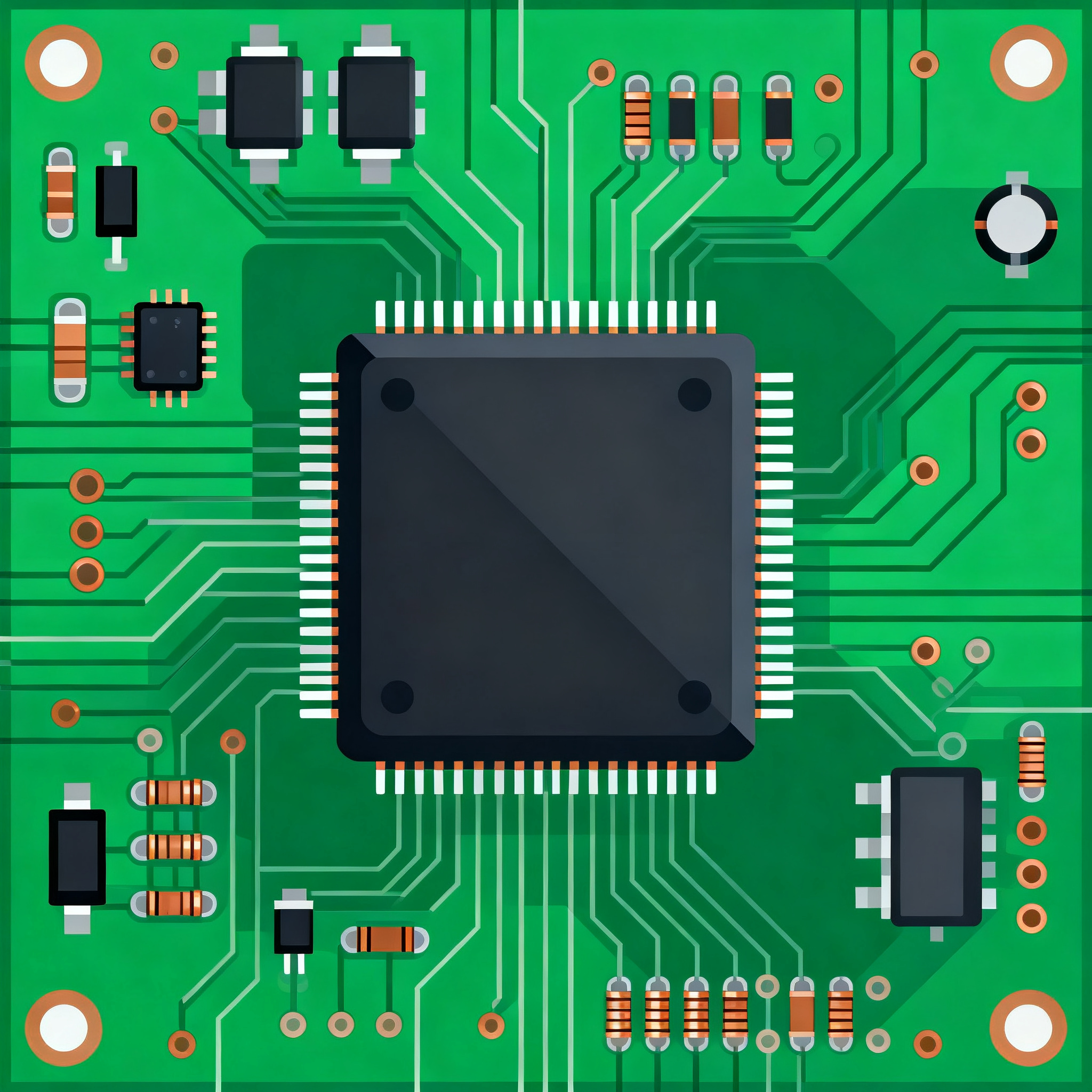
pcb design for electrical performance
PCB Design for Electrical Performance: IC Chip Component Introduction In the rapidly evolving field of electronics, PCB design plays a crucial role in determining the electrical performance of integra...
Introduction
In the rapidly evolving field of electronics, PCB design plays a crucial role in determining the electrical performance of integrated circuits (ICs). With the increasing complexity of electronic devices, selecting the right IC chip and designing an optimal PCB layout are critical to achieving desired performance outcomes. This article delves into the specifications, selection criteria, and application circuits of IC chips, providing insights into how these components influence the overall electrical performance of a device.
Technical Overview
IC chips form the heart of modern electronic devices, performing a wide range of functions from processing to communication. These chips are designed based on specific architectures and principles that dictate their performance and application suitability. Understanding the core concepts behind IC chip design, such as CPU architecture, memory configuration, and peripheral integration, is essential for engineers tasked with optimizing PCB layouts for electrical performance.
The architecture of an IC chip often includes a central processing unit (CPU), memory blocks, and various peripherals. The CPU speed, memory capacity, and the types of peripherals integrated into the chip are key factors influencing the chip's performance. Additionally, power consumption and packaging also play a vital role in determining the chip's suitability for specific applications.
Detailed Specifications
When evaluating IC chips for PCB design, understanding the core specifications is paramount. These specifications provide a detailed insight into the chip's performance capabilities and limitations. Key specifications include CPU speed, memory type and size, available peripherals, power requirements, and packaging. These elements collectively determine the chip's performance, compatibility with other components, and suitability for the intended application.
| Specification | Details | Remarks |
|---|---|---|
| CPU Speed | 1.2 GHz | High-performance processing |
| Memory | 4 GB DDR4 | Ample for most applications |
| Peripherals | UART, I2C, SPI | Versatile connectivity options |
| Power Supply | 3.3V, 5V | Dual voltage support |
| Package | LQFP, BGA | Flexible mounting options |
| Operating Temperature | -40°C to 85°C | Wide range for industrial use |
| Flash Memory | 512 MB | Sufficient for firmware storage |
| ADC Channels | 8 Channels | Useful for sensor interfacing |
| GPIOs | 40 Pins | Extensive I/O capability |
| Clock Speed | 100 MHz | Stable operational frequency |
Key Takeaways from the Specifications
The core specifications outlined in the table above highlight the essential features of an IC chip that influence its performance. The CPU speed and memory capacity indicate the processing power and data handling capability, crucial for applications requiring fast computation and large data processing. The variety of peripherals such as UART, I2C, and SPI offer diverse communication interfaces, enabling integration with different modules and sensors. Power supply options and packaging types provide flexibility in design and compatibility with various PCB layouts. Understanding these specifications helps engineers select the right IC chip for their specific application needs.
| Characteristic | Specification | Notes |
|---|---|---|
| Supply Voltage | 1.8V to 3.6V | Wide range for compatibility |
| Operating Current | 20 mA | Low power consumption |
| Standby Current | 5 μA | Energy-efficient in idle mode |
| Input Voltage Range | 0V to 5V | Flexible input conditions |
| Output Current | 10 mA per pin | Sufficient for most I/O |
| Propagation Delay | 5 ns | Fast signal transmission |
| ESD Protection | 2 kV | Enhanced reliability |
| Input Capacitance | 10 pF | Minimal load on input signals |
| Output Impedance | 50 Ohms | Standard for signal integrity |
| Thermal Resistance | 50°C/W | Efficient heat dissipation |
Practical Implications
The electrical characteristics of an IC chip are crucial for ensuring reliable performance under varying operational conditions. The supply voltage range and operating current reflect the chip's power efficiency, which is vital for battery-operated devices. Low standby current contributes to energy conservation, making the chip ideal for low-power applications. The propagation delay and output impedance are critical for maintaining signal integrity, especially in high-speed circuits. ESD protection enhances the chip's durability and reliability in harsh environments. These characteristics guide engineers in designing PCBs that optimize the electrical performance of the IC chip.
| Application | Configuration | Benefits |
|---|---|---|
| Consumer Electronics | Standard Configuration | Cost-effective, reliable performance |
| Industrial Automation | Extended Temperature Range | Robust and durable |
| Automotive Systems | High ESD Protection | Enhanced safety and reliability |
| Medical Devices | Low Power Consumption | Extended battery life |
| IoT Devices | Wireless Connectivity | Seamless integration and control |
| Embedded Systems | Custom Firmware Support | Tailored functionality |
Application Guidelines
The application comparison table provides insights into how different configurations of IC chips can be leveraged across various industries. For consumer electronics, standard configurations offer a balance between performance and cost. Industrial applications benefit from chips with extended temperature ranges, ensuring reliability in extreme conditions. Automotive systems prioritize high ESD protection for safety, while medical devices focus on low power consumption for prolonged battery life. IoT devices require wireless connectivity options for seamless integration, and embedded systems benefit from custom firmware support for specialized functionalities. Selecting the right configuration based on application requirements is crucial for optimal performance.
Design Considerations
Designing PCBs for optimal electrical performance involves several critical considerations. Engineers must account for signal integrity, power distribution, thermal management, and electromagnetic interference (EMI) in their designs. Signal integrity is maintained by minimizing trace lengths, using appropriate impedance matching, and placing decoupling capacitors near power pins. Power distribution networks should be designed to minimize voltage drops and ensure stable power delivery to all components.
Thermal management is essential to prevent overheating, which can degrade performance and reliability. Engineers should consider using thermal vias, heat sinks, and appropriate copper thickness to dissipate heat effectively. EMI can be mitigated by employing proper grounding techniques, shielding sensitive components, and adhering to design guidelines outlined in IPC standards.
Step-by-Step Implementation
- Requirement Analysis: Begin by analyzing the specific requirements of the application, including performance, power, and environmental constraints.
- Component Selection: Use datasheets and reference materials to select IC chips that meet the identified requirements.
- Schematic Design: Create a detailed schematic, ensuring all components are correctly connected and integrated.
- PCB Layout: Design the PCB layout, paying attention to trace routing, component placement, and layer stack-up.
- Signal Integrity Analysis: Perform simulations to analyze signal integrity and make necessary adjustments to the layout.
- Prototype Fabrication: Use services like PCBWay and Nova PCBA for quick-turn fabrication and assembly of prototypes.
- Testing and Validation: Conduct thorough testing of the prototype to validate performance against specifications.
- Iteration and Optimization: Refine the design based on testing results, optimizing for performance and manufacturability.
Common Issues & Solutions
- Signal Integrity Problems: Use proper impedance matching and place decoupling capacitors near power pins to minimize noise.
- Thermal Management Challenges: Employ thermal vias and heat sinks to dissipate heat efficiently.
- EMI Interference: Implement grounding techniques and shielding to reduce electromagnetic interference.
- Power Distribution Issues: Design robust power distribution networks to prevent voltage drops.
- Component Placement Errors: Ensure adequate spacing between components to avoid crosstalk and thermal accumulation.
- Fabrication Defects: Adhere to IPC standards and collaborate with reliable manufacturers to minimize defects.
Applications & Use Cases
IC chips find applications across a wide range of industries, from consumer electronics to industrial automation. In consumer electronics, they power smartphones, tablets, and home appliances, providing processing power and connectivity. Industrial automation systems utilize IC chips for process control, monitoring, and data acquisition. In the automotive sector, IC chips are integral to advanced driver-assistance systems (ADAS) and infotainment systems. Medical devices rely on IC chips for patient monitoring, diagnostics, and portable healthcare solutions. The versatility of IC chips makes them indispensable in modern technology.
Selection & Sourcing Guide
When selecting and sourcing IC chips, engineers should consider factors such as performance specifications, compatibility, and cost. Reliable sources for IC chips include online platforms like IC Online, where a wide range of components is available. It is crucial to verify the authenticity and quality of components from suppliers, ensuring they meet industry standards and application requirements.
FAQ
- What is the importance of IC chip specifications? Specifications define the performance capabilities and limitations of the chip, guiding selection and design decisions.
- How do I ensure signal integrity in my PCB design? Maintain short trace lengths, use impedance matching, and place decoupling capacitors near power pins.
- What are the key considerations for thermal management? Use thermal vias, heat sinks, and appropriate copper thickness to dissipate heat effectively.
- How can I minimize EMI in my PCB design? Implement proper grounding techniques, shielding, and follow design guidelines from IPC standards.
- What role do peripherals play in IC chip selection? Peripherals determine the chip's connectivity options and integration with other components.
- Why is power efficiency important in IC chips? Power efficiency reduces energy consumption, prolonging battery life in portable devices.
- How do I choose the right package for my IC chip? Consider space constraints, thermal requirements, and mounting options when selecting a package.
- What are the benefits of using quick-turn PCB assembly services? Quick-turn services expedite prototype development, allowing for faster testing and iteration.
- What are some common fabrication defects to watch out for? Common defects include solder bridges, misaligned components, and incomplete traces, which can be minimized by adhering to IPC standards.
- How do application requirements influence IC chip selection? Application requirements dictate the performance, power, and environmental specifications needed for the IC chip.
Conclusion
PCB design for electrical performance is a multifaceted process that requires careful consideration of IC chip specifications, electrical characteristics, and application requirements. By understanding the core specifications and practical implications of IC chips, engineers can design PCBs that optimize performance, reliability, and efficiency. With the right selection criteria and design guidelines, IC chips can be effectively integrated into a wide range of applications, driving innovation and technological advancement.