Navigating the Future: Top PCB Prototyping Services for Rapid Product Development
Navigating the Future: Top PCB Prototyping Services for Rapid Product Development Introduction In the fast-paced world of electronics, rapid product development is crucial for staying ahead of the com...
Introduction
In the fast-paced world of electronics, rapid product development is crucial for staying ahead of the competition. Printed Circuit Board (PCB) prototyping services play a vital role in this process, enabling engineers to quickly test and iterate designs before moving to mass production. This article explores the top PCB prototyping services, focusing on component specifications, datasheets, selection criteria, and application circuits. Understanding these aspects is essential for engineers to make informed decisions that align with product goals and market demands.
Technical Overview
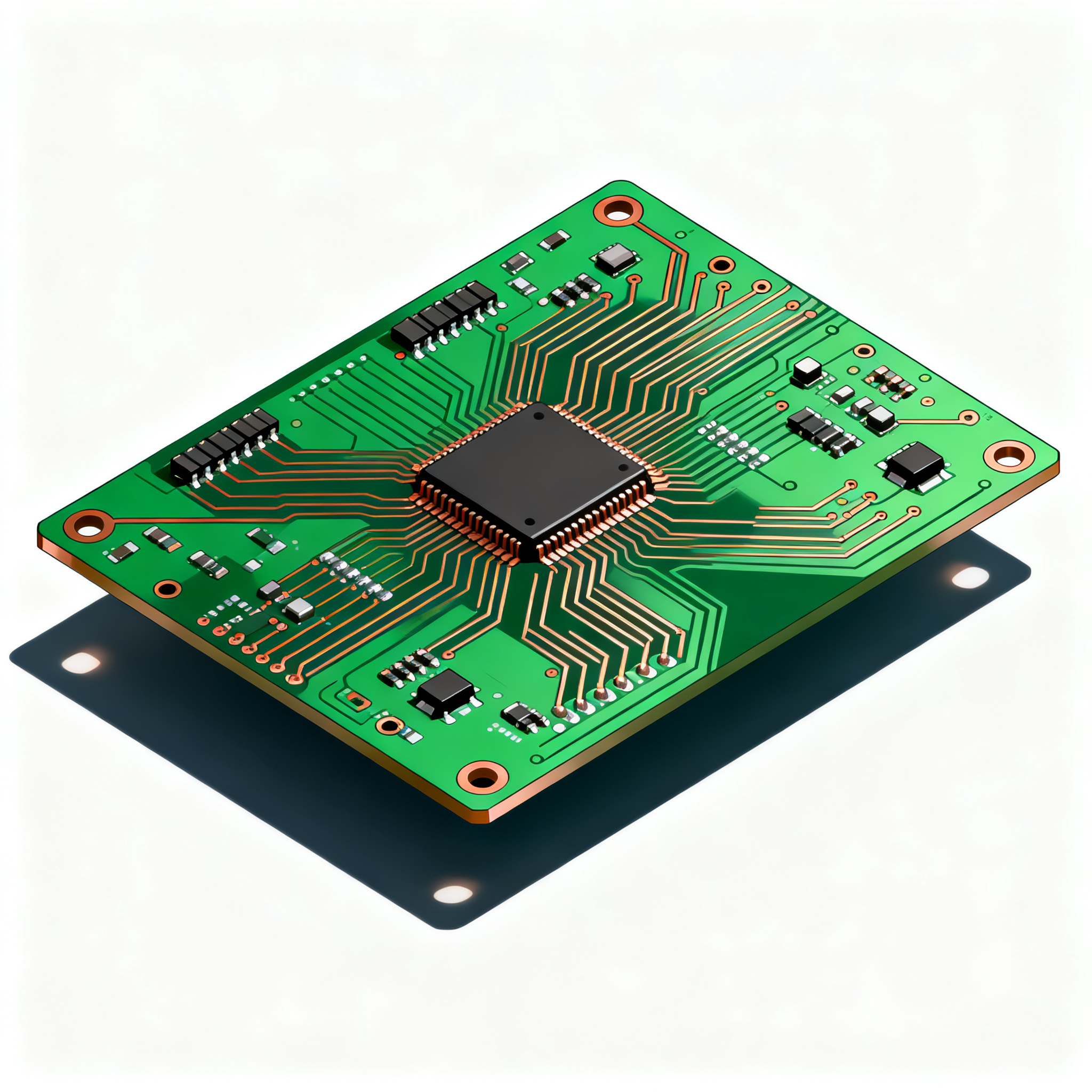
PCBs are the backbone of modern electronic devices, serving as the platform for integrating various electronic components. The architecture of a PCB involves multiple layers, including conductive pathways, insulating layers, and components like IC chips, resistors, and capacitors. The design principles of PCBs emphasize signal integrity, power distribution, and thermal management. Adhering to industry standards such as those provided by IPC is critical for ensuring quality and functionality. Rapid prototyping services offer the advantage of quick turnaround times, allowing engineers to test designs under real-world conditions, which is crucial for identifying potential issues early in the development cycle.
Detailed Specifications
When selecting components for PCB prototyping, understanding the core specifications is crucial. These specifications include CPU speed, memory, peripheral interfaces, power requirements, and package types. Each aspect can significantly impact the performance and suitability of a component for a given application. Below is a table detailing these core specifications for a hypothetical IC chip used in PCB prototyping.
| Specification | Details | Remarks |
|---|---|---|
| CPU Speed | 1.5 GHz | High-performance applications |
| Memory | 2 GB DDR4 | Supports multitasking |
| Peripherals | USB, I2C, SPI | Versatile connectivity |
| Power Supply | 3.3V | Low power consumption |
| Package Type | QFN32 | Compact form factor |
| Temperature Range | -40°C to 85°C | Industrial applications |
| Flash Memory | 256 KB | Ample storage for firmware |
| GPIO Pins | 20 | Flexible I/O options |
| ADC Resolution | 12-bit | High precision measurement |
| Clock Frequency | 50 MHz | Stable operation |
| Operating Voltage | 1.8V to 3.6V | Wide range support |
Key Takeaways from the Specifications
The core specifications table highlights the essential features of the IC chip, which are critical for determining its suitability for various applications. The CPU speed and memory capacity indicate the processing power and ability to handle complex tasks. Peripheral interfaces like USB, I2C, and SPI provide flexibility in connecting with other components, making the chip ideal for diverse applications. The power supply and package type are crucial for ensuring efficient power management and accommodating space constraints in compact designs. Understanding these specifications helps engineers select components that align with project requirements and constraints.
| Parameter | Value | Implication |
|---|---|---|
| Supply Voltage | 3.3V | Standard voltage level |
| Operating Current | 200 mA | Moderate power consumption |
| Input Voltage Range | 0V to 3.3V | Compatible with TTL logic |
| Output Current | 20 mA per pin | Drives LEDs, small loads |
| Propagation Delay | 5 ns | Fast signal processing |
| Output Voltage High | 2.9V | Meets logic high level |
| Output Voltage Low | 0.4V | Meets logic low level |
| Input Leakage Current | 1 µA | Minimal leakage |
| ESD Protection | 2 kV | Standard protection |
| Clock Jitter | ±50 ps | Stable clock performance |
| Power Dissipation | 500 mW | Efficient thermal management |
Practical Implications
The electrical characteristics table provides insight into the operational parameters of the IC chip. Supply voltage and operating current are critical for ensuring compatibility with power sources and managing power consumption. The input and output voltage levels, along with current capabilities, determine the chip's ability to interface with other components and drive loads. Propagation delay and clock jitter are important for timing-sensitive applications, affecting overall system performance. Understanding these characteristics helps engineers design circuits that meet performance criteria while minimizing power usage and heat generation.
| Application | Configuration | Benefits |
|---|---|---|
| IoT Devices | Low power, wireless connectivity | Extended battery life |
| Industrial Automation | Robust design, high reliability | Continuous operation |
| Consumer Electronics | Compact size, multimedia support | Enhanced user experience |
| Automotive Systems | Wide temperature range, durability | Reliable performance |
| Medical Devices | Precision, safety compliance | Accurate diagnostics |
| Wearable Technology | Lightweight, energy-efficient | Comfort and convenience |
| Smart Home Devices | Connectivity, user-friendly | Seamless integration |
Application Guidelines
The application comparison table showcases the versatility of the IC chip in different use cases. For IoT devices, low power consumption and wireless connectivity are crucial for prolonged battery life. In industrial automation, robustness and reliability are key for uninterrupted operation. Consumer electronics benefit from compact designs and multimedia capabilities, enhancing user experience. Automotive systems require components that can withstand extreme temperatures and provide consistent performance. Medical devices prioritize precision and compliance with safety standards for accurate diagnostics. Understanding these applications helps engineers select the right configurations to meet specific project needs.
Design Considerations
Designing a PCB involves multiple considerations to ensure optimal performance and manufacturability. Engineers must adhere to design rules that align with manufacturing capabilities, such as trace width, spacing, and layer count. Thermal management is crucial for preventing overheating and ensuring component longevity. Signal integrity must be maintained by minimizing noise and interference through proper routing and grounding techniques. Power distribution networks should be designed to provide stable voltage levels across the board. Component placement and orientation affect assembly efficiency and testing. By considering these factors, engineers can create designs that are both functional and cost-effective.
Step-by-Step Implementation
- Define the project requirements, including performance goals, environmental conditions, and budget constraints.
- Select components based on specifications, availability, and compatibility with existing systems.
- Create a schematic diagram to outline the electrical connections and component placement.
- Design the PCB layout, considering trace routing, layer stack-up, and thermal management.
- Run simulations to validate the design, checking for signal integrity and power distribution issues.
- Generate manufacturing files, including Gerber files and a Bill of Materials (BOM).
- Procure components and submit the design to a PCB prototyping service for fabrication.
- Assemble the prototype, perform testing to verify functionality, and iterate on the design as needed.
Common Issues & Solutions
- Issue: Signal interference causing data corruption. Solution: Implement proper grounding and shielding techniques.
- Issue: Overheating components leading to failure. Solution: Enhance thermal management with heat sinks and ventilation.
- Issue: Power supply fluctuations affecting performance. Solution: Design robust power distribution networks with decoupling capacitors.
- Issue: Inconsistent solder joints causing connectivity issues. Solution: Ensure proper soldering techniques and quality inspection.
- Issue: Design not meeting size constraints. Solution: Optimize component placement and use multi-layer PCBs.
- Issue: Long lead times for components delaying production. Solution: Source components from multiple suppliers to ensure availability.
Applications & Use Cases
PCB prototyping services are widely used across various industries, from consumer electronics to industrial automation. In consumer electronics, PCBs enable the compact and efficient design of smartphones, tablets, and wearable devices. In industrial automation, PCBs are used in control systems and sensors for monitoring and managing industrial processes. Automotive applications include engine control units and infotainment systems. Medical devices rely on PCBs for diagnostic equipment and monitoring devices. The versatility of PCBs makes them indispensable in modern electronics, driving innovation and enabling new technologies.
Selection & Sourcing Guide
When selecting components for PCB prototyping, engineers should consider factors such as performance, reliability, and cost. It's essential to review datasheets and compare specifications to ensure compatibility with the project requirements. Sourcing components from reputable suppliers is crucial for ensuring quality and availability. For a comprehensive selection of ICs and other components, visit IC Online, a trusted resource for component sourcing.
FAQ
- What is PCB prototyping? It's the process of creating a preliminary version of a PCB to test and validate a design before mass production.
- Why is rapid prototyping important? It allows for quick iterations and testing, reducing time-to-market and minimizing design errors.
- What are the key specifications for selecting an IC chip? Consider CPU speed, memory, peripherals, power requirements, and package type.
- How do I ensure signal integrity in my PCB design? Use proper grounding, minimize trace lengths, and avoid crossing signal lines.
- What are common materials used in PCB fabrication? FR4, aluminum, and polyimide are commonly used materials for PCBs.
- How can I reduce power consumption in my design? Optimize power distribution, use low-power components, and implement sleep modes.
- What is the significance of IPC standards? They provide guidelines for design, assembly, and quality inspection to ensure reliability and performance.
- How do I handle component obsolescence? Plan for alternative components and maintain a flexible design to accommodate changes.
- What testing methods are used for PCBs? Functional testing, in-circuit testing, and boundary scan testing are commonly used methods.
- How do I select the right PCB prototyping service? Consider factors such as turnaround time, cost, quality, and customer support.
Conclusion
In conclusion, PCB prototyping services are essential for driving innovation and ensuring the success of electronic products. By understanding component specifications, electrical characteristics, and application guidelines, engineers can make informed decisions that align with project goals. With the right design considerations and prototyping strategies, companies can accelerate product development, reduce costs, and bring high-quality products to market faster.