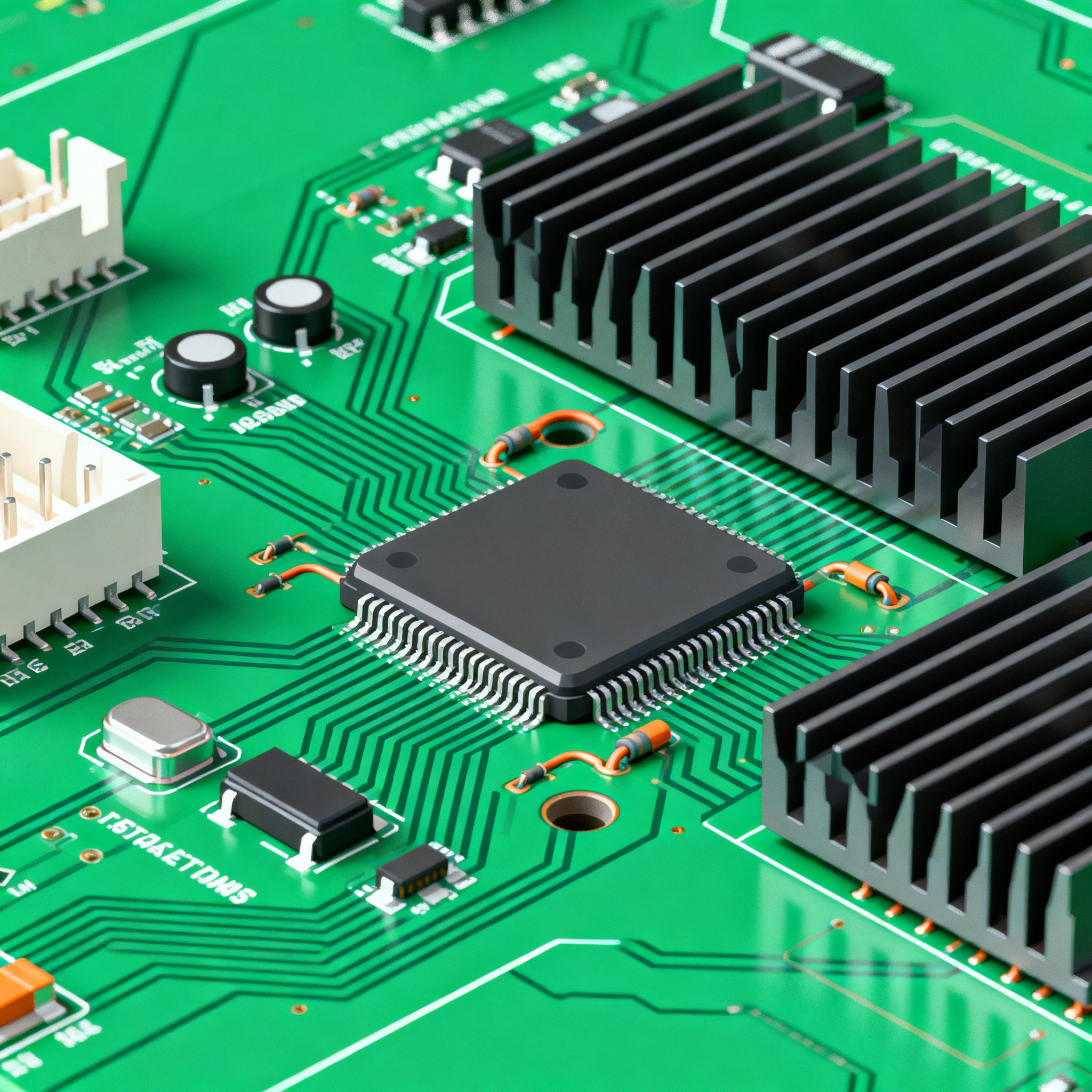
Mastering Thermal Management in PCBs: Best Practices for Effective Heat Dissipation in High-Performance Boards
Introduction In the rapidly evolving landscape of electronics, effective thermal management in Printed Circuit Boards (PCBs) is crucial, especially for high-performance boards. As devices become faste...
Introduction
In the rapidly evolving landscape of electronics, effective thermal management in Printed Circuit Boards (PCBs) is crucial, especially for high-performance boards. As devices become faster and more powerful, managing heat dissipation becomes a significant challenge. Ensuring components operate within their optimal temperature ranges is essential to maintain performance, reliability, and longevity. This article explores the best practices for mastering thermal management in PCBs, focusing on component specifications, datasheets, selection criteria, and application circuits.
Technical Overview
Thermal management in PCBs involves various techniques and strategies to dissipate heat generated by electronic components. The core concepts include understanding thermal conductivity, thermal resistance, and the use of heat sinks, thermal vias, and materials with high thermal conductivity. The architecture of a PCB plays a significant role in its thermal performance. Components like IC chips, capacitors, and resistors each contribute to the overall heat profile of the board. Effective thermal management ensures that heat is evenly distributed and efficiently removed from critical areas, preventing hotspots that can lead to component failure.
High-performance boards often include multiple layers to enhance thermal conductivity and incorporate materials like copper and aluminum. The principles of thermal management also extend to the layout and placement of components, where strategic positioning can significantly impact heat dissipation. Advanced simulation tools and software aid engineers in predicting thermal behavior and optimizing designs before physical prototypes are created.
Detailed Specifications
Understanding the specifications of components used in PCBs is vital for effective thermal management. Key specifications include CPU speed, memory, power requirements, and package type. These factors influence the thermal profile and dictate the cooling solutions required. Let's delve into the core specifications of a typical high-performance IC chip.
| Specification | Details | Notes |
|---|---|---|
| CPU Speed | 3.2 GHz | High-performance processing |
| Memory | 16 GB DDR4 | Supports fast data transfer |
| Peripherals | USB 3.0, HDMI, Ethernet | Connectivity options |
| Power | 95 W TDP | Thermal design power |
| Package | LGA 1151 | Land grid array |
| Cache | 12 MB SmartCache | Improves data access speed |
| Graphics | Integrated Intel UHD 630 | Basic graphics capability |
| Voltage | 1.2 V | Core voltage requirement |
| Temperature Range | 0°C to 100°C | Operational limits |
| Form Factor | ATX | Standard motherboard size |
| Manufacturing Process | 14 nm | Advanced fabrication technology |
Key Takeaways from the Specifications
The specifications outlined in the table highlight the importance of selecting components that align with the thermal management strategy of your PCB design. The CPU speed and power consumption directly influence the amount of heat generated, dictating the need for efficient cooling solutions. The package type and form factor also play a critical role in determining the layout and cooling options available. Understanding these specifications allows engineers to make informed decisions about component selection and the necessary thermal management techniques to employ.
| Characteristic | Value | Importance |
|---|---|---|
| Core Voltage | 1.2 V | Stability and efficiency |
| Max Current | 50 A | Power delivery capability |
| Timing | CAS Latency 16 | Memory performance |
| I/O Voltage | 3.3 V | Compatibility with peripherals |
| Leakage Current | 1 mA | Efficiency and heat generation |
| Switching Frequency | 1 GHz | Signal integrity |
| Thermal Resistance | 0.5 °C/W | Heat dissipation efficiency |
| Input Capacitance | 10 pF | Signal quality |
| ESD Protection | 2 kV | Component safety |
| Propagation Delay | 5 ns | Signal timing accuracy |
| Power Dissipation | 10 W | Overall heat output |
Practical Implications
The electrical characteristics table provides insights into the operational parameters that affect thermal performance. Core voltage and maximum current are crucial for determining the power requirements and thermal output. The thermal resistance value indicates how efficiently the component can dissipate heat, impacting the choice of cooling solutions. Engineers must consider these characteristics when designing PCBs to ensure optimal thermal management and prevent overheating, which can lead to component failure or reduced performance.
| Use Case | Configuration | Benefits |
|---|---|---|
| Gaming PC | High-end GPU, liquid cooling | Enhanced performance and cooling |
| Data Center | Multi-core CPUs, advanced air cooling | Efficient processing and thermal management |
| Embedded Systems | Compact design, passive cooling | Low power consumption and reliability |
| Industrial Automation | Robust components, heat sinks | Durability and thermal stability |
| Consumer Electronics | Integrated solutions, fan cooling | Cost-effectiveness and ease of use |
| Automotive | Rugged design, thermal pads | Temperature resilience and safety |
| IoT Devices | Low-power chips, efficient heat spreading | Extended battery life and reliability |
| Telecommunications | High-frequency components, advanced heat sinks | Signal integrity and thermal efficiency |
Application Guidelines
The application comparison table highlights how different configurations cater to specific use cases, each with unique thermal management requirements. For example, gaming PCs benefit from high-end GPUs and liquid cooling to handle intense processing loads, while embedded systems prioritize compact designs and passive cooling for reliability. Understanding these configurations helps engineers select the appropriate components and design strategies to meet the thermal demands of their specific applications, ensuring optimal performance and longevity.
Design Considerations
Effective thermal management requires careful consideration of several design factors. Engineers should focus on component placement, board layout, and the selection of materials with high thermal conductivity. Utilizing thermal vias, heat sinks, and thermal pads can enhance heat dissipation. Additionally, incorporating simulation tools during the design phase allows for the prediction and optimization of thermal performance. It's essential to consider the operating environment and potential heat sources when designing PCBs to ensure reliable and efficient thermal management.
Step-by-Step Implementation
- Identify Heat Sources: Begin by identifying components that generate significant heat, such as CPUs, GPUs, and power regulators.
- Optimize Component Placement: Place heat-generating components away from sensitive areas and ensure even heat distribution across the board.
- Select Appropriate Materials: Choose materials with high thermal conductivity, such as copper and aluminum, for layers and heat sinks.
- Incorporate Thermal Vias: Use thermal vias to connect heat-generating components to internal layers or external heat sinks.
- Design for Airflow: Ensure proper airflow by designing the PCB layout to facilitate efficient air circulation around components.
- Use Simulation Tools: Employ thermal simulation software to predict heat distribution and identify potential hotspots.
- Implement Cooling Solutions: Install heat sinks, fans, or liquid cooling systems as needed based on the thermal analysis.
- Test and Validate: Conduct thermal testing under various operating conditions to validate the effectiveness of your thermal management strategy.
Common Issues & Solutions
- Overheating: Caused by inadequate cooling solutions. Solution: Upgrade to more efficient heat sinks or incorporate active cooling methods.
- Uneven Heat Distribution: Results from poor component placement. Solution: Reconfigure the layout to ensure even heat spread.
- Excessive Power Consumption: Leads to increased heat generation. Solution: Optimize power management and use low-power components.
- Thermal Cycling: Causes stress on components. Solution: Use materials with low thermal expansion coefficients and ensure gradual temperature changes.
- Signal Integrity Issues: Arise from thermal-induced delays. Solution: Implement proper shielding and layout strategies to minimize signal degradation.
- Environmental Factors: External heat sources can impact performance. Solution: Design enclosures with adequate ventilation and thermal insulation.
Applications & Use Cases
Thermal management techniques are crucial across various industries. In consumer electronics, efficient heat dissipation ensures device longevity and user safety. In data centers, advanced cooling solutions enable high-density computing and energy efficiency. Automotive applications require robust thermal management to withstand extreme temperatures, ensuring reliability and safety. Understanding the specific requirements of each use case allows engineers to design PCBs that meet thermal and performance demands effectively.
Selection & Sourcing Guide
When selecting components for thermal management, consider factors such as power consumption, thermal resistance, and package type. Utilize resources like IC Online to source high-quality components that meet your design specifications. Ensure that datasheets are reviewed to understand the thermal characteristics and operating limits of each component, facilitating informed decisions and effective thermal management strategies.
FAQ
- What is thermal management in PCBs? Thermal management involves techniques to dissipate heat generated by electronic components, ensuring optimal performance and reliability.
- Why is thermal management important? It prevents overheating, which can lead to component failure, reduced performance, and shortened device lifespan.
- What are common thermal management techniques? Techniques include using heat sinks, thermal vias, high-conductivity materials, and active cooling solutions.
- How do I choose the right components for thermal management? Consider specifications like power consumption, thermal resistance, and operating temperature ranges when selecting components.
- What role do simulation tools play in thermal management? They help predict thermal behavior, optimize designs, and identify potential hotspots before physical prototypes are built.
- How does component placement affect thermal management? Strategic placement ensures even heat distribution and efficient cooling, preventing hotspots.
- What are thermal vias? They are conductive pathways that enhance heat transfer from heat-generating components to other board layers or heat sinks.
- Can environmental factors impact thermal management? Yes, external heat sources and environmental conditions can affect thermal performance, requiring appropriate design considerations.
- What is the significance of thermal resistance? It indicates how efficiently a component can dissipate heat, influencing the choice of cooling solutions.
- How can I validate my thermal management strategy? Conduct thermal testing under various conditions to assess the effectiveness of your strategy and make necessary adjustments.
Conclusion
Mastering thermal management in PCBs is essential for optimizing the performance and longevity of high-performance boards. By understanding component specifications, employing effective design strategies, and utilizing advanced tools, engineers can ensure efficient heat dissipation and prevent overheating. As technology continues to advance, prioritizing thermal management will remain a critical factor in the success of electronic devices across various industries.