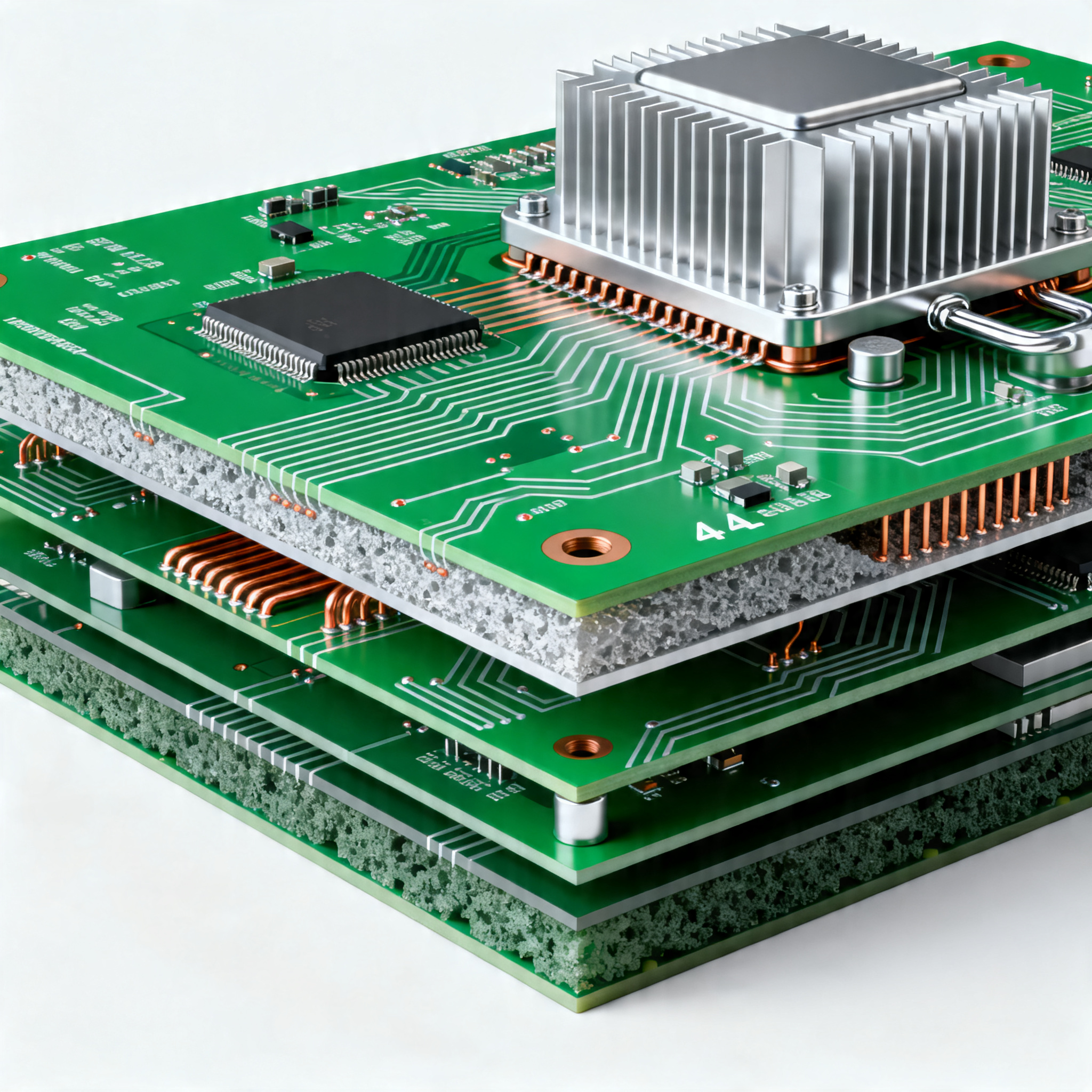
Mastering Thermal Management in 4-Layer PCBs: A Step-by-Step Design Guide for Engineers
Mastering Thermal Management in 4-Layer PCBs Introduction In the rapidly evolving world of electronics, effective thermal management in PCB design is crucial for ensuring reliability and optimal perfo...
Introduction
In the rapidly evolving world of electronics, effective thermal management in PCB design is crucial for ensuring reliability and optimal performance. As devices become more compact and powerful, managing heat dissipation in multi-layer PCBs, particularly 4-layer designs, becomes increasingly challenging. This guide provides a comprehensive approach to mastering thermal management in 4-layer PCBs, covering key aspects such as circuit topology, component calculations, performance analysis, and design trade-offs.
Technical Overview
Thermal management in PCBs involves the strategic planning and implementation of heat dissipation techniques to maintain component temperatures within safe operating limits. This includes the use of thermal vias, heat sinks, and appropriate trace widths. The architecture of a 4-layer PCB typically consists of a top layer, inner layers for power and ground planes, and a bottom layer. These layers must be carefully designed to optimize thermal performance while maintaining electrical integrity. Core principles include understanding thermal resistance, calculating power dissipation, and selecting materials with high thermal conductivity.
Detailed Specifications
When designing a 4-layer PCB, several key specifications must be considered to ensure effective thermal management. These include component values, thermal resistance calculations, and power dissipation formulas. Understanding these parameters is essential for designing a PCB that can handle the thermal loads of modern electronic devices.
| Component | Value | Calculation/Formula |
|---|---|---|
| Thermal Via Diameter | 0.3 mm | Standard size for efficient heat transfer |
| Thermal Conductivity | 0.5 W/mK | Material-based; affects heat dissipation |
| Power Dissipation | 2 W | P = I2R |
| Trace Width | 0.25 mm | Calculated based on current carrying capacity |
| Layer Stackup | 4 layers | Top, Ground, Power, Bottom |
| Dielectric Material | FR-4 | Commonly used for its thermal properties |
| Thermal Resistance | 10°C/W | Rth = (Tj - Ta)/P |
| Heat Sink Area | 20 cm2 | Based on power dissipation and thermal resistance |
| Via Spacing | 1 mm | Optimized for thermal and electrical performance |
| Copper Thickness | 1 oz/ft2 | Standard for balancing cost and performance |
Key Takeaways from the Specifications
The specifications outlined in the table above are critical for designing a thermally efficient 4-layer PCB. The thermal via diameter and spacing are optimized to enhance heat transfer from critical components to the ground plane. The choice of dielectric material, such as FR-4, plays a significant role in thermal performance due to its balance of thermal conductivity and cost. Calculating power dissipation and thermal resistance helps in determining the necessary heat sink area to maintain component temperatures within safe limits. These specifications form the foundation for effective thermal management in PCB design.
| Parameter | Value | Impact on Performance |
|---|---|---|
| Gain | 10 dB | High gain can increase thermal load |
| Bandwidth | 1 GHz | Wide bandwidth may require additional cooling |
| Noise Figure | 3 dB | Lower noise figure improves signal integrity |
| Power Consumption | 5 W | Directly impacts heat generation |
| Thermal Stability | ±5°C | Ensures reliable operation across temperature range |
| Signal Integrity | High | Critical for maintaining data accuracy |
| Efficiency | 85% | Higher efficiency reduces heat output |
| Junction Temperature | 85°C | Must be controlled to prevent damage |
Practical Implications
The performance analysis table highlights critical parameters that influence the thermal performance of a 4-layer PCB. Gain and bandwidth are directly related to the thermal load, as higher values can increase the heat generated by components. Power consumption is a key factor in determining the cooling requirements; efficient designs minimize unnecessary heat output. Thermal stability is essential for ensuring consistent performance across varying environmental conditions. Understanding these parameters allows engineers to make informed decisions about cooling strategies and component selection to optimize thermal management.
| Configuration | Advantages | Disadvantages |
|---|---|---|
| Thick Copper Layers | Improved current carrying capacity | Increased cost and weight |
| Thermal Vias | Enhanced heat dissipation | Potential signal integrity issues |
| Embedded Heat Sinks | Efficient space utilization | Complex manufacturing process |
| Active Cooling | Effective for high-power applications | Requires additional power sources |
| Heat Spreaders | Uniform temperature distribution | Added design complexity |
| High Thermal Conductivity Material | Superior heat transfer | Higher material costs |
Application Guidelines
The design trade-offs table provides insights into various configurations and their respective pros and cons. Thick copper layers offer improved current carrying capacity but increase cost and weight. Thermal vias are effective for heat dissipation but may affect signal integrity. Embedded heat sinks maximize space utilization yet complicate the manufacturing process. Active cooling solutions are suitable for high-power applications but require additional power sources. Engineers must weigh these trade-offs to select the most appropriate thermal management strategy for their specific application, balancing performance, cost, and manufacturability.
Design Considerations
Designing a thermally efficient 4-layer PCB requires careful consideration of numerous factors. The layout should be optimized for heat dissipation, which involves strategic placement of components and thermal vias. Power and ground planes should be designed to minimize thermal resistance, and trace widths should be calculated based on current carrying requirements. Material selection is also crucial; high thermal conductivity materials can significantly improve heat dissipation but may increase costs. The use of heat sinks and spreaders should be evaluated based on the thermal load and available space. Additionally, simulation tools can be invaluable for predicting thermal performance and identifying potential hotspots before manufacturing.
Step-by-Step Implementation
Implementing effective thermal management in a 4-layer PCB design involves the following steps:
- Define Thermal Requirements: Begin by identifying the thermal requirements of the PCB based on the power dissipation and operating temperature range of the components.
- Select Appropriate Materials: Choose materials with high thermal conductivity for the PCB substrate and copper layers to enhance heat dissipation.
- Design Layer Stackup: Optimize the layer stackup to include dedicated power and ground planes for improved heat spreading and reduced thermal resistance.
- Optimize Component Placement: Place heat-generating components strategically to minimize thermal interaction and facilitate efficient heat dissipation.
- Incorporate Thermal Vias: Use a network of thermal vias to transfer heat from the top layers to the ground plane, enhancing overall thermal performance.
- Simulate Thermal Performance: Utilize simulation tools to model the thermal behavior of the PCB and identify potential hotspots or areas for improvement.
- Implement Cooling Solutions: Based on the simulation results, incorporate additional cooling solutions such as heat sinks, spreaders, or active cooling if necessary.
- Validate Design: Prototype the PCB and conduct thermal testing to ensure that the design meets the specified thermal requirements under real-world conditions.
Common Issues & Solutions
Thermal management in 4-layer PCBs can present several challenges, but these can be addressed with practical solutions:
- Hotspots: Use thermal vias and spreaders to distribute heat evenly across the PCB.
- Signal Integrity Issues: Carefully plan via placement to avoid disrupting signal paths.
- Component Overheating: Implement heat sinks or active cooling for high-power components.
- Insufficient Heat Dissipation: Increase copper thickness or use high thermal conductivity materials.
- Complex Manufacturing: Simplify designs by reducing the number of thermal vias or integrating modular cooling solutions.
- Cost Constraints: Balance performance with cost by selecting affordable materials and limiting unnecessary features.
Applications & Use Cases
Effective thermal management in 4-layer PCBs is critical across a wide range of applications, from consumer electronics to industrial systems. In high-performance computing, efficient heat dissipation ensures reliable operation of CPUs and GPUs. In telecommunications, maintaining optimal temperatures prevents signal degradation in RF circuits. Automotive electronics rely on robust thermal management to withstand harsh environmental conditions. By mastering thermal management techniques, engineers can design PCBs that deliver superior performance and reliability in diverse applications.
Selection & Sourcing Guide
When selecting components for a thermally efficient PCB design, consider sourcing from reputable suppliers that offer high-quality materials and components. For more information on selecting integrated circuits and other electronic components, visit IC Online.
FAQ
- What is the importance of thermal management in PCB design? Thermal management is crucial for maintaining component temperatures within safe limits, ensuring reliability and performance.
- How do thermal vias improve heat dissipation? Thermal vias transfer heat from the top layers to the ground plane, enhancing overall thermal performance.
- What materials are best for thermal management in PCBs? Materials with high thermal conductivity, such as certain ceramics and metals, are ideal for thermal management.
- How can simulation tools aid in thermal management? Simulation tools can model the thermal behavior of a PCB, helping identify potential hotspots and optimize designs.
- What are common cooling solutions for high-power PCBs? Common solutions include heat sinks, spreaders, and active cooling systems.
- How can I balance thermal performance and cost? Optimize the design by selecting affordable materials and focusing on critical thermal management features.
- What role does copper thickness play in thermal management? Thicker copper layers improve current carrying capacity and heat dissipation.
- Why is it important to validate the thermal design with testing? Testing ensures that the PCB meets the specified thermal requirements under real-world conditions.
- Can thermal management impact signal integrity? Yes, improper via placement or excessive heat can affect signal integrity, so careful design is essential.
Conclusion
Mastering thermal management in 4-layer PCBs is essential for designing reliable and high-performance electronic devices. By understanding the key specifications, performance parameters, and design trade-offs, engineers can develop efficient thermal solutions that balance performance and cost. With the right materials, layout strategies, and cooling techniques, thermal challenges can be effectively addressed, ensuring the longevity and reliability of modern electronic systems.