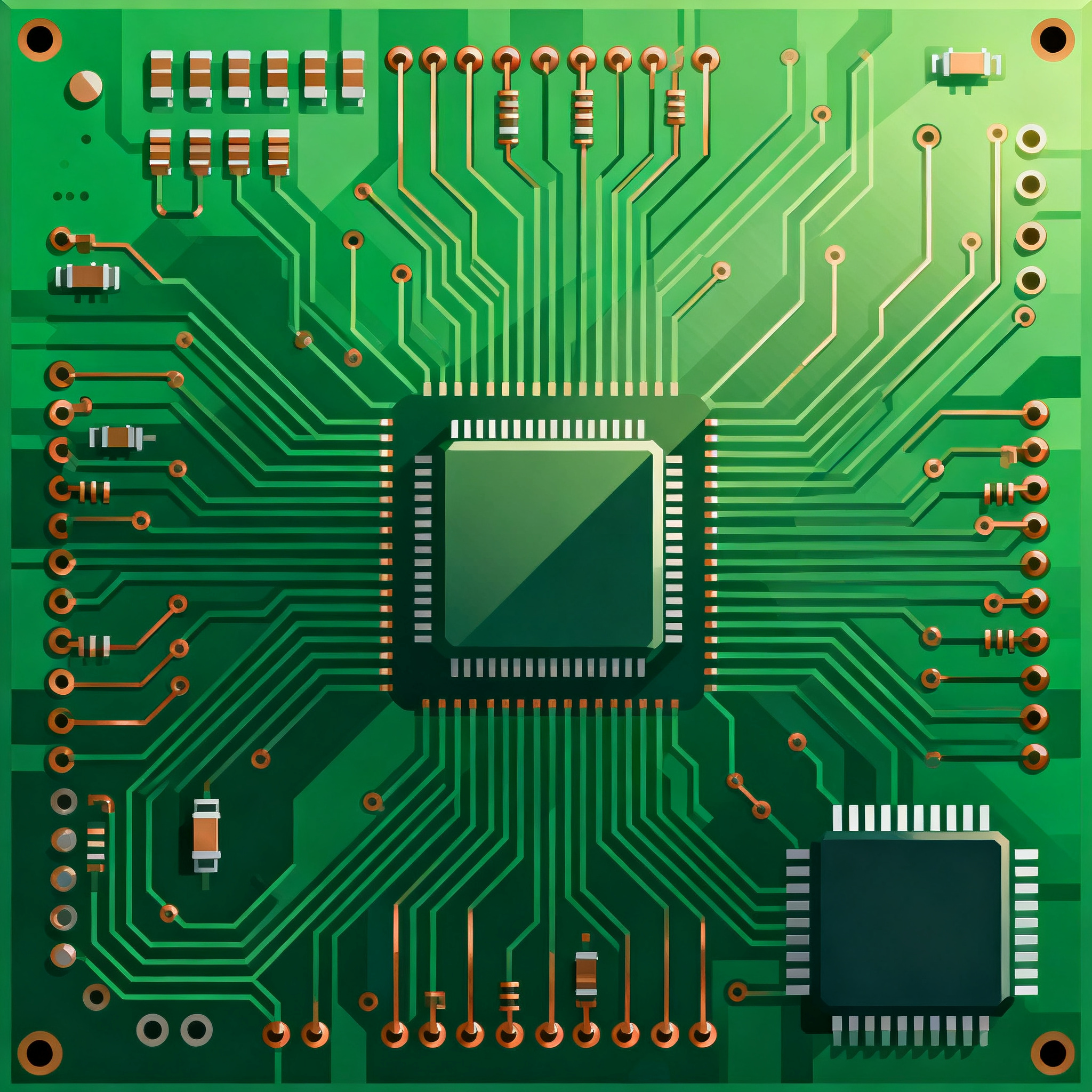
Mastering Advanced PCB Design Techniques for 4-Layer Circuits in 2026
Mastering Advanced PCB Design Techniques for 4-Layer Circuits in 2026 body { font-family: Arial, sans-serif; line-height: 1.6; margin: 20px; } h2 { color: #2c3e50; } table { border: 1px solid #ddd; wi...
Introduction
In the rapidly advancing field of electronics, mastering advanced PCB design techniques has become crucial, especially for creating efficient 4-layer circuits. As we look toward 2026, the demand for compact, high-performance electronic devices continues to grow, driving the need for more sophisticated PCB designs. Understanding circuit topology, component calculations, performance analysis, and design trade-offs is essential for engineers aiming to optimize their designs for both functionality and manufacturability.
Technical Overview
At the heart of advanced PCB design lies the intricate architecture of 4-layer circuits. These designs offer a balanced approach between complexity and performance, providing additional layers for routing and power distribution. The core concepts involve understanding the stack-up configuration, signal integrity, thermal management, and electromagnetic compatibility (EMC). By leveraging the principles of circuit topology, designers can efficiently allocate layers for specific functions, such as signal routing, ground planes, and power distribution, ensuring optimal performance.
Detailed Specifications
When designing a 4-layer PCB, several specifications need to be carefully considered to achieve the desired performance. These include component values, calculations, and the necessary formulas to ensure accurate signal transmission and minimal interference. Understanding these parameters is critical for optimizing the circuit's functionality and reliability.
| Parameter | Value | Formula/Calculation |
|---|---|---|
| Resistor (R1) | 1kΩ | Ohm's Law: V = IR |
| Capacitor (C1) | 10μF | Impedance: Z = 1/(jωC) |
| Inductor (L1) | 10μH | Reactance: X = jωL |
| Voltage (Vcc) | 5V | N/A |
| Current (I) | 10mA | Ohm's Law: I = V/R |
| Frequency (f) | 1MHz | f = 1/T |
| Trace Width | 0.2mm | Based on IPC-2221 |
| Dielectric Constant (εr) | 4.2 | N/A |
| Trace Impedance | 50Ω | Z0 = √(L/C) |
| Power (P) | 50mW | P = VI |
Key Takeaways from the Specifications
The design parameters outlined in Table 1 are fundamental for creating a robust 4-layer PCB. Each component value, such as the resistor or capacitor, plays a crucial role in determining the circuit's overall behavior. The calculations provided, like Ohm's Law and impedance formulas, help in predicting how the circuit will perform under different conditions. Understanding these parameters is vital for ensuring that the circuit operates within its intended specifications and avoids issues such as overheating or signal distortion.
| Performance Metric | Value | Comments |
|---|---|---|
| Gain | 20dB | Measured at 1kHz |
| Bandwidth | 10MHz | 3dB cutoff frequency |
| Noise | 5μV | Equivalent input noise |
| Power Consumption | 100mW | At full load |
| Signal Integrity | High | Minimal crosstalk |
| Thermal Performance | Good | Effective heat dissipation |
| EMC Compliance | Yes | Meets EMC standards |
| Latency | 5ns | Propagation delay |
Practical Implications
The performance metrics in Table 2 highlight the capabilities of a well-designed 4-layer PCB. Parameters such as gain and bandwidth are critical for applications requiring high-speed data transmission and signal amplification. Noise levels and power consumption are essential considerations for ensuring efficient and reliable operation. Understanding these metrics allows engineers to make informed decisions about the circuit's suitability for specific applications, ensuring that it meets the necessary performance criteria.
| Configuration | Pros | Cons |
|---|---|---|
| Standard 4-Layer | Cost-effective | Limited routing space |
| Signal-Ground-Power-Ground | Improved EMI performance | Higher cost |
| Power-Signal-Ground-Signal | Good power distribution | Complex layout |
| Mixed Signal | Flexibility | Increased design time |
| High-Speed Design | Optimal for fast signals | Requires precise impedance control |
| Low-Noise Design | Enhanced signal integrity | Potentially higher costs |
Application Guidelines
Table 3 presents various design configurations and their respective advantages and disadvantages. Choosing the right configuration involves balancing performance needs with cost and complexity. For example, a signal-ground-power-ground configuration offers better EMI performance but at a higher cost. Understanding these trade-offs helps engineers select the most suitable design for their specific application, whether it be for high-speed data transmission, low-noise environments, or cost-sensitive projects.
Design Considerations
Designing a 4-layer PCB involves several practical considerations that can significantly impact the final product's performance and manufacturability. Engineers must carefully select the stack-up configuration, considering factors such as signal integrity, thermal management, and power distribution. Proper trace routing is crucial to minimize crosstalk and signal loss, while via placement should be optimized to reduce parasitic inductance and capacitance. Additionally, attention must be given to the selection of dielectric materials and the implementation of ground planes to enhance EMC compliance. By adhering to industry standards, such as those outlined by IPC, designers can ensure their PCBs meet quality and reliability requirements.
Step-by-Step Implementation
- Define Requirements: Begin by clearly defining the circuit's requirements, including functionality, performance, and physical constraints.
- Select Stack-Up: Choose an appropriate 4-layer stack-up configuration based on the design requirements and performance goals.
- Component Placement: Strategically place components to optimize signal flow and minimize trace lengths.
- Route Traces: Carefully route traces, ensuring controlled impedance and minimizing potential sources of interference.
- Implement Ground and Power Planes: Use dedicated layers for ground and power distribution to enhance signal integrity and thermal performance.
- Perform Design Rule Checks (DRC): Conduct thorough design rule checks to ensure compliance with manufacturing capabilities and standards.
- Prototype and Test: Create prototypes and conduct rigorous testing to validate the design against the defined requirements.
- Iterate and Optimize: Based on testing results, make necessary design adjustments to optimize performance and manufacturability.
Common Issues & Solutions
- Signal Interference: Use proper grounding techniques and shielding to minimize interference.
- Thermal Management: Implement thermal vias and heat sinks to dissipate heat effectively.
- EMC Compliance: Design with EMC standards in mind, using appropriate filtering and shielding.
- Manufacturing Tolerances: Work closely with manufacturers to understand tolerances and adjust designs accordingly.
- Component Sourcing: Ensure reliable component sourcing to avoid delays and compatibility issues.
- Design Complexity: Simplify designs where possible to reduce complexity and potential errors.
Applications & Use Cases
4-layer PCB designs are utilized in various applications, from consumer electronics to industrial systems. They are ideal for high-density, high-speed applications such as smartphones, computers, and communication devices. Additionally, they are employed in automotive and aerospace industries where reliability and performance are critical. The versatility of 4-layer designs makes them suitable for a wide range of use cases, offering a balance between complexity and functionality.
Selection & Sourcing Guide
When selecting components and materials for your PCB design, consider using reputable sources to ensure quality and reliability. For a comprehensive list of electronic components, visit IC Online. This resource provides access to a wide range of components, helping you make informed decisions for your design needs.
FAQ
- What is the advantage of a 4-layer PCB over a 2-layer PCB? A 4-layer PCB offers improved signal integrity, better power distribution, and enhanced thermal management compared to a 2-layer PCB.
- How do I choose the right stack-up configuration? Consider the specific requirements of your application, such as signal speed, power needs, and space constraints, to select the appropriate stack-up.
- What are common design rule violations? Common violations include trace width and spacing issues, inadequate grounding, and improper via placement.
- How can I improve the thermal performance of my PCB? Use thermal vias, heat sinks, and proper component placement to enhance thermal performance.
- What is the role of a ground plane in a 4-layer PCB? A ground plane helps reduce electromagnetic interference and provides a stable reference for signal integrity.
- How do I ensure EMC compliance in my design? Implement filtering, shielding, and proper grounding techniques to meet EMC standards.
- What tools are recommended for PCB design? Popular tools include Altium Designer, Eagle, and KiCad, which offer comprehensive features for PCB design.
- How important is component placement? Proper component placement is crucial for optimizing signal flow and minimizing trace lengths, which impacts overall performance.
- What are the challenges of high-speed PCB design? Challenges include managing signal integrity, minimizing crosstalk, and ensuring controlled impedance.
- How can I reduce design complexity? Simplify the design by minimizing unnecessary components, using clear routing paths, and adhering to design rules.
Conclusion
Mastering advanced PCB design techniques for 4-layer circuits is essential for meeting the demands of modern electronic applications. By understanding circuit topology, component calculations, performance analysis, and design trade-offs, engineers can create efficient, high-performance designs that meet industry standards. As we approach 2026, staying informed about the latest techniques and technologies will be crucial for success in the ever-evolving field of electronics.