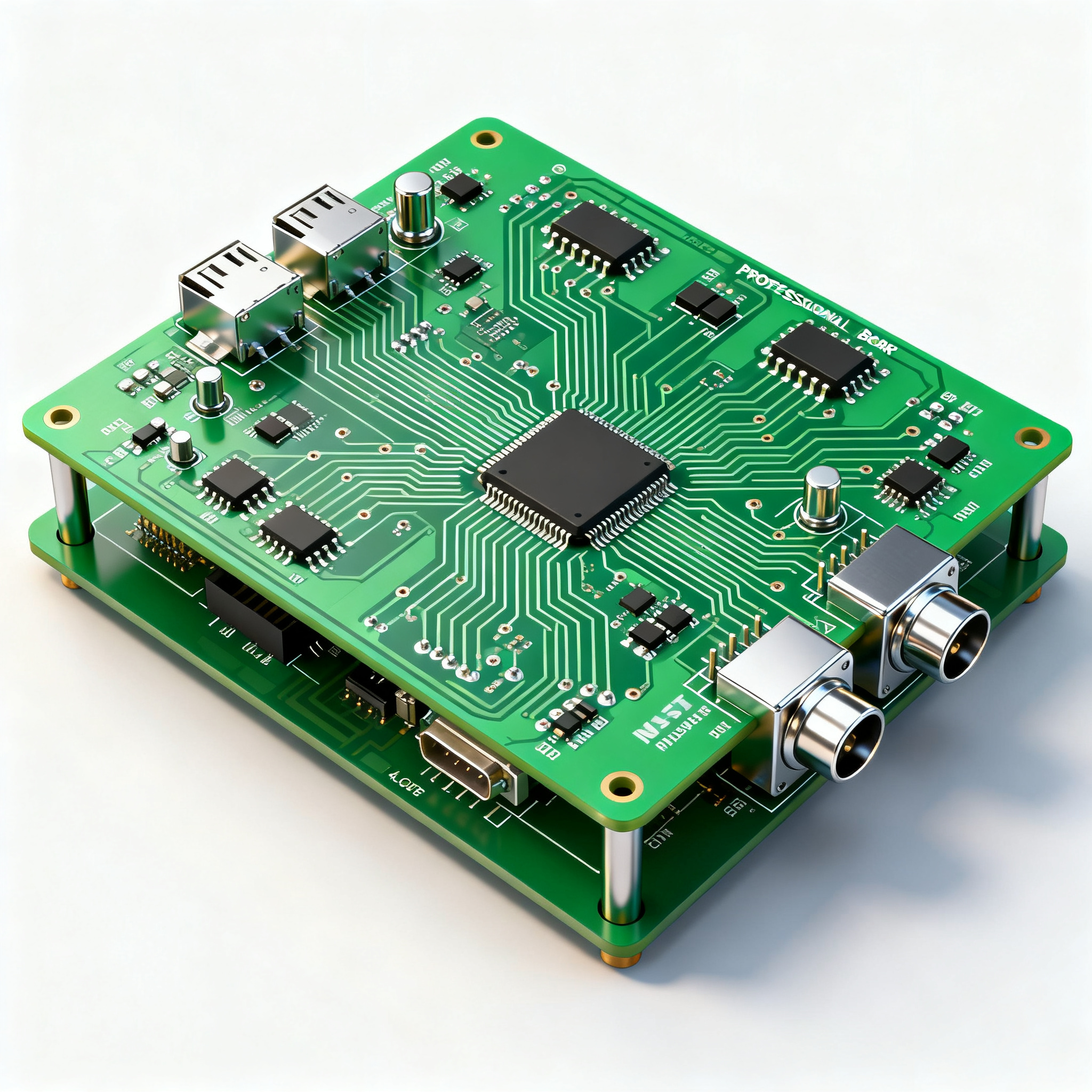
Mastering 4-Layer Satellite Communication PCB Manufacturing: Best Practices for 2026
Introduction In the rapidly evolving field of satellite communications, the design and manufacturing of 4-layer PCBs are crucial for ensuring reliable and efficient performance. By 2026, advancements ...
Introduction
In the rapidly evolving field of satellite communications, the design and manufacturing of 4-layer PCBs are crucial for ensuring reliable and efficient performance. By 2026, advancements in technology and manufacturing processes will have further transformed the landscape, making it imperative for engineers and designers to master the best practices in PCB manufacturing. This article delves into the specifics of component selection, datasheet analysis, and application circuits, providing a comprehensive guide for those involved in satellite communication projects.
Technical Overview
Satellite communication systems rely heavily on the efficient transfer and processing of signals, making the choice of PCB design and components critical. A 4-layer PCB provides multiple advantages, including improved signal integrity, reduced electromagnetic interference (EMI), and enhanced power distribution. The core architecture of these PCBs typically includes a ground plane, power plane, and two signal layers, offering a balance between complexity and performance.
The principles governing the design of these PCBs focus on minimizing signal loss and crosstalk, while ensuring thermal management and mechanical stability. Understanding these principles allows engineers to select the appropriate components and design configurations that meet the stringent requirements of satellite communication systems. The adherence to industry standards such as IPC-A-610 and IPC-2221 is essential for ensuring quality and reliability in manufacturing.
Detailed Specifications
When designing a 4-layer PCB for satellite communication, understanding the specifications of each component is crucial. These specifications include CPU speed, memory capacity, peripheral interfaces, power requirements, and packaging. Selecting components that meet the specific needs of your application can significantly impact the performance and reliability of the final product.
| Specification | Details | Notes |
|---|---|---|
| CPU Speed | 1.2 GHz | Optimal for data processing |
| Memory | 4 GB DDR4 | Sufficient for most applications |
| Peripherals | USB 3.0, SPI, I2C | Flexible interface options |
| Power | 5V, 3A | Standard power requirements |
| Package | BGA | Compact and efficient |
| Operating Temperature | -40°C to 85°C | Wide temperature range |
| Storage Temperature | -55°C to 125°C | For extreme conditions |
| Clock Frequency | 100 MHz | Stable operation |
| Core Voltage | 1.8V | Low power consumption |
| Package Size | 15x15 mm | Compact design |
| Lifecycle | 10 years | Long-term availability |
| Compliance | RoHS, REACH | Environmentally friendly |
Key Takeaways from the Specifications
The data presented in Table 1 highlights the importance of aligning component specifications with the intended application. For instance, a CPU speed of 1.2 GHz and 4 GB of DDR4 memory ensure ample processing power and memory capacity for most satellite communication tasks. The inclusion of various peripheral interfaces like USB 3.0, SPI, and I2C provides flexibility in connecting different modules and devices. Additionally, the components' compliance with standards like RoHS ensures environmental sustainability, which is increasingly important in modern electronics design.
| Electrical Parameter | Specification | Notes |
|---|---|---|
| Supply Voltage | 5V | Standard operating voltage |
| Operating Current | 500 mA | Under typical load |
| Standby Current | 50 mA | Low power mode |
| Input Voltage Range | 4.5V to 5.5V | Voltage tolerance |
| Output Voltage | 3.3V | Regulated output |
| Output Current | 1A | Maximum load capacity |
| Ripple Voltage | 50 mV | Minimal ripple |
| Switching Frequency | 500 kHz | Efficient power conversion |
| Efficiency | 85% | High efficiency |
| ESD Protection | ±2kV | Enhanced reliability |
| Thermal Resistance | 35°C/W | Good thermal performance |
| Noise Margin | 1V | Robust signal integrity |
Practical Implications
Table 2 provides insights into the electrical characteristics that are critical for the reliable operation of satellite communication systems. The supply voltage of 5V and an operating current of 500 mA are typical for many applications, but the ability to support a wide input voltage range enhances versatility. The high efficiency of 85% and low ripple voltage of 50 mV ensure that power is used effectively, minimizing waste and thermal buildup. ESD protection and thermal resistance are vital for enhancing the durability and reliability of the PCB in harsh environments.
| Use Case | Configuration | Benefits |
|---|---|---|
| Data Processing Module | High CPU, High Memory | Fast data throughput |
| Signal Amplification | High Output Current | Enhanced signal strength |
| Low-Power Operation | Low Standby Current | Extended battery life |
| Temperature Extremes | Wide Operating Temperature | Reliable in harsh conditions |
| Compact Designs | Small Package Size | Space-saving |
| Environmentally Sensitive Areas | RoHS Compliance | Reduced environmental impact |
| High-Speed Communication | High Clock Frequency | Improved data rates |
| Robust Designs | High ESD Protection | Increased reliability |
Application Guidelines
The application comparison in Table 3 underscores the diverse use cases for 4-layer PCBs in satellite communication systems. For instance, configurations focusing on high CPU and memory are ideal for data processing modules that require fast data throughput. In contrast, designs prioritizing low standby current are better suited for low-power operations, extending battery life in portable applications. Understanding these configurations allows engineers to tailor their designs to specific operational requirements, ensuring that each application achieves optimal performance and reliability.
Design Considerations
When designing a 4-layer PCB for satellite communications, several key considerations must be addressed to ensure optimal performance and reliability. First, signal integrity is paramount; using a dedicated ground plane and carefully routing signal traces can minimize crosstalk and electromagnetic interference. Power distribution is another critical aspect, with the use of a power plane to ensure stable voltage levels across the board.
Thermal management is essential in high-performance PCBs, as excessive heat can degrade component performance and lifespan. Employing thermal vias and heat sinks can help dissipate heat effectively. Additionally, the choice of materials and finishes, such as high-temperature laminates and ENIG (Electroless Nickel Immersion Gold) finishes, can enhance durability and longevity.
Component placement and routing should follow best practices, with high-speed signals kept short and direct, and sensitive components shielded from interference. Compliance with industry standards such as IPC-A-610 ensures quality and reliability in manufacturing, while adhering to design rules provided by manufacturers like PCBWay and Nova PCBA can optimize the fabrication process.
Step-by-Step Implementation
- Define Requirements: Start by clearly defining the requirements of your satellite communication system, including performance, environmental conditions, and compliance standards.
- Select Components: Choose components based on the specifications outlined in the datasheets, ensuring they meet the necessary performance and environmental criteria.
- Create Schematic: Develop a detailed schematic diagram using PCB design software, incorporating all selected components and their connections.
- Design PCB Layout: Lay out the PCB, focusing on minimizing trace lengths for high-speed signals and providing adequate power distribution and grounding.
- Simulate Design: Use simulation tools to verify signal integrity, power distribution, and thermal performance, making adjustments as necessary.
- Prototype and Test: Manufacture a prototype PCB and conduct thorough testing to validate performance and identify any issues.
- Iterate Design: Based on test results, make any necessary adjustments to the design, focusing on improving performance and reliability.
- Finalize Production: Once the design is validated, proceed with full-scale production, ensuring compliance with all relevant standards and quality controls.
Common Issues & Solutions
- Signal Integrity Issues: Use controlled impedance traces and differential pairs to minimize signal distortion.
- Thermal Management Challenges: Incorporate thermal vias and heat sinks to dissipate heat effectively.
- Power Distribution Problems: Ensure a robust power plane design and use decoupling capacitors near critical components.
- Electromagnetic Interference (EMI): Implement shielding and filter components to reduce EMI.
- Component Placement Errors: Follow best practices for component placement, keeping sensitive components away from high-speed signals.
- Manufacturing Defects: Conduct thorough quality inspections and adhere to IPC standards to minimize defects.
Applications & Use Cases
4-layer PCBs are widely used in various satellite communication applications due to their ability to handle complex signal processing and power distribution requirements. Common use cases include data processing modules that require high-speed computing, signal amplification circuits that enhance signal strength, and low-power devices that prioritize energy efficiency. These PCBs are also ideal for applications in extreme temperature environments, where reliable performance is crucial for mission success.
Selection & Sourcing Guide
When selecting components for a 4-layer PCB in satellite communication systems, it's important to consider factors such as performance specifications, environmental tolerance, and compliance with industry standards. IC Online offers a comprehensive database of components, allowing engineers to compare specifications and make informed decisions. Additionally, sourcing from reputable manufacturers ensures quality and reliability in the final product.
FAQ
- What are the benefits of a 4-layer PCB in satellite communications? 4-layer PCBs offer improved signal integrity, reduced EMI, and enhanced power distribution, making them ideal for complex communication systems.
- How do I ensure signal integrity in my PCB design? Use dedicated ground planes, controlled impedance traces, and differential pairs to minimize signal loss and crosstalk.
- What materials are recommended for high-temperature environments? High-temperature laminates and ENIG finishes are recommended for durability and performance in extreme conditions.
- How can I improve thermal management in my design? Incorporate thermal vias, heat sinks, and consider the use of thermal simulation tools to optimize heat dissipation.
- What standards should I adhere to for quality assurance? Adhering to IPC-A-610 and IPC-2221 standards ensures quality and reliability in PCB manufacturing.
- How do I choose the right components for my application? Analyze datasheets for specifications such as CPU speed, memory, power requirements, and environmental tolerance to ensure compatibility with your application.
- What are the common challenges in PCB manufacturing? Common challenges include signal integrity issues, thermal management, and EMI, which can be addressed through careful design and adherence to best practices.
- Can I use a 4-layer PCB for low-power applications? Yes, 4-layer PCBs can be optimized for low-power applications by focusing on efficient power distribution and low standby current.
- What tools are recommended for PCB design and simulation? PCB design software with simulation capabilities, such as Altium Designer or Cadence Allegro, is recommended for comprehensive design and analysis.
- How do I ensure compliance with environmental standards? Select components and materials that are RoHS and REACH compliant, and follow industry guidelines for environmentally friendly design.
Conclusion
Mastering the manufacturing of 4-layer PCBs for satellite communication systems is essential for achieving reliable and efficient performance. By understanding component specifications, adhering to best practices in design and manufacturing, and utilizing advanced simulation tools, engineers can create PCBs that meet the demanding requirements of modern communication systems. With the right approach, these PCBs can provide the backbone for successful satellite communication applications in 2026 and beyond.