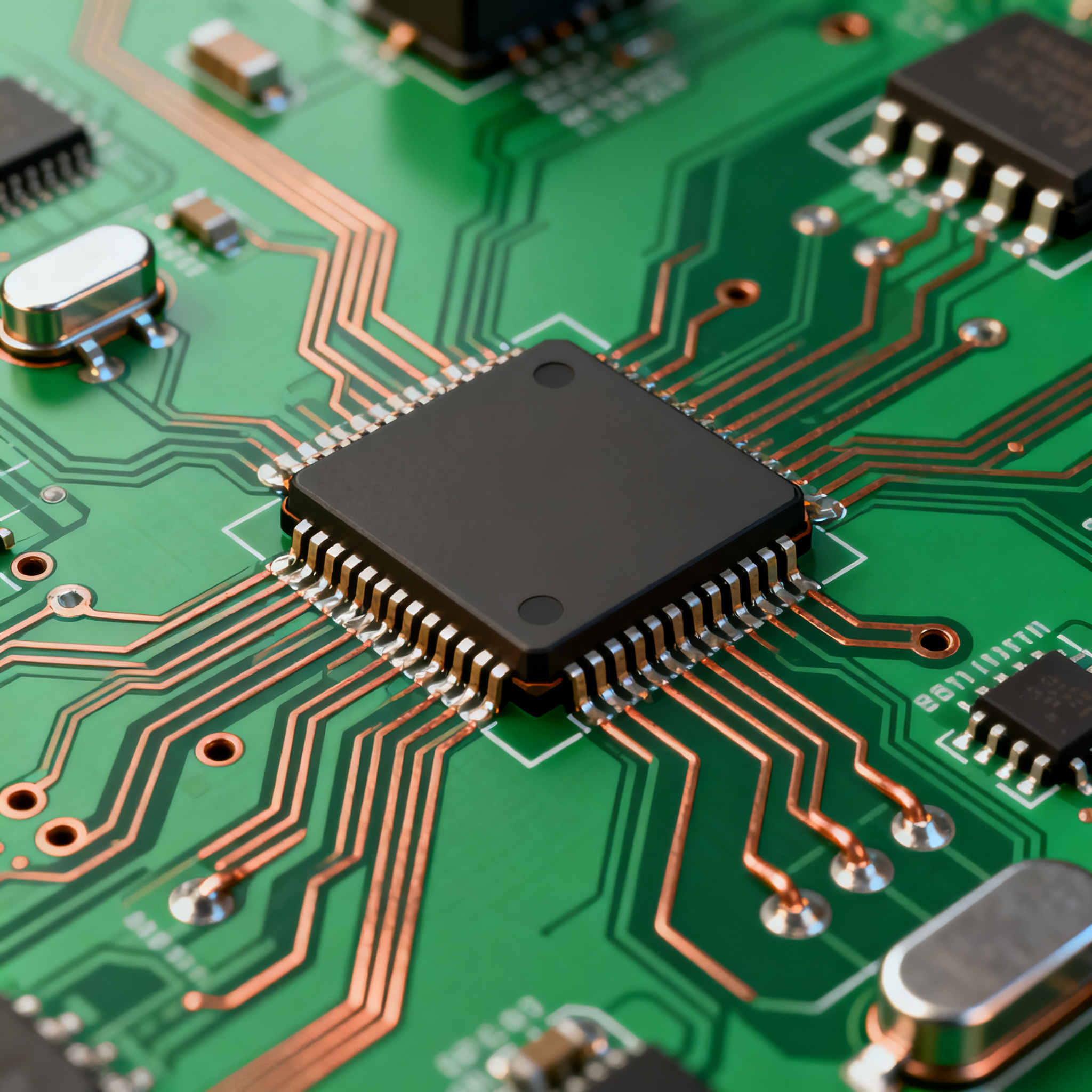
Key PCBA Quality Control Measures: A Guide for Consistent Performance Standards
Key PCBA Quality Control Measures: A Guide for Consistent Performance Standards Introduction In the rapidly evolving electronics industry, maintaining consistent performance standards for printed circ...
Introduction
In the rapidly evolving electronics industry, maintaining consistent performance standards for printed circuit board assemblies (PCBAs) is crucial. With the growing complexity of electronic devices, ensuring the reliability and quality of PCBAs is paramount to the success of any electronic product. Quality control measures are essential in the design, manufacturing, and testing phases to prevent defects and ensure optimal performance. This guide explores the key PCBA quality control measures, focusing on component specifications, datasheets, selection criteria, and application circuits.
Technical Overview
Printed circuit board assemblies (PCBAs) form the backbone of modern electronic devices, serving as the platform that interconnects various electronic components. The core architecture of a PCBA includes layers of copper traces and other materials, which provide electrical connectivity and mechanical support. The design and manufacturing processes are governed by stringent standards such as IPC-A-610 and IPC-2221, which ensure that PCBAs meet specific quality and performance criteria.
The principles of PCBA design involve selecting suitable materials, optimizing trace layouts, and ensuring thermal management to prevent overheating. Manufacturing processes such as soldering, component placement, and testing are critical in ensuring that the final assembly functions as intended. Quality control measures, including visual inspections, automated optical inspections (AOI), and functional testing, help identify and rectify defects early in the production cycle.
By understanding the core concepts and architecture of PCBAs, manufacturers can implement effective quality control measures to maintain consistent performance standards. This involves a detailed examination of component specifications, careful selection of components, and the use of appropriate application circuits to ensure that the assembly meets the desired performance criteria.
Detailed Specifications
Component specifications are critical in determining the performance and reliability of PCBAs. Key specifications include electrical parameters, mechanical properties, and environmental ratings that define the operational limits of components. Understanding these specifications is essential for selecting components that meet the requirements of specific applications and ensuring that the final assembly performs reliably under various conditions.
| Parameter | Specification | Description |
|---|---|---|
| Operating Voltage | 3.3V - 5V | Range of voltage for optimal performance |
| Current Rating | 500mA | Maximum current the component can handle |
| Power Dissipation | 250mW | Maximum power the component can dissipate safely |
| Temperature Range | -40°C to 85°C | Operational temperature limits |
| Tolerance | ±5% | Acceptable deviation from specified values |
| Package Type | SMD | Surface mount device |
| Frequency Range | 1MHz - 100MHz | Range of frequencies the component can operate at |
| Moisture Sensitivity Level | Level 3 | Component's sensitivity to moisture |
| Lead Finish | SnAgCu | Type of finish on component leads |
| RoHS Compliant | Yes | Compliance with Restriction of Hazardous Substances Directive |
Key Takeaways from the Specifications
The specifications outlined in Table 1 provide a comprehensive overview of the key parameters that influence the performance and reliability of components used in PCBAs. Understanding these parameters is essential for selecting components that meet the specific needs of an application. For instance, the operating voltage and current rating determine the power requirements, while the temperature range and tolerance affect the environmental suitability and precision of the component. By considering these specifications during the design phase, engineers can ensure that the components selected will function reliably within the intended application, reducing the risk of failure and enhancing the overall performance of the PCBA.
| Metric | Value | Significance |
|---|---|---|
| Thermal Resistance | 35°C/W | Indicator of heat dissipation efficiency |
| Signal Integrity | High | Quality of signal transmission |
| Dielectric Strength | 2000V | Maximum voltage the material can withstand |
| Inductance | 10nH | Measure of the component's ability to store energy |
| Capacitance | 100pF | Measure of the component's ability to store charge |
| ESR (Equivalent Series Resistance) | 0.1Ω | Resistance that appears in series with capacitance |
| Junction Temperature | 125°C | Maximum temperature of the semiconductor junction |
| EMI (Electromagnetic Interference) | Low | Amount of interference generated by the component |
| MTBF (Mean Time Between Failures) | 1,000,000 hours | Predicted time between failures |
Practical Implications
The performance metrics outlined in Table 2 provide critical insights into the electrical and thermal characteristics of components used in PCBAs. Understanding these metrics is essential for ensuring that the components will perform reliably under operational conditions. For example, thermal resistance and junction temperature are crucial for thermal management, as they indicate how well a component can dissipate heat. Signal integrity and EMI levels are important for maintaining the quality of signal transmission and minimizing interference. By considering these metrics during the design and testing phases, engineers can optimize the performance and reliability of the PCBA, leading to improved product quality and customer satisfaction.
| Application | Configuration | Description |
|---|---|---|
| Consumer Electronics | Single-Sided PCB | Used in devices like smartphones and tablets |
| Automotive | Double-Sided PCB | Used in vehicle control systems |
| Industrial Controls | Multi-Layer PCB | Used in automation and control systems |
| Telecommunications | High-Frequency PCB | Used in network and communication equipment |
| Medical Devices | Flexible PCB | Used in wearable and implantable devices |
| Aerospace | Rigid-Flex PCB | Used in aircraft and space applications |
| Computing | Embedded Systems PCB | Used in computers and data centers |
Application Guidelines
The application matrix in Table 3 provides a clear overview of the various use cases and configurations for PCBAs across different industries. Each application has specific requirements that influence the selection of PCB configuration. For instance, consumer electronics often utilize single-sided PCBs for compactness, while automotive applications require double-sided PCBs for more complex circuitry. Understanding these configurations helps in selecting the right type of PCBA to match the specific needs of an application, ensuring optimal performance and reliability.
Design Considerations
Designing a PCBA involves several critical considerations to ensure optimal performance and reliability. First, selecting the right components is paramount. Engineers must evaluate component specifications, such as voltage, current, and temperature ratings, to ensure compatibility with the application. Additionally, the choice of PCB material, such as FR-4 or polyimide, affects the thermal and electrical properties of the board.
Trace layout is another crucial aspect. Proper trace width and spacing are essential for handling the current load and minimizing electromagnetic interference (EMI). Utilizing design tools and adhering to industry standards like IPC-2221 can aid in optimizing trace layouts.
Thermal management is vital to prevent overheating. This involves using heat sinks, thermal vias, and appropriate component placement to dissipate heat effectively. Engineers must also consider the thermal resistance and junction temperature of components to ensure they operate within safe limits.
Signal integrity is critical for high-frequency applications. Techniques such as impedance matching, differential signaling, and proper grounding can help maintain signal quality and reduce noise.
Finally, manufacturability and testability should be considered. Designing for manufacturability (DFM) involves optimizing the design to simplify production processes and reduce costs. Testability ensures that the PCBA can be easily tested for defects, improving quality control.
Step-by-Step Implementation
- Define Requirements: Begin by defining the requirements and specifications for the PCBA. Consider factors such as application, environmental conditions, and performance criteria.
- Select Components: Choose components based on their specifications and compatibility with the application. Refer to datasheets and industry standards for guidance.
- Create Schematic: Use electronic design automation (EDA) tools to create a schematic diagram. Ensure that all components are correctly placed and interconnected.
- Design PCB Layout: Design the PCB layout, focusing on trace routing, component placement, and thermal management. Use design rules and guidelines to optimize the layout.
- Simulate and Validate: Simulate the circuit to validate its performance. Use simulation tools to identify potential issues and make necessary adjustments.
- Prototype and Test: Create a prototype of the PCBA and conduct thorough testing. Perform functional, environmental, and stress tests to ensure reliability.
- Iterate and Refine: Based on test results, iterate the design to address any issues. Refine the layout, component selection, and other aspects as needed.
- Prepare for Production: Finalize the design and prepare for production. Ensure that all documentation, including Gerber files and bill of materials (BOM), is complete and accurate.
Common Issues & Solutions
- Issue: Component Mismatch - Ensure that all components meet the specified ratings and are compatible with the application.
- Issue: Poor Signal Integrity - Use proper grounding and shielding techniques to minimize noise and interference.
- Issue: Thermal Overload - Implement effective thermal management strategies, including the use of heat sinks and thermal vias.
- Issue: Manufacturing Defects - Design for manufacturability and conduct thorough testing to identify and address defects early.
- Issue: EMI Interference - Apply EMI mitigation techniques, such as differential signaling and impedance matching, to reduce interference.
- Issue: Solder Joint Failures - Ensure proper soldering techniques and materials to enhance joint reliability.
Applications & Use Cases
PCBA applications span a wide range of industries, each with unique requirements and challenges. In consumer electronics, PCBAs are used in smartphones, tablets, and wearable devices, where compactness and reliability are critical. Automotive applications require robust PCBAs for vehicle control systems, demanding high reliability and resistance to harsh environmental conditions.
In the industrial sector, PCBAs are used in automation and control systems, where precision and durability are essential. Medical devices rely on PCBAs for critical functions in wearable and implantable devices, necessitating high reliability and compliance with regulatory standards.
Telecommunications and aerospace applications require PCBAs with high-frequency capabilities and resistance to extreme conditions, respectively. Understanding these use cases helps in selecting the appropriate PCBA configuration and components to meet the specific needs of each application.
Selection & Sourcing Guide
Selecting and sourcing components for PCBAs requires careful consideration of specifications, performance criteria, and supplier reliability. Engineers should refer to datasheets and industry standards to ensure compatibility and performance. It's essential to work with reputable suppliers who provide quality components and reliable delivery.
Online resources like IC Online offer a wide range of components, making it easier to compare specifications and prices. By leveraging these resources, engineers can streamline the selection and sourcing process, ensuring that the final assembly meets the desired performance and reliability standards.
FAQ
- What is PCBA? - PCBA stands for Printed Circuit Board Assembly, which involves mounting electronic components onto a PCB.
- Why is quality control important in PCBA? - Quality control ensures that the PCBA meets performance standards and is free from defects, enhancing reliability and customer satisfaction.
- What are IPC standards? - IPC standards, such as IPC-A-610 and IPC-2221, provide guidelines for PCB design, assembly, and quality inspection.
- How do I select components for PCBA? - Consider specifications like voltage, current, and temperature ratings, and refer to datasheets for detailed information.
- What is thermal management in PCBA? - Thermal management involves strategies to dissipate heat and prevent overheating, ensuring component reliability.
- What are common PCBA defects? - Common defects include solder joint failures, poor signal integrity, and thermal overload, which can be addressed through design and testing.
- How do I ensure signal integrity in PCBA? - Use proper grounding, shielding, and impedance matching techniques to maintain signal quality and reduce noise.
- What is the role of simulation in PCBA design? - Simulation helps validate circuit performance and identify potential issues before prototyping and production.
- How do I source components for PCBA? - Use online resources and work with reputable suppliers to ensure quality and reliable delivery.
- What are the benefits of using multi-layer PCBs? - Multi-layer PCBs offer increased complexity and functionality, allowing for more compact and efficient designs.
Conclusion
Maintaining consistent performance standards in PCBA manufacturing is essential for the success of electronic products. By understanding key specifications, performance metrics, and application configurations, engineers can design and produce reliable and high-quality PCBAs. Implementing effective quality control measures, from component selection to testing, ensures that the final assembly meets the desired performance criteria, leading to improved product quality and customer satisfaction.