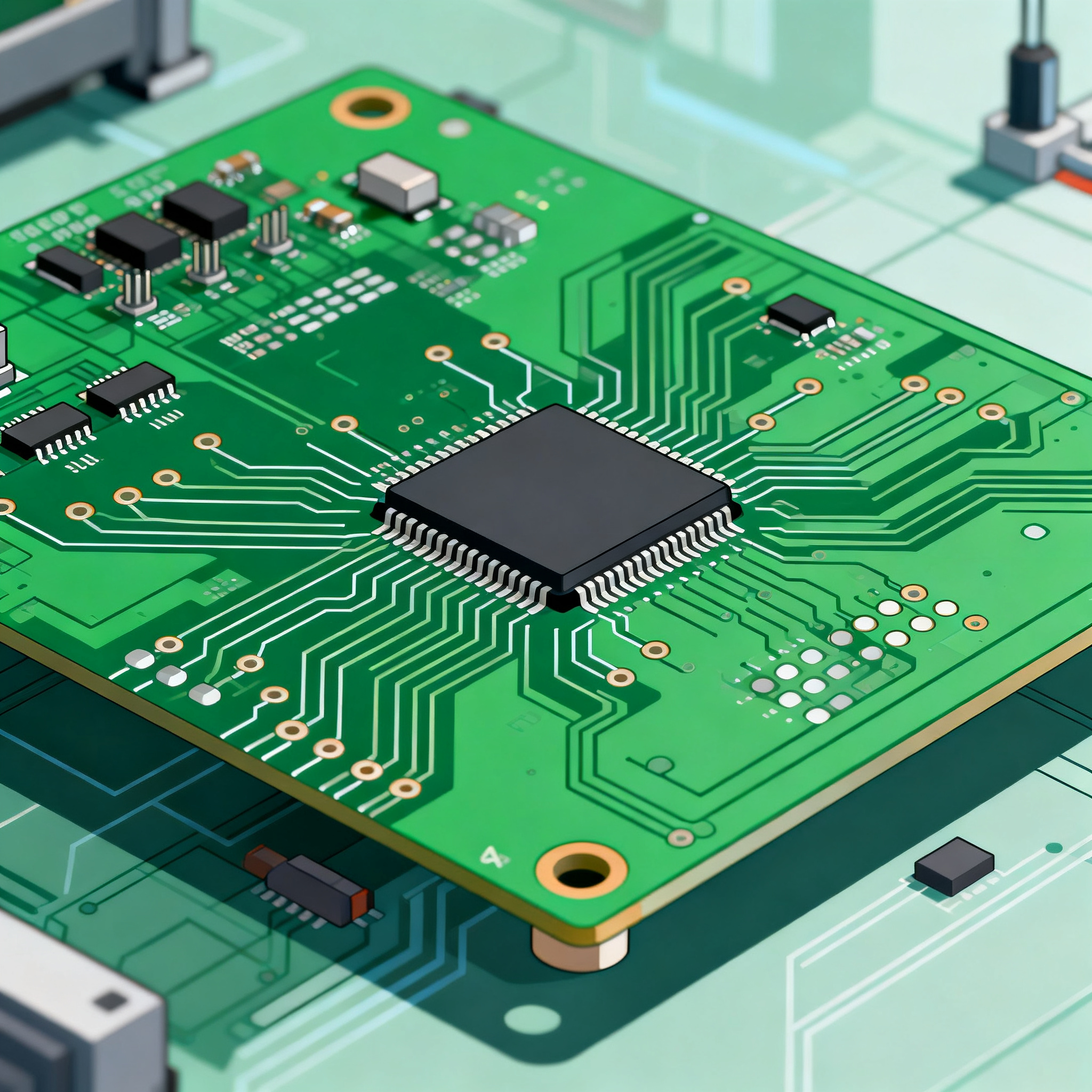
Industrial Automation PCBA Services: Step-by-Step Design Tips for 4-Layer Boards
Introduction In the rapidly evolving landscape of industrial automation, the design and implementation of Printed Circuit Board Assemblies (PCBAs) play a critical role in ensuring efficient and reliab...
Introduction
In the rapidly evolving landscape of industrial automation, the design and implementation of Printed Circuit Board Assemblies (PCBAs) play a critical role in ensuring efficient and reliable operations. As industries move towards smarter and more interconnected systems, the demand for high-performance, multi-layer PCBAs has surged. This article focuses on the step-by-step design tips for 4-layer boards, particularly in the context of industrial automation. Understanding the core specifications, electrical characteristics, and application guidelines is crucial for engineers and designers to make informed decisions. This guide will provide insights into the selection and application of integrated circuits (ICs) in these advanced systems.
Technical Overview
At the heart of industrial automation systems are PCBAs that integrate multiple components to perform complex tasks. These boards are designed to handle various functions such as processing, control, communication, and power management. A 4-layer board design offers several advantages, including improved signal integrity, reduced electromagnetic interference, and enhanced power distribution. The architecture typically includes a signal layer, a ground layer, a power layer, and another signal layer, allowing for efficient routing and reduced crosstalk.
Key principles in designing these boards involve adhering to industry standards such as IPC-2221 for design and IPC-A-610 for assembly, which ensure quality and reliability. The selection of components, such as microcontrollers, sensors, and communication modules, is critical. These components must be compatible with the board's architecture and meet the application's specific requirements. Understanding the datasheets and specifications of these components is essential for optimizing performance and ensuring system reliability.
Detailed Specifications
When designing a 4-layer board for industrial automation, several specifications are crucial. These include CPU speed, memory capacity, available peripherals, power requirements, and package type. Selecting the right components based on these specifications ensures that the board can handle the intended tasks efficiently and reliably. Below is a detailed table outlining the core specifications to consider.
| Specification | Description | Example Value |
|---|---|---|
| CPU Speed | Processing speed of the microcontroller | 1.2 GHz |
| Memory | On-board RAM and Flash storage | 512 MB RAM, 4 GB Flash |
| Peripherals | Available I/O ports and interfaces | UART, SPI, I2C |
| Power Supply | Operating voltage range | 3.3V to 5V |
| Package Type | Physical form factor of the IC | LQFP, BGA |
| Temperature Range | Operational temperature range | -40°C to 85°C |
| Connectivity | Wireless and wired communication options | Ethernet, Wi-Fi |
| GPIO Pins | General-purpose input/output pins | 32 |
| ADC/DAC Channels | Analog-to-digital and digital-to-analog converters | 8 ADC, 2 DAC |
| Clock Speed | Maximum clock frequency | 200 MHz |
Key Takeaways from the Specifications
The specifications outlined in Table 1 provide a comprehensive overview of the critical parameters that influence the performance and functionality of a 4-layer board in industrial automation applications. For instance, the CPU speed and memory capacity directly impact the processing power and data handling capabilities of the board. The availability of various peripherals such as UART, SPI, and I2C enables seamless integration with other components and systems. Additionally, understanding the power supply requirements and package type ensures compatibility with the overall design and operational environment. By carefully evaluating these specifications, designers can select components that meet the specific needs of their applications, ensuring optimal performance and reliability.
| Characteristic | Description | Example Value |
|---|---|---|
| Operating Voltage | Typical voltage range for operation | 3.3V |
| Maximum Current | Maximum current draw | 500 mA |
| Input Leakage Current | Current leakage at input pins | 1 µA |
| Output High Voltage | Voltage level for logic high | 2.8V |
| Output Low Voltage | Voltage level for logic low | 0.4V |
| Propagation Delay | Delay time for signal propagation | 5 ns |
| Power Dissipation | Total power dissipation | 300 mW |
| Input Capacitance | Capacitance at input pins | 10 pF |
| Output Current | Current capability of output pins | 20 mA |
| ESD Protection | Electrostatic discharge protection level | 2 kV |
| Clock Jitter | Variation in clock signal timing | 50 ps |
Practical Implications
The electrical characteristics outlined in Table 2 are essential for ensuring the stability and performance of the 4-layer board in industrial applications. Operating voltage and maximum current specifications dictate the power requirements, influencing the choice of power supply and battery life. Parameters like propagation delay and clock jitter are crucial for high-speed applications where timing precision is critical. ESD protection is vital for safeguarding the board against electrostatic discharge, which can cause significant damage. Understanding these characteristics helps in designing robust and reliable systems that can withstand harsh industrial environments and maintain consistent performance.
| Application | Configuration | Example Use Case |
|---|---|---|
| Process Control | High CPU speed, multiple I/O | Automated manufacturing line |
| Data Acquisition | High ADC/DAC channels | Environmental monitoring |
| Communication Gateway | High connectivity, low power | IoT device integration |
| Motor Control | High current output, fast timing | Robotic arm control |
| Safety Systems | High reliability, ESD protection | Fire alarm systems |
| Power Management | Low power dissipation | Battery-operated devices |
| Embedded Systems | Compact package, high memory | Smart home appliances |
Application Guidelines
The application comparison in Table 3 highlights different use cases and configurations for 4-layer boards in industrial automation. For example, process control applications benefit from high CPU speed and multiple I/O options, making them suitable for automated manufacturing lines. Data acquisition systems require high ADC/DAC channels to accurately monitor environmental parameters. Communication gateways focus on connectivity and low power consumption, ideal for IoT integrations. Understanding these configurations helps designers choose the right board setup for specific applications, ensuring that the system meets performance, reliability, and efficiency requirements.
Design Considerations
Designing a 4-layer board for industrial automation involves several critical considerations to ensure optimal performance and reliability. Firstly, adhering to industry standards such as IPC-2221 and IPC-A-610 is crucial for maintaining quality and consistency. These standards provide guidelines for design, assembly, and inspection, ensuring that the board meets industry expectations.
Signal integrity is another critical consideration. Proper layer stack-up and routing techniques help minimize electromagnetic interference and crosstalk, which can degrade signal quality. Using dedicated ground and power planes improves power distribution and reduces noise. It is also essential to consider thermal management, as industrial applications often operate in harsh environments. Implementing adequate heat dissipation measures, such as thermal vias and heat sinks, helps maintain optimal operating temperatures.
Component selection is equally important. Designers must choose components that meet the application's specific requirements, considering factors such as power consumption, package type, and environmental conditions. Additionally, designing for manufacturability involves optimizing the layout for efficient assembly and testing, reducing production costs and time. By carefully considering these factors, designers can create robust and reliable 4-layer boards that meet the demands of industrial automation applications.
Step-by-Step Implementation
Implementing a 4-layer board design for industrial automation involves several key steps:
- Define Requirements: Begin by clearly defining the application's requirements, including performance, environmental conditions, and regulatory standards.
- Select Components: Choose components that meet the specifications outlined in the requirements. Consider factors such as CPU speed, memory, and I/O options.
- Design Schematic: Create a detailed schematic diagram that outlines the connections between components. Ensure that the design adheres to industry standards.
- Layer Stack-Up: Determine the optimal layer stack-up for the board, considering factors such as signal integrity and power distribution.
- PCB Layout: Design the PCB layout, focusing on efficient routing and minimizing trace lengths. Use dedicated planes for power and ground.
- Thermal Management: Implement thermal management solutions, such as thermal vias and heat sinks, to ensure proper heat dissipation.
- Manufacturing and Assembly: Work with a reliable PCB manufacturer to produce the board. Ensure that the assembly process follows IPC standards for quality and reliability.
- Testing and Validation: Conduct thorough testing to validate the board's performance and ensure it meets the application's requirements.
Common Issues & Solutions
Designing and implementing 4-layer boards for industrial automation can present several challenges. Here are some common issues and solutions:
- Signal Integrity Issues: Use proper layer stack-up and routing techniques to minimize crosstalk and electromagnetic interference.
- Thermal Management: Implement thermal vias and heat sinks to manage heat dissipation effectively in high-temperature environments.
- Power Distribution: Use dedicated power planes and decoupling capacitors to ensure stable power supply to all components.
- Component Placement: Optimize component placement to reduce trace lengths and improve signal integrity and manufacturability.
- Manufacturing Defects: Work with reputable PCB manufacturers and adhere to IPC standards to minimize defects and ensure quality.
- Environmental Factors: Choose components with appropriate temperature and humidity ratings to withstand harsh industrial conditions.
Applications & Use Cases
4-layer boards are widely used in various industrial automation applications due to their enhanced performance and reliability. In automated manufacturing lines, these boards control and monitor complex processes, ensuring precision and efficiency. In environmental monitoring systems, they collect and process data from multiple sensors, providing valuable insights into environmental conditions. Communication gateways leverage their connectivity features to integrate IoT devices, enabling seamless data exchange and remote monitoring. Additionally, in robotic systems, these boards control motors and actuators, facilitating precise movements and operations. By understanding these applications, designers can tailor their board designs to meet specific industry needs.
Selection & Sourcing Guide
When selecting components for 4-layer boards in industrial automation, it is essential to consider factors such as performance, compatibility, and environmental suitability. Utilize resources like IC Online to explore a wide range of components, including microcontrollers, sensors, and communication modules. Ensure that the selected components meet the application's specifications and adhere to industry standards. Collaborate with reputable suppliers to source high-quality components, ensuring reliability and performance in your designs.
FAQ
- What are the advantages of a 4-layer board in industrial automation? 4-layer boards offer improved signal integrity, reduced electromagnetic interference, and enhanced power distribution, making them ideal for complex industrial applications.
- How do I choose the right components for my board design? Consider factors such as CPU speed, memory, I/O options, and environmental conditions when selecting components. Use datasheets and specifications to guide your choices.
- What standards should I follow for PCB design and assembly? Adhere to IPC-2221 for design and IPC-A-610 for assembly to ensure quality and reliability.
- How can I ensure proper thermal management in my board design? Implement thermal vias, heat sinks, and proper layer stack-up to manage heat dissipation effectively.
- What are common issues in 4-layer board design, and how can I address them? Common issues include signal integrity, thermal management, and power distribution. Use proper design techniques and adhere to industry standards to address these challenges.
- How do I test and validate my board design? Conduct thorough testing to validate performance, including functional testing, signal integrity testing, and environmental testing.
- What are the key considerations for manufacturability? Optimize the layout for efficient assembly and testing, and work with reputable manufacturers to ensure quality production.
- Can 4-layer boards be used in harsh industrial environments? Yes, by selecting components with appropriate temperature and humidity ratings and implementing robust design techniques, 4-layer boards can perform reliably in harsh environments.
- How do I ensure my board design meets regulatory standards? Research and adhere to relevant industry standards and regulations, and conduct compliance testing as necessary.
- What resources are available for sourcing components? Utilize online resources such as IC Online to explore and source high-quality components for your designs.
Conclusion
Designing 4-layer boards for industrial automation requires a comprehensive understanding of specifications, electrical characteristics, and application guidelines. By adhering to industry standards and carefully selecting components, designers can create robust and reliable systems that meet the demands of modern industrial applications. With the insights and guidelines provided in this article, engineers and designers can optimize their board designs, ensuring efficient and reliable operations in complex industrial environments.