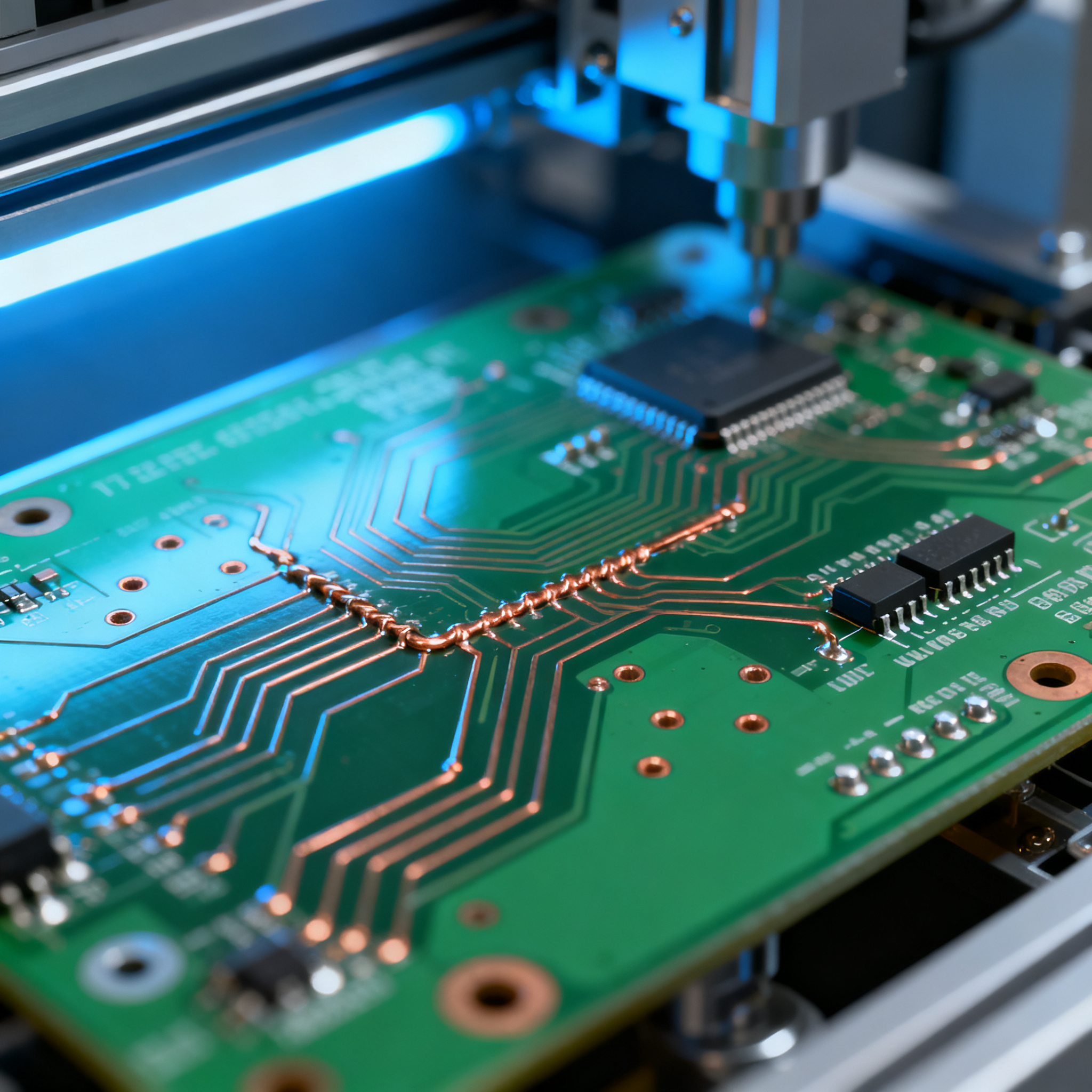
Identifying and Mitigating PCBA Manufacturing Defects: Best Practices for 2026
Introduction In the rapidly evolving field of electronics, Printed Circuit Board Assembly (PCBA) remains a cornerstone of product development and manufacturing. With the increasing complexity of integ...
Introduction
In the rapidly evolving field of electronics, Printed Circuit Board Assembly (PCBA) remains a cornerstone of product development and manufacturing. With the increasing complexity of integrated circuits (ICs) and the demand for more robust and reliable electronics, understanding and mitigating PCBA manufacturing defects is critical. This article provides an in-depth analysis of best practices for identifying and mitigating manufacturing defects in PCBA, focusing on component specifications, selection criteria, and application circuits. As we look towards 2026, the integration of advanced technologies and adherence to rigorous standards will be essential for maintaining quality and efficiency in PCBA manufacturing.
Technical Overview
PCBA involves the mounting of electronic components onto a printed circuit board (PCB) to create a functional electronic assembly. The process requires precision and adherence to strict standards such as IPC-A-610 and IPC-2221, which define the acceptability of electronic assemblies and the design of PCBs, respectively. The architecture of a PCBA includes various layers, each serving a specific purpose, from signal transmission to power distribution. Core concepts in PCBA include the selection of appropriate components, understanding their specifications, and ensuring compatibility with the overall design. The principles of PCBA design also involve considerations for thermal management, signal integrity, and electromagnetic compatibility, all of which are crucial for the reliable performance of the final product.
Detailed Specifications
When designing a PCBA, understanding component specifications is vital. These specifications provide the necessary details to ensure that each component will function correctly within the circuit. Important specifications include CPU speed, memory capacity, power requirements, and package type, among others. These factors influence the performance, cost, and reliability of the final product. The following table outlines the core specifications of a typical integrated circuit chip used in PCBA.
| Specification | Details | Notes |
|---|---|---|
| CPU Speed | 1.2 GHz | Optimized for low-power applications |
| Memory | 512 MB DDR3 | Expandable up to 2 GB |
| Peripherals | UART, SPI, I2C | Supports multiple interfaces |
| Power | 3.3V, 1.5A | Low power consumption |
| Package | LQFP-64 | 64-pin package |
| Temperature Range | -40°C to 85°C | Industrial grade |
| Dimensions | 10mm x 10mm | Compact design |
| Operating Frequency | 400 MHz | Supports high-speed operations |
| Voltage Range | 1.8V to 3.6V | Wide voltage range |
| Analog Inputs | 8 channels | High precision |
| Digital Outputs | 16 lines | Configurable GPIOs |
Key Takeaways from the Specifications
The core specifications outlined in the table above highlight the critical parameters to consider when selecting an IC for your PCBA. The CPU speed and memory capacity determine the processing power and data handling capabilities of the assembly. Power requirements and package type are crucial for ensuring compatibility with the overall design, especially in power-sensitive applications. Additionally, the temperature range and operating frequency are vital for determining the environmental suitability and performance limits of the IC. Understanding these specifications helps designers make informed decisions, ensuring that the components meet the functional and operational requirements of the end application.
| Characteristic | Min | Max |
|---|---|---|
| Supply Voltage (Vcc) | 3.0V | 3.6V |
| Input Current | 0 mA | 10 mA |
| Output Current | 0 mA | 20 mA |
| Operating Temperature | -40°C | 85°C |
| Storage Temperature | -55°C | 125°C |
| Propagation Delay | 5 ns | 20 ns |
| Input Voltage High | 2.0V | Vcc |
| Input Voltage Low | 0V | 0.8V |
| Output Voltage High | 2.4V | Vcc |
| Output Voltage Low | 0V | 0.4V |
| Clock Frequency | 0 MHz | 100 MHz |
| Capacitance | 5 pF | 10 pF |
Practical Implications
The electrical characteristics of an IC, as detailed in the table, define its operational limits and performance capabilities. The supply voltage and current specifications are crucial for ensuring that the IC operates within its safe range, preventing damage due to overvoltage or excessive current. The propagation delay impacts the speed of signal processing, which is critical in high-speed applications. Understanding input and output voltage levels ensures compatibility with other components in the circuit. These characteristics must be carefully considered during the design phase to ensure reliable and efficient operation of the PCBA.
| Application | Configuration | Benefits |
|---|---|---|
| Consumer Electronics | Standard Configuration | Cost-effective, high volume |
| Industrial Automation | Robust Configuration | Durability, extended temperature range |
| Automotive Systems | Enhanced Configuration | High reliability, safety features |
| Medical Devices | Precision Configuration | High accuracy, low power |
| Telecommunications | High-Speed Configuration | Fast data processing, low latency |
| IoT Devices | Low-Power Configuration | Energy efficiency, remote operation |
| Aerospace | Specialized Configuration | Radiation resistance, reliability |
| Wearable Technology | Compact Configuration | Small size, lightweight |
Application Guidelines
The application comparison table provides insights into how different IC configurations cater to various industry needs. In consumer electronics, a standard configuration offers a balance between cost and performance. Industrial automation demands robust configurations for durability and extended temperature ranges. Automotive systems benefit from enhanced configurations that prioritize reliability and safety. Each application has unique requirements, and selecting the right configuration ensures optimal performance and longevity of the PCBA. Designers must evaluate the specific needs of their application to choose the most suitable IC configuration.
Design Considerations
Designing a PCBA requires careful consideration of multiple factors to ensure functionality, reliability, and manufacturability. Key considerations include:
- Component Selection: Choose components that meet or exceed the required specifications, considering factors like cost, availability, and performance.
- Thermal Management: Implement effective heat dissipation techniques to prevent overheating and ensure stable operation.
- Signal Integrity: Design the layout to minimize interference and signal loss, ensuring accurate data transmission.
- Power Distribution: Ensure adequate power supply to all components, with appropriate decoupling capacitors to stabilize voltage levels.
- Testing and Validation: Incorporate testing procedures to validate the design and identify any potential issues early in the development process.
- Compliance with Standards: Adhere to relevant industry standards, such as IPC guidelines, to ensure quality and compatibility.
By addressing these considerations, designers can create PCBAs that meet the desired performance and reliability standards.
Step-by-Step Implementation
- Define Requirements: Begin by outlining the specific requirements of your PCBA, including performance, environmental conditions, and regulatory standards.
- Select Components: Choose components based on the defined requirements, considering factors like availability, cost, and compatibility.
- Design Schematic: Create a detailed schematic diagram that outlines the electrical connections and component placements.
- Layout Design: Design the PCB layout, ensuring optimal placement of components to minimize signal interference and maximize thermal efficiency.
- Prototype Fabrication: Fabricate a prototype of the design to test its functionality and identify any design flaws.
- Testing and Debugging: Conduct thorough testing to validate the prototype, using tools like oscilloscopes and multimeters to measure performance.
- Iterate Design: Make necessary adjustments to the design based on test results, optimizing for performance and reliability.
- Final Production: Once the design is validated, proceed with full-scale production, ensuring quality control measures are in place.
Following these steps ensures a structured approach to PCBA design and manufacturing, reducing the risk of defects and improving overall product quality.
Common Issues & Solutions
Despite best efforts, manufacturing defects can occur. Here are some common issues and solutions:
- Solder Bridges: Excess solder forming a bridge between adjacent pads can cause shorts. Solution: Optimize solder paste application and reflow profile.
- Open Circuits: Broken connections may result from poor soldering. Solution: Inspect solder joints and ensure proper reflow settings.
- Component Misalignment: Misplaced components can affect functionality. Solution: Use automated optical inspection (AOI) to detect and correct misalignments.
- Thermal Issues: Overheating can damage components. Solution: Implement adequate cooling solutions and verify thermal profiles.
- Electromagnetic Interference (EMI): EMI can disrupt circuit operation. Solution: Design with proper shielding and grounding techniques.
- Component Variability: Variations in component specifications can affect performance. Solution: Source components from reputable suppliers and verify specifications.
Identifying and addressing these issues early in the design and manufacturing process helps ensure a reliable and high-quality PCBA.
Applications & Use Cases
PCBA is utilized across a wide range of industries, each with unique requirements:
- Consumer Electronics: Used in smartphones, tablets, and home appliances for efficient performance and compact design.
- Industrial Automation: Essential for controlling machinery and processes, requiring robust and reliable assemblies.
- Automotive Systems: Critical for infotainment, navigation, and safety systems, demanding high reliability and safety standards.
- Medical Devices: Used in diagnostic and monitoring equipment, requiring precision and compliance with medical standards.
- Telecommunications: Vital for network infrastructure and communication devices, necessitating high-speed and low-latency performance.
These applications highlight the versatility and importance of PCBA in modern technology.
Selection & Sourcing Guide
Selecting and sourcing the right components is crucial for successful PCBA design. Consider the following:
- Compatibility: Ensure components are compatible with the overall design and meet the required specifications.
- Reliability: Choose components from reputable manufacturers with a track record of reliability and quality.
- Cost: Balance cost with performance, ensuring the components fit within the project budget.
- Availability: Verify component availability to avoid delays in production.
For more information on sourcing components, visit IC Online.
FAQ
- What is PCBA? PCBA stands for Printed Circuit Board Assembly, the process of mounting electronic components onto a PCB to create a functional electronic assembly.
- Why are component specifications important? Specifications ensure that components will function correctly within the circuit, affecting performance, cost, and reliability.
- What are common PCBA defects? Common defects include solder bridges, open circuits, component misalignment, and thermal issues.
- How can I prevent thermal issues in PCBA? Implement effective heat dissipation techniques and verify thermal profiles during the design phase.
- What standards should I follow for PCBA? Follow IPC standards such as IPC-A-610 for acceptability and IPC-2221 for design guidelines.
- How do I choose the right IC for my application? Evaluate the specific needs of your application and select an IC configuration that meets those requirements.
- What are the benefits of automated optical inspection (AOI)? AOI helps detect and correct misalignments and other defects, improving overall quality.
- How can I ensure reliable component sourcing? Source components from reputable suppliers and verify specifications to ensure reliability.
- What is the importance of signal integrity in PCBA? Signal integrity ensures accurate data transmission, minimizing interference and signal loss.
- How can I optimize my PCBA design for manufacturability? Consider factors like component placement, thermal management, and testing procedures to ensure manufacturability.
Conclusion
Identifying and mitigating PCBA manufacturing defects is essential for producing reliable and high-quality electronic assemblies. By understanding component specifications, adhering to design standards, and implementing best practices, manufacturers can optimize their PCBA processes for 2026 and beyond. The integration of advanced technologies and a focus on quality will ensure that PCBA continues to play a vital role in the electronics industry.