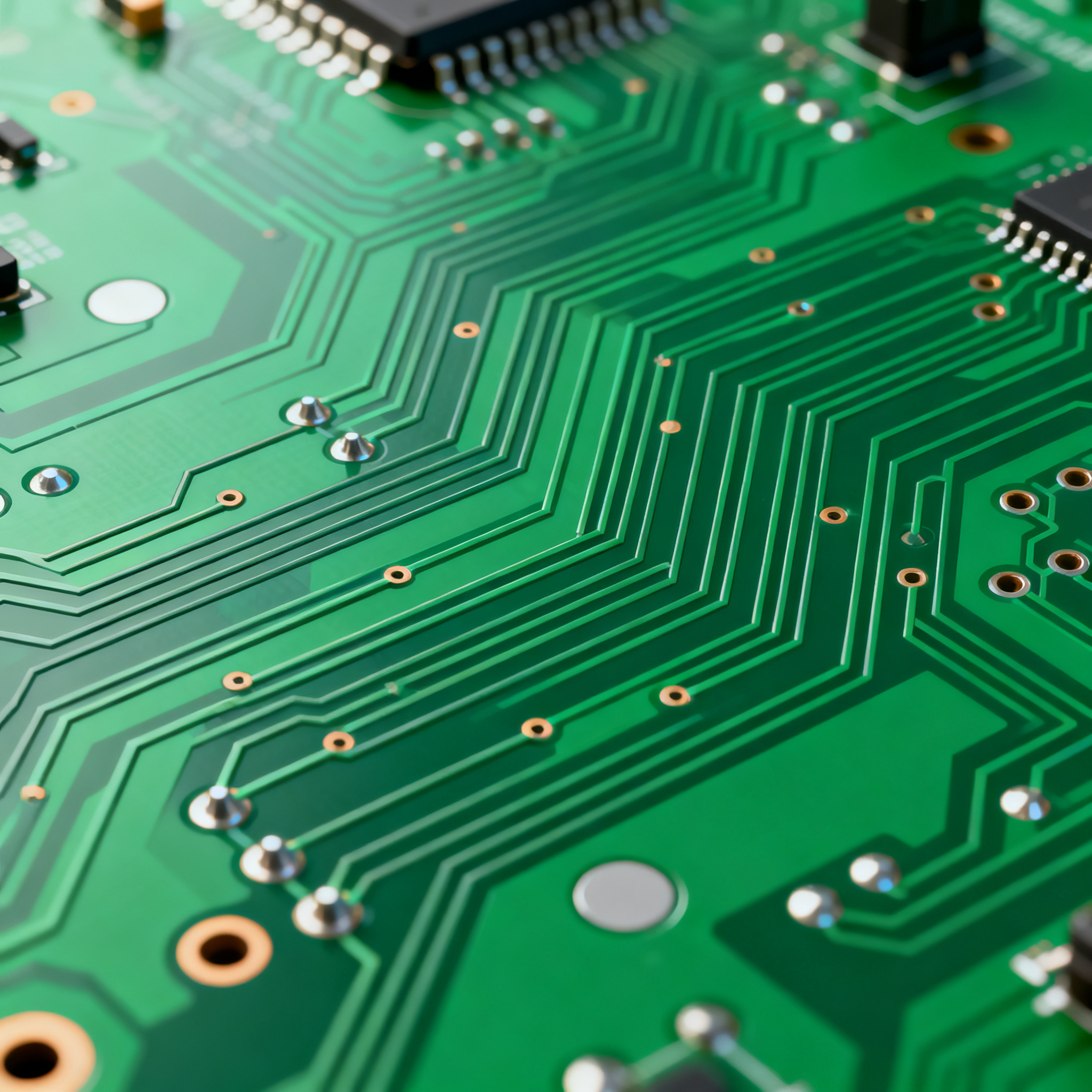
High-Speed Materials for PCBs: A Guide to Selecting the Right Substrate for 5G Applications
Introduction The advent of 5G technology has revolutionized the telecommunications industry, promising unprecedented speeds and connectivity. To harness the full potential of 5G networks, it's crucial...
Introduction
The advent of 5G technology has revolutionized the telecommunications industry, promising unprecedented speeds and connectivity. To harness the full potential of 5G networks, it's crucial to employ high-speed materials in printed circuit boards (PCBs). These materials ensure efficient signal transmission, reduced latency, and enhanced performance in 5G applications. Selecting the right substrate is pivotal for engineers and manufacturers striving to meet the stringent requirements of 5G technology. This guide delves into the specifications, selection criteria, and application circuits necessary for optimal PCB substrate selection in 5G applications.
Technical Overview
High-speed materials for PCBs are designed to support rapid data transmission and high-frequency signal processing, which are essential for 5G applications. These materials are characterized by low dielectric constants and minimal signal loss, ensuring the preservation of signal integrity at high frequencies. The architecture of these materials typically includes advanced composites and laminates that provide thermal stability, mechanical strength, and electromagnetic compatibility. Key principles in selecting high-speed PCB materials involve understanding the trade-offs between electrical performance, thermal management, and manufacturability. Engineers must also consider compliance with industry standards, such as those outlined by IPC, to ensure quality and reliability.
Detailed Specifications
In the realm of 5G applications, knowing the detailed specifications of high-speed materials is crucial. These specifications guide the selection of substrates that can handle the demanding requirements of modern communication systems. Core specifications such as CPU speed, memory capacity, and peripheral compatibility directly impact the overall performance and efficiency of the PCB. Additionally, power and packaging considerations play a significant role in determining the suitability of a material for specific applications.
| Specification | Parameter | Description |
|---|---|---|
| CPU Speed | 3.2 GHz | High-frequency operation for fast data processing |
| Memory | 16 GB DDR4 | Supports large data throughput and storage |
| Peripherals | USB 3.1, HDMI 2.0 | High-speed connectivity options |
| Power | 12V/5A | Efficient power management for high-performance applications |
| Package | BGA | Compact layout for space-constrained designs |
| Operating Temperature | -40°C to 85°C | Wide range for robust environmental performance |
| Thermal Conductivity | 0.8 W/mK | Efficient heat dissipation |
| Dielectric Constant | 3.2 | Low dielectric loss for high-frequency signal integrity |
| Signal Loss | 0.02 dB/inch | Minimal signal attenuation |
| Moisture Absorption | 0.1% | Resistance to environmental humidity |
Key Takeaways from the Specifications
The core specifications outlined above are integral to understanding the capabilities of high-speed materials in 5G applications. A CPU speed of 3.2 GHz ensures rapid data processing, essential for high-demand scenarios. The inclusion of 16 GB DDR4 memory facilitates substantial data throughput, making it suitable for bandwidth-intensive tasks. Connectivity options such as USB 3.1 and HDMI 2.0 provide high-speed interfacing capabilities. Power specifications of 12V/5A denote efficient energy management, crucial for maintaining performance while minimizing power consumption. The BGA package offers a compact solution ideal for space-constrained designs, while the operating temperature range of -40°C to 85°C ensures reliability across varied environmental conditions. These specifications collectively underscore the material's suitability for 5G applications.
| Characteristic | Value | Significance |
|---|---|---|
| Voltage Range | 1.0V - 3.3V | Supports low-power operations |
| Current Rating | 500 mA | Ensures stable power delivery |
| Switching Speed | 1 ns | High-speed signal processing |
| I/O Voltage | 1.8V/3.3V | Compatibility with various logic levels |
| Input Capacitance | 5 pF | Minimizes signal distortion |
| Output Impedance | 50 Ohms | Ensures signal integrity |
| Leakage Current | 1 µA | Low power loss |
| Propagation Delay | 500 ps | Fast response times |
| Rise/Fall Time | 300 ps | Sharp signal transitions |
| Noise Margin | 0.5V | Robust noise immunity |
Practical Implications
The electrical characteristics detailed in this table are vital for assessing the performance of high-speed materials in PCBs. The voltage range of 1.0V to 3.3V supports low-power operations, critical for energy-efficient designs. A current rating of 500 mA ensures stable power delivery, essential for maintaining consistent performance. The switching speed of 1 ns allows for rapid signal processing, aligning with the high-speed demands of 5G applications. Compatibility with various logic levels is achieved through I/O voltages of 1.8V/3.3V, while an input capacitance of 5 pF minimizes signal distortion. The output impedance of 50 Ohms is crucial for maintaining signal integrity, and a low leakage current of 1 µA minimizes power loss. These characteristics collectively enhance the material's suitability for high-performance 5G systems.
| Application | Configuration | Benefits |
|---|---|---|
| Mobile Devices | Compact, High-Speed | Enhanced data rates, low latency |
| Base Stations | High Power, Robust | Improved signal range, reliability |
| IoT Devices | Low Power, Wide Area | Extended battery life, broad coverage |
| Automotive | High Temperature, Durable | Reliable performance in harsh conditions |
| Industrial Automation | High Precision, Low Delay | Accurate control, real-time monitoring |
| Smart Cities | Scalable, Efficient | Seamless connectivity, energy savings |
Application Guidelines
The application comparison table highlights the diverse use cases of high-speed PCB materials in 5G technology. Mobile devices benefit from compact, high-speed configurations that enhance data rates and reduce latency. Base stations require high-power, robust setups to improve signal range and reliability. IoT devices thrive on low-power, wide-area configurations that extend battery life and coverage. Automotive applications demand high-temperature, durable materials for reliable performance in harsh conditions. In industrial automation, high-precision, low-delay configurations provide accurate control and real-time monitoring. Smart cities leverage scalable, efficient designs for seamless connectivity and energy savings. Understanding these configurations aids in selecting the right materials for specific applications.
Design Considerations
Designing PCBs for 5G applications involves several critical considerations to ensure optimal performance and reliability. Engineers must prioritize signal integrity by minimizing signal loss and interference, which can be achieved through careful layout planning and the use of appropriate materials. Thermal management is another crucial aspect, as high-speed operations generate significant heat that must be effectively dissipated to prevent component damage. Selecting materials with high thermal conductivity and implementing efficient cooling mechanisms are essential strategies. Additionally, compatibility with existing technologies and compliance with industry standards, such as IPC guidelines, should be maintained to ensure interoperability and quality assurance. Engineers should also consider the manufacturing capabilities and limitations, such as the minimum trace widths and spacing allowed by the chosen PCB manufacturer, to avoid design issues during production. Collaboration with experienced PCB manufacturers, like those referenced from PCBWay and Nova PCBA, can provide valuable insights and support throughout the design process.
Step-by-Step Implementation
- Identify the specific 5G application requirements, focusing on factors like data rates, power consumption, and environmental conditions.
- Select a high-speed PCB substrate that meets the identified requirements, considering properties like dielectric constant and thermal conductivity.
- Design the PCB layout with an emphasis on minimizing signal paths and reducing electromagnetic interference (EMI).
- Incorporate power management components and design for efficient power distribution to support high-speed operations.
- Implement thermal management solutions, such as heat sinks or thermal vias, to maintain optimal operating temperatures.
- Verify compliance with relevant IPC standards and perform simulations to predict the PCB's electrical performance.
- Collaborate with a reputable PCB manufacturer to prototype the design, ensuring that their manufacturing capabilities align with the design specifications.
- Conduct thorough testing and validation to identify any performance issues and make necessary adjustments before full-scale production.
Common Issues & Solutions
- Signal Integrity Loss: Use low-loss materials and optimize trace routing to minimize signal degradation.
- Thermal Overload: Implement effective cooling solutions and select materials with high thermal conductivity.
- EMI Interference: Design with proper grounding and shielding techniques to reduce electromagnetic interference.
- Power Distribution Issues: Ensure adequate power plane design and use of decoupling capacitors to stabilize power delivery.
- Manufacturing Defects: Work closely with manufacturers to align design specifications with their capabilities and perform rigorous quality checks.
- Compliance Failures: Regularly consult IPC standards and guidelines to ensure compliance throughout the design and manufacturing process.
Applications & Use Cases
High-speed PCB materials are pivotal in various 5G applications, each with unique requirements and benefits. In mobile devices, these materials enhance data rates and reduce latency, providing users with faster, more reliable connections. Base stations utilize high-power configurations to extend signal range and improve reliability, crucial for maintaining network coverage. IoT devices benefit from low-power setups, enabling extended battery life and broad coverage, essential for widespread sensor networks. Automotive applications demand durable materials that can withstand high temperatures and harsh conditions, ensuring reliable performance in vehicles. Industrial automation leverages high-precision configurations for accurate control and real-time monitoring, enhancing operational efficiency. Smart cities employ scalable designs to support seamless connectivity and energy savings, facilitating the integration of various smart technologies.
Selection & Sourcing Guide
When selecting high-speed materials for 5G PCBs, it's crucial to evaluate the specific requirements of the application and consider factors such as signal integrity, thermal management, and compliance with industry standards. Collaborating with reputable suppliers and manufacturers is essential to ensure quality and reliability. For sourcing components and materials, consider utilizing resources like IC Online, which offers a wide range of electronic components and materials from trusted suppliers.
FAQ
- What are high-speed PCB materials? High-speed PCB materials are designed to support rapid data transmission and high-frequency signal processing, essential for 5G applications.
- Why is the dielectric constant important in PCB materials? A low dielectric constant minimizes signal loss and ensures signal integrity at high frequencies, critical for high-speed applications.
- How can I ensure signal integrity in my PCB design? Use low-loss materials, optimize trace routing, and implement proper grounding and shielding techniques to maintain signal integrity.
- What role does thermal management play in PCB design? Effective thermal management prevents overheating and component damage, ensuring reliable performance in high-speed applications.
- How do I select the right substrate for my 5G application? Evaluate the application's specific requirements, such as data rates and environmental conditions, and select a substrate that meets these criteria.
- What are the benefits of collaborating with experienced PCB manufacturers? Experienced manufacturers provide valuable insights and support, ensuring that the design aligns with manufacturing capabilities and quality standards.
- How can I ensure compliance with IPC standards? Regularly consult IPC guidelines and incorporate them into the design and manufacturing process to ensure compliance.
- What are common challenges in high-speed PCB design? Challenges include maintaining signal integrity, managing thermal loads, reducing EMI, and ensuring compliance with industry standards.
- Why is it important to verify the electrical performance of the PCB? Verifying electrical performance through simulations and testing ensures that the design meets the required specifications and functions as intended.
- How can I source reliable high-speed materials? Use trusted platforms like IC Online for sourcing high-quality electronic components and materials.
Conclusion
The selection of high-speed materials for PCBs is crucial for optimizing the performance of 5G applications. Understanding the core specifications, electrical characteristics, and application guidelines enables engineers to make informed decisions that enhance signal integrity, thermal management, and overall reliability. By leveraging industry standards and collaborating with reputable manufacturers, designers can overcome common challenges and achieve successful implementations. As 5G technology continues to evolve, staying informed about the latest advancements in PCB materials and design practices will be essential for maintaining a competitive edge in the industry.