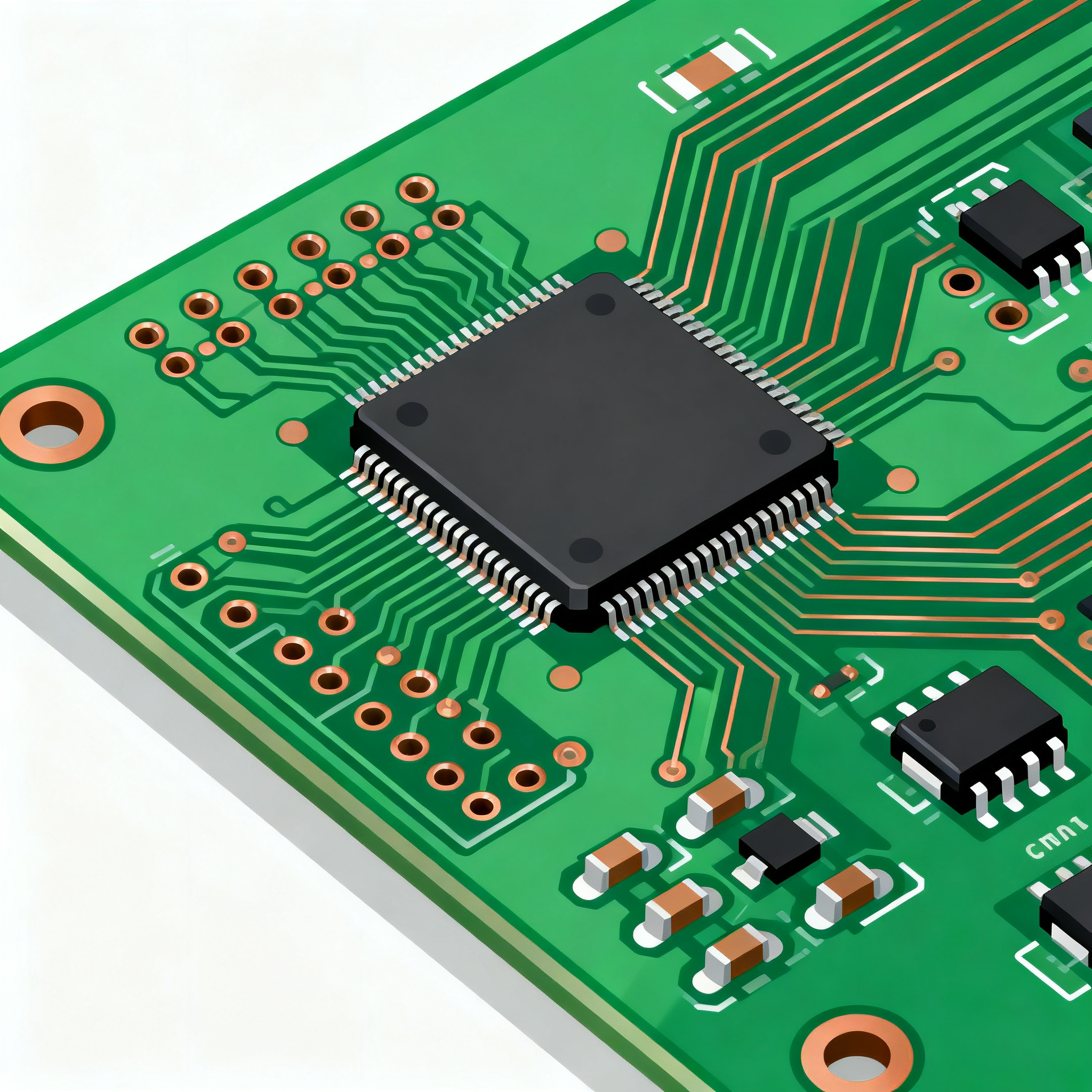
From Concept to Creation: Real-World Applications of PCB Prototyping Services
Introduction In the ever-evolving world of electronics, the ability to rapidly prototype printed circuit boards (PCBs) is crucial. PCB prototyping services have become the backbone of innovation, allo...
Introduction
In the ever-evolving world of electronics, the ability to rapidly prototype printed circuit boards (PCBs) is crucial. PCB prototyping services have become the backbone of innovation, allowing engineers to validate designs quickly, test functionality, and ensure product reliability. As industries push the boundaries of technology, from consumer electronics to industrial automation, the role of PCB prototyping becomes even more significant. This article delves into the real-world applications of PCB prototyping services, focusing specifically on the intricacies of IC chip selection, component specifications, and application circuits.
Technical Overview
At the core of any electronic device is its architecture, which defines its functionality and performance. PCB prototyping services facilitate the transformation of a conceptual design into a tangible product. This process involves several stages, including schematic design, layout, fabrication, and assembly. Each stage requires meticulous attention to detail to ensure the final product meets the desired specifications and standards.
The architecture of a PCB largely depends on its application and the components it houses. Integrated Circuits (ICs) are pivotal in this architecture, serving as the brains of the device. Their selection is critical, as it influences the performance, power consumption, and overall efficiency of the device. Understanding the specifications of these components, such as CPU speed, memory, and peripheral interfaces, is essential for successful PCB design.
Detailed Specifications
When designing a PCB, it's crucial to consider the specifications of each component. These specifications dictate how the components will interact with each other and the overall system. Key specifications include CPU speed, memory capacity, peripheral support, power requirements, and package type. These factors determine the performance and compatibility of the PCB with its intended application.
| Specification | Details | Importance |
|---|---|---|
| CPU Speed | 1.2 GHz | Determines processing power |
| Memory | 512 MB DDR3 | Influences data handling capability |
| Peripherals | USB, UART, SPI | Facilitates external communication |
| Power Supply | 3.3V - 5V | Ensures stable operation |
| Package Type | QFN32 | Affects size and heat dissipation |
| Clock Speed | 100 MHz | Impacts timing accuracy |
| Operating Temperature | -40°C to 85°C | Determines environmental suitability |
| Storage Capacity | 32 GB eMMC | Essential for data storage |
| Connectivity | Bluetooth 5.0 | Enables wireless communication |
| Dimensions | 10mm x 10mm | Influences form factor |
Key Takeaways from the Specifications
The specifications outlined in Table 1 highlight the critical aspects of IC chip selection for PCB design. CPU speed and memory are pivotal for performance-intensive applications, while the choice of peripherals determines the range of external devices that can be interfaced. Power supply requirements are essential for ensuring the reliable operation of the circuit, especially in power-constrained environments. The package type and dimensions play a significant role in the thermal management and space constraints of the PCB. Understanding these specifications helps engineers make informed decisions during the design phase, ensuring the final product meets both technical and functional requirements.
| Characteristic | Value | Significance |
|---|---|---|
| Operating Voltage | 3.3V | Standard for low-power devices |
| Max Current | 500 mA | Imposes power limits |
| Input Impedance | 50 Ohms | Affects signal integrity |
| Output Drive Strength | 10 mA | Determines load capacity |
| Rise Time | 2 ns | Impacts signal transitions |
| Fall Time | 2 ns | Ensures rapid deactivation |
| Propagation Delay | 5 ns | Influences timing synchronization |
| Leakage Current | 1 µA | Critical for low-power applications |
| I/O Voltage Levels | 1.8V to 3.3V | Ensures compatibility with other ICs |
| Thermal Resistance | 20°C/W | Key for thermal management |
Practical Implications
The electrical characteristics presented in Table 2 are crucial for the functional reliability of the PCB. Operating voltage and maximum current define the power envelope within which the IC can safely operate. Input impedance and output drive strength impact the signal integrity and interaction with other components. Timing parameters like rise time, fall time, and propagation delay are vital for ensuring proper synchronization and signal transitions. Understanding these characteristics allows designers to optimize PCB layouts for performance and reliability, while also considering thermal management to prevent overheating and ensure longevity.
| Application | Configuration | Benefits |
|---|---|---|
| Consumer Electronics | Embedded Systems | Low power, compact design |
| Industrial Automation | High-performance Controllers | Robust and reliable |
| Automotive Systems | ECU Modules | High temperature tolerance |
| IoT Devices | Wireless Connectivity | Remote monitoring and control |
| Medical Devices | Portable Instruments | Precision and accuracy |
| Telecommunications | Signal Processing | High-speed data transmission |
| Renewable Energy | Power Conversion | Efficiency and sustainability |
Application Guidelines
Table 3 illustrates various applications and configurations of PCB prototyping services. Each application has distinct requirements and benefits, from consumer electronics requiring low power and compact designs, to industrial automation needing robust and reliable systems. Automotive systems often demand high-temperature tolerance, while IoT devices benefit from wireless connectivity for remote operations. The diversity of use cases highlights the versatility of PCB prototyping, enabling tailored solutions for specific industry needs. Selecting the right configuration ensures optimal performance and cost-effectiveness, aligning with the intended application.
Design Considerations
Designing a PCB involves several critical considerations to ensure functionality, performance, and reliability. Engineers must account for signal integrity, power distribution, thermal management, and electromagnetic compatibility (EMC). Proper placement of components, trace routing, and layer stack-up are essential for minimizing interference and optimizing the electrical performance of the PCB. Additionally, adhering to industry standards such as IPC-A-610 and IPC-2221 is crucial for quality assurance and compliance.
Signal integrity is paramount in high-speed designs, where trace impedance matching and minimizing crosstalk are essential. Power distribution networks should be carefully designed to provide stable voltage levels across the board, while thermal management solutions, such as heat sinks and thermal vias, help dissipate heat generated by active components. EMC considerations involve the use of shielding, filtering, and grounding techniques to prevent unwanted emissions and ensure regulatory compliance.
Another vital aspect is the choice of materials and fabrication techniques, which impact the mechanical and environmental robustness of the PCB. Selecting the appropriate substrate, copper thickness, and solder mask type can influence the board's durability and performance under various conditions. By incorporating these design considerations, engineers can create PCBs that meet the stringent demands of modern electronic applications.
Step-by-Step Implementation
- Define Requirements: Start by clearly defining the functional and performance requirements of the PCB. This includes understanding the application, environment, and specific needs of the end product.
- Schematic Design: Develop a detailed schematic that outlines the electrical connections and components. Use CAD tools to ensure accuracy and facilitate design revisions.
- Component Selection: Choose components based on the specifications and requirements. Consider factors such as availability, cost, and compatibility with the design.
- PCB Layout: Create the PCB layout, paying close attention to trace routing, component placement, and layer stack-up. Use simulation tools to verify signal integrity and power distribution.
- Prototype Fabrication: Use a reliable PCB prototyping service to fabricate the initial prototype. This allows for testing and validation of the design before mass production.
- Testing and Validation: Conduct thorough testing to verify the functionality and performance of the prototype. Identify and address any issues or discrepancies.
- Design Iteration: Based on the testing results, make necessary design modifications and iterate on the prototype. This may involve refining the layout, adjusting component values, or implementing additional features.
- Final Production: Once the design is validated, proceed to mass production using a trusted PCB manufacturing partner. Ensure quality control measures are in place to maintain consistency and reliability.
Common Issues & Solutions
- Signal Integrity Problems: Use proper trace impedance matching and minimize crosstalk by maintaining adequate separation between traces.
- Power Distribution Challenges: Implement a well-designed power distribution network with decoupling capacitors to ensure stable voltage levels.
- Thermal Management Issues: Utilize heat sinks, thermal vias, and adequate ventilation to dissipate heat generated by active components.
- Electromagnetic Interference (EMI): Apply shielding, filtering, and grounding techniques to minimize EMI and ensure compliance with regulatory standards.
- Component Sourcing Delays: Work with reliable suppliers and maintain a buffer stock of critical components to avoid production delays.
- Design Rule Violations: Adhere to design rules and guidelines provided by PCB fabrication services to prevent manufacturing issues.
Applications & Use Cases
PCB prototyping services find applications across a wide range of industries, each with unique requirements and challenges. In consumer electronics, PCBs are used in smartphones, tablets, and wearable devices, where compact size and power efficiency are critical. Industrial automation relies on PCBs for control systems and sensors, demanding reliability and robustness. The automotive industry uses PCBs in engine control units (ECUs) and infotainment systems, requiring high-temperature tolerance and durability.
In the realm of IoT, PCBs enable connectivity and data processing in smart home devices and industrial sensors. Medical devices utilize PCBs in portable diagnostic equipment, emphasizing precision and accuracy. Telecommunications equipment, such as routers and switches, relies on high-speed PCBs for efficient data transmission. Finally, renewable energy systems use PCBs in power converters and inverters, prioritizing efficiency and sustainability.
Selection & Sourcing Guide
When selecting and sourcing IC chips and components for PCB prototyping, it's essential to consider factors such as availability, cost, and compatibility. Utilize online resources like IC Online to compare specifications, check stock levels, and identify suitable suppliers. Collaborating with reputable distributors and manufacturers ensures access to high-quality components and minimizes the risk of counterfeit parts.
FAQ
- What is PCB prototyping? PCB prototyping is the process of creating a preliminary version of a printed circuit board to test and validate a design before mass production.
- Why is component selection important? Component selection affects the performance, cost, and reliability of the final product, making it a critical step in the design process.
- How do I ensure signal integrity in my PCB design? Use proper trace impedance matching, minimize crosstalk, and maintain adequate separation between traces to ensure signal integrity.
- What are the benefits of using a PCB prototyping service? PCB prototyping services offer quick turnaround times, allowing for rapid design validation and iteration, reducing time-to-market.
- How can I manage thermal challenges in my PCB? Implement heat sinks, thermal vias, and adequate ventilation to dissipate heat generated by active components.
- What is the role of IPC standards in PCB design? IPC standards provide guidelines for PCB design, assembly, and quality inspection, ensuring reliability and compliance with industry norms.
- How do I select the right PCB manufacturer? Evaluate manufacturers based on their capabilities, quality control measures, and customer reviews to ensure reliable production.
- What are common issues in PCB prototyping? Common issues include signal integrity problems, power distribution challenges, and thermal management concerns, all of which require careful design considerations.
- How can I avoid design rule violations? Adhere to design rules and guidelines provided by PCB fabrication services and use design rule checking tools to prevent violations.
- What resources are available for PCB design and manufacturing? Utilize resources like IPC standards, PCBWay, and Nova PCBA for design guidelines, fabrication capabilities, and assembly services.
Conclusion
PCB prototyping services are an invaluable tool for engineers and designers, enabling rapid validation and iteration of electronic designs. By understanding component specifications, electrical characteristics, and application requirements, engineers can create optimized PCBs for various industries. With careful design considerations and a clear understanding of common issues and solutions, the path from concept to creation becomes more efficient and successful, driving innovation and technological advancement.