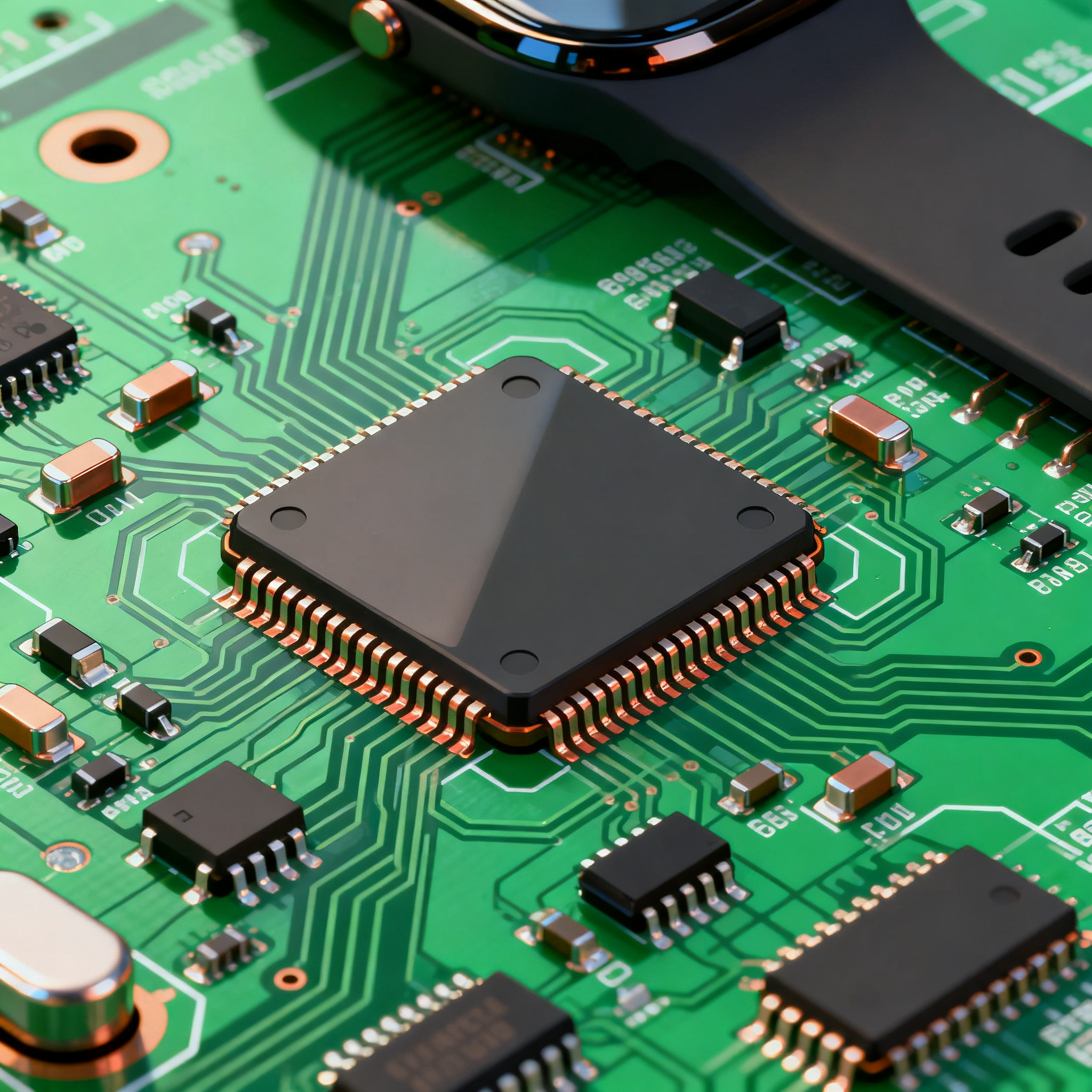
Fitness Tracker PCBA Manufacturing: Real Examples of High-Performance Solutions
Fitness Tracker PCBA Manufacturing: Real Examples of High-Performance Solutions table { border-collapse: collapse; width: 100%; margin: 20px 0; } th, td { border: 1px solid #ddd; padding: 8px; } th { ...
Introduction
In the rapidly evolving world of wearable technology, fitness trackers have carved out a significant niche. These compact devices are not only packed with sensors and processors but also require a meticulously designed Printed Circuit Board Assembly (PCBA) to ensure performance, reliability, and longevity. Understanding the components that make up the PCBA, particularly the RF components, is crucial for engineers and designers aiming to optimize performance and efficiency. This article delves into the technical specifications and real-world applications of high-performance PCBA solutions for fitness trackers.
Technical Overview
The architecture of a fitness tracker involves a complex integration of various components, each serving a unique function. The core components include microcontrollers, sensors, power management units, and RF modules. RF components are critical, as they facilitate communication between the device and external systems, such as smartphones or cloud services. The selection of these components is guided by factors such as power consumption, signal range, and data transfer rates. The design principles focus on maximizing efficiency while minimizing size and weight, which are crucial for wearable devices.
RF components in fitness trackers must be carefully selected to ensure they meet the desired specifications. This involves a detailed analysis of the datasheets, understanding the component's electrical characteristics, and its integration into the overall system architecture. The design and placement of these components on the PCB are governed by IPC standards, which ensure quality and reliability. The manufacturing process, including assembly and inspection, follows stringent guidelines to produce high-performance solutions that meet industry standards.
Detailed Specifications
When designing a PCBA for fitness trackers, understanding the key specifications of RF components is crucial. These specifications include parameters such as frequency range, power output, sensitivity, and data rate. Selecting the right component involves evaluating these parameters against the application's requirements. Below is a table outlining the key specifications of typical RF components used in fitness trackers.
| Parameter | Specification | Description |
|---|---|---|
| Frequency Range | 2.4 GHz | Standard frequency for Bluetooth communication |
| Power Output | 10 dBm | Output power level for effective range |
| Sensitivity | -90 dBm | Minimum detectable signal strength |
| Data Rate | 1 Mbps | Maximum data transfer speed |
| Supply Voltage | 1.8V - 3.3V | Operating voltage range for the RF module |
| Current Consumption | 15 mA | Average current draw during operation |
| Modulation Type | GFSK | Gaussian Frequency-Shift Keying |
| Package Type | QFN | Quad Flat No-Lead package for compact size |
| Operating Temperature | -40°C to 85°C | Temperature range for reliable operation |
| Impedance | 50 Ohms | Standard RF impedance for matching |
Key Takeaways from the Specifications
The specifications outlined above are critical in determining the suitability of an RF component for fitness trackers. The frequency range of 2.4 GHz is commonly used for Bluetooth communication due to its balance between range and data rate. Power output and sensitivity are crucial for ensuring a stable connection and effective communication range. The data rate of 1 Mbps is adequate for transmitting fitness data without delays. Additionally, the supply voltage and current consumption must align with the device's power management capabilities to ensure efficient battery usage. Understanding these parameters helps in selecting components that meet the application's performance and size constraints.
| Metric | Value | Implication |
|---|---|---|
| Thermal Resistance | 35°C/W | Indicates heat dissipation efficiency |
| Junction Temperature | 125°C | Maximum temperature for reliable operation |
| ESD Protection | 2 kV | Electrostatic discharge protection level |
| RF Output Power | 10 dBm | Ensures adequate transmission strength |
| Noise Figure | 3 dB | Signal-to-noise ratio performance |
| Spurious Emissions | -36 dBm | Unwanted emissions level |
| Operating Humidity | 5% to 95% | Environmental operating conditions |
| Signal Bandwidth | 1 MHz | Bandwidth for data transmission |
| Harmonic Suppression | -40 dBc | Reduction of harmonic distortion |
Practical Implications
The performance metrics provide insights into the electrical and thermal characteristics of RF components. Thermal resistance and junction temperature are crucial for assessing the component's ability to dissipate heat, which is vital for maintaining performance over time. ESD protection is necessary to prevent damage from electrostatic discharge, a common issue in wearable devices. RF output power and noise figure are indicators of communication quality and efficiency, affecting the user's experience. Understanding these metrics helps engineers design systems that are robust, efficient, and capable of delivering consistent performance under various conditions.
| Use Case | Configuration | Details |
|---|---|---|
| Basic Fitness Tracking | Single RF Module | Low power, basic data transmission |
| Advanced Health Monitoring | Dual RF Modules | Enhanced data rates, multiple sensors |
| GPS Integration | RF + GPS Module | Location tracking capabilities |
| Smartphone Connectivity | Bluetooth LE | Seamless integration with mobile devices |
| Data Synchronization | Wi-Fi Module | High-speed data upload to cloud |
| Environmental Sensing | RF + Sensor Network | Real-time environmental monitoring |
| Sports Analytics | RF + Motion Sensors | Detailed activity tracking and analysis |
Application Guidelines
The application matrix highlights various configurations and their corresponding use cases. For basic fitness tracking, a single RF module suffices, offering low power consumption and basic data transmission capabilities. More advanced health monitoring systems may require dual RF modules to support multiple sensors and higher data rates. Integrating GPS modules enables location tracking, which is essential for outdoor activities. Bluetooth LE is preferred for smartphone connectivity due to its low energy consumption and reliable performance. For applications requiring data synchronization, a Wi-Fi module is ideal for high-speed uploads to the cloud. Understanding these configurations is key to selecting the right components for specific applications, ensuring optimal performance and user satisfaction.
Design Considerations
When designing PCBA for fitness trackers, several factors must be considered to ensure optimal performance and reliability. The layout and placement of RF components are critical, as they influence signal integrity and electromagnetic interference. Engineers must adhere to IPC standards, such as IPC-A-610 and IPC-2221, to ensure quality and compliance with industry regulations. Additionally, thermal management is crucial, as wearable devices often operate in varying environmental conditions. Proper heat dissipation techniques, such as thermal vias and heat sinks, should be incorporated into the design.
Power management is another critical aspect, as fitness trackers rely on battery power. Selecting components with low power consumption and implementing efficient power management strategies can significantly enhance battery life. The choice of materials, such as high-frequency laminates, can also impact performance, particularly in RF applications. Engineers should consider the trade-offs between cost, performance, and manufacturability when selecting materials and components. Prototyping and testing are essential to validate the design and make necessary adjustments before mass production.
Finally, collaboration with reliable manufacturing partners, like those found on platforms such as PCBWay and Nova PCBA, is crucial for ensuring the quality and success of the final product. These partners can provide valuable insights into manufacturing capabilities and help optimize the design for production.
Step-by-Step Implementation
- Define the requirements: Identify the key functionalities and performance metrics needed for the fitness tracker.
- Select components: Use datasheets and performance metrics to choose the appropriate RF and other components.
- Design the schematic: Create a detailed schematic diagram incorporating all selected components.
- Layout the PCB: Use CAD tools to design the PCB layout, focusing on signal integrity and thermal management.
- Prototype the design: Manufacture a prototype to test and validate the design against the requirements.
- Test and iterate: Conduct thorough testing to identify and resolve any issues, iterating on the design as necessary.
- Prepare for production: Finalize the design and collaborate with a manufacturing partner for mass production.
- Quality assurance: Implement quality control measures to ensure the final product meets all specifications and standards.
Common Issues & Solutions
- Signal interference: Use proper shielding and layout techniques to minimize interference.
- Power consumption: Optimize the power management strategy and select components with low power draw.
- Thermal issues: Incorporate thermal management solutions, such as heat sinks and thermal vias.
- Connectivity problems: Ensure proper antenna design and placement for reliable communication.
- Component mismatch: Use impedance matching techniques to ensure compatibility between components.
- Manufacturing defects: Collaborate with experienced manufacturers and conduct thorough quality inspections.
Applications & Use Cases
Fitness trackers have a wide range of applications, from basic activity monitoring to advanced health analytics. They are used in sports to track performance, in healthcare to monitor vital signs, and in lifestyle applications to encourage physical activity. The integration of GPS and environmental sensors expands their use to outdoor activities and environmental monitoring. By selecting the right components and configurations, fitness trackers can be tailored to meet specific user needs, providing valuable insights and enhancing the overall user experience.
Selection & Sourcing Guide
Selecting the right components for a fitness tracker PCBA involves evaluating performance, cost, and availability. Engineers can use resources like IC Online to source components and compare specifications. It's essential to balance performance requirements with budget constraints and consider the long-term availability of components to ensure successful product development and lifecycle management.
FAQ
- What is the typical battery life of a fitness tracker? Battery life varies but typically ranges from a few days to a week, depending on usage and power management.
- How do I ensure reliable Bluetooth connectivity? Proper antenna design and placement, along with selecting components with good sensitivity and power output, can enhance connectivity.
- What are the common RF components used in fitness trackers? Common components include Bluetooth modules, Wi-Fi chips, and GPS receivers.
- How can I reduce power consumption? Use low-power components, implement power-saving modes, and optimize software algorithms.
- What standards should I follow for PCBA design? Adhere to IPC standards, such as IPC-A-610 and IPC-2221, for quality and reliability.
- How do I manage heat in a compact device? Use thermal vias, heat sinks, and ensure proper airflow in the design.
- What materials are best for RF applications? High-frequency laminates and low-loss dielectrics are preferred for RF applications.
- Can fitness trackers be waterproof? Yes, with proper sealing and the use of waterproof components, fitness trackers can be made waterproof.
- How do I test the performance of a fitness tracker? Conduct thorough testing in various conditions, including temperature, humidity, and electromagnetic interference.
- What tools are used for PCB design? Popular tools include Altium Designer, Eagle, and KiCAD for PCB design and layout.
Conclusion
The design and manufacturing of fitness tracker PCBAs require a deep understanding of component specifications, performance metrics, and application requirements. By carefully selecting components and following best practices in design and manufacturing, engineers can create high-performance solutions that meet the needs of modern consumers. With the right approach, fitness trackers can offer reliable performance, extended battery life, and a seamless user experience, making them invaluable tools in the pursuit of health and fitness.