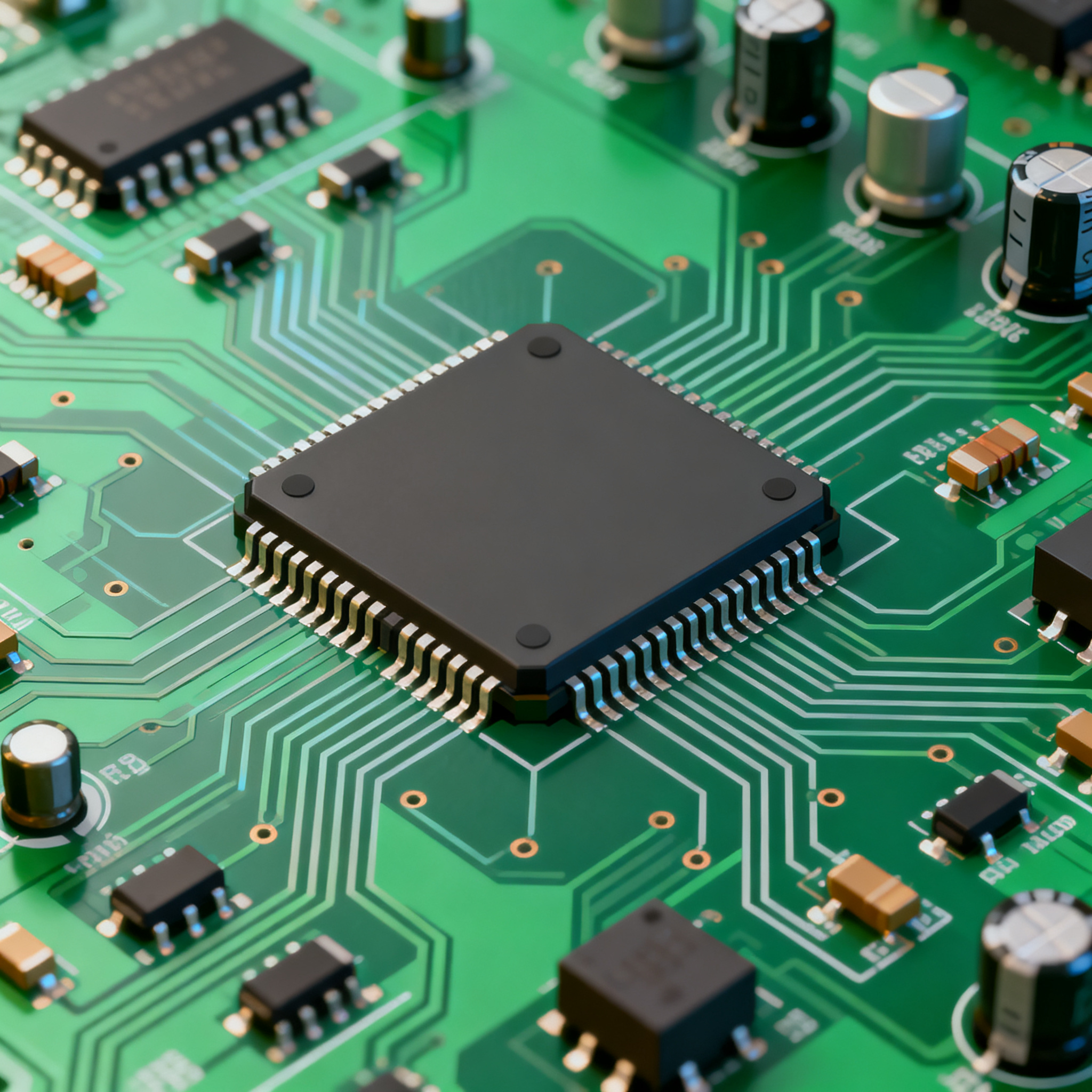
Essential PCBA Design Rules: Avoiding Common Pitfalls in High-Frequency Circuits
Essential PCBA Design Rules: Avoiding Common Pitfalls in High-Frequency Circuits Introduction In the rapidly evolving world of electronics, high-frequency circuit design presents unique challenges. As...
Introduction
In the rapidly evolving world of electronics, high-frequency circuit design presents unique challenges. As devices become more compact and powerful, the demand for efficient and effective printed circuit board assemblies (PCBA) grows. High-frequency circuits are integral to applications ranging from telecommunications to radar systems, where performance and reliability are paramount. Understanding the nuances of PCBA design is crucial for engineers to avoid common pitfalls, ensuring optimal functionality and longevity of the circuits.
Technical Overview
High-frequency circuits operate at frequencies typically above 100 MHz, where traditional design rules may not apply. These circuits require careful consideration of circuit topology, component selection, and layout to minimize issues such as electromagnetic interference (EMI) and signal integrity problems. The architecture of high-frequency PCBs often involves multilayer designs to effectively manage power distribution and ground planes. Principles such as impedance matching, controlled dielectric properties, and minimizing parasitic capacitance and inductance are essential to achieve desired performance.
Detailed Specifications
When designing high-frequency circuits, certain specifications are crucial in ensuring desired performance. These include component values, layout considerations, and the use of specific materials that support high-frequency operation. Proper calculations and adherence to design standards are vital in mitigating signal losses and ensuring efficient circuit operation.
| Parameter | Value/Formula | Description |
|---|---|---|
| Resonant Frequency | f0 = 1/(2π√(LC)) | Determines the frequency at which the circuit naturally oscillates. |
| Characteristic Impedance | Z0 = √(L/C) | Critical for impedance matching in transmission lines. |
| Capacitor ESR | 0.01 - 0.1 ohms | Equivalent Series Resistance affects the quality factor of resonant circuits. |
| Inductor Q Factor | Q = XL/R | Higher Q indicates lower energy loss relative to stored energy. |
| Dielectric Constant | εr = 2.2 - 4.5 | Affects the speed of signal propagation through the PCB material. |
| Trace Width | Calculated based on current and impedance requirements. | Ensures minimal resistive losses and proper impedance. |
| Via Inductance | 0.3 - 0.6 nH | Impacts high-frequency signal integrity due to parasitic effects. |
| Power Supply Decoupling | Use of multiple capacitors in parallel | Minimizes power supply noise and stabilizes voltage levels. |
| Ground Plane | Continuous layer | Provides a low-impedance path for return currents, reducing EMI. |
| Signal Layer Stack-up | Alternating signal and ground planes | Improves signal integrity by minimizing crosstalk and EMI. |
Key Takeaways from the Specifications
The specifications listed in Table 1 highlight critical parameters that influence the design and performance of high-frequency circuits. Understanding the resonant frequency and characteristic impedance is essential for achieving desired oscillation and signal transmission properties. The choice of materials, such as those with appropriate dielectric constants, directly affects signal speed and integrity. Additionally, careful calculation of trace width and via inductance helps in minimizing signal loss and parasitic effects, which are critical in high-frequency applications.
| Performance Metric | Value | Impact |
|---|---|---|
| Gain | 20 dB | Indicates amplification level; crucial for signal processing. |
| Bandwidth | 3 GHz | Determines the range of frequencies over which the circuit operates effectively. |
| Noise Figure | 1.5 dB | Lower values indicate better noise performance, crucial for signal clarity. |
| Power Consumption | 2 W | Affects thermal management and overall energy efficiency. |
| Return Loss | 15 dB | Measures signal power loss; higher values indicate better impedance matching. |
| Harmonic Distortion | 0.05% | Low distortion is crucial for maintaining signal fidelity. |
| Phase Margin | 45° | Ensures stability of the circuit; higher margins indicate better stability. |
| Intermodulation Distortion | -60 dBc | Lower values are better to reduce unwanted mixing of signals. |
Practical Implications
The performance metrics in Table 2 provide insights into the efficiency and reliability of high-frequency circuits. A gain of 20 dB, for instance, signifies significant amplification, making it suitable for applications requiring strong signal processing. The bandwidth of 3 GHz indicates the circuit's capability to handle a wide range of frequencies, which is essential for modern communication systems. Low noise figures and harmonic distortion values are indicators of high signal quality, while power consumption directly influences thermal design and energy efficiency strategies.
| Configuration | Pros | Cons |
|---|---|---|
| Single-Layer PCB | Cost-effective, simple design | Limited routing space, not suitable for high-frequency |
| Multilayer PCB | Supports complex routing, reduced EMI | Higher cost, complex manufacturing |
| Microstrip Layout | Good for high-frequency, easy to fabricate | Requires precise impedance control |
| Stripline Layout | Excellent EMI performance | Higher manufacturing complexity |
| Embedded Components | Reduced parasitics, compact design | Difficulty in assembly and repair |
| Surface Mount Technology (SMT) | Compact, high-speed assembly | Thermal management challenges |
| Through-Hole Technology | Strong mechanical bonds | Limited by higher parasitic inductance |
Application Guidelines
The design trade-offs in Table 3 illustrate the choices engineers face when selecting PCB configurations. Multilayer PCBs offer superior signal integrity and EMI reduction but come at a higher cost and complexity. Microstrip and stripline layouts are favored for high-frequency applications due to their efficient electromagnetic performance, but they require precise design and manufacturing processes. Choosing between SMT and through-hole technology depends on the specific application needs and constraints, such as space and thermal management.
Design Considerations
When designing high-frequency circuits, several practical guidelines should be considered to ensure optimal performance. First, maintaining an uninterrupted ground plane is critical to minimize EMI and maintain signal integrity. Proper impedance matching is essential to reduce signal reflections and power loss, achievable through careful trace width and spacing calculations. The use of high-quality materials with low dielectric loss tangents can significantly enhance the circuit's performance. Additionally, designers should prioritize thermal management to prevent component overheating, which can degrade performance and reliability.
Another key consideration is the selection of components with appropriate tolerances and characteristics that match the circuit's operational frequency. For instance, capacitors and inductors with high Q factors are preferred for their low energy loss. Designers should also consider the use of simulation tools to model the circuit's behavior under various conditions, allowing for optimization before physical prototyping. Lastly, adherence to industry standards such as IPC-2221 ensures compliance with best practices in PCB design and manufacturing.
Step-by-Step Implementation
- Define Requirements: Begin by outlining the circuit's performance requirements, including frequency range, power levels, and signal integrity needs.
- Select Components: Choose components that meet the specified requirements, considering factors such as tolerance, Q factor, and thermal performance.
- Design Schematic: Create a detailed schematic diagram that accurately represents the circuit topology and component connections.
- Layout Design: Utilize PCB design software to layout the circuit, ensuring proper trace width, spacing, and layer stack-up to support high-frequency operation.
- Simulate Circuit: Use simulation tools to analyze the circuit's behavior, checking for potential issues such as signal reflections and EMI.
- Prototype Fabrication: Fabricate a prototype PCB to test the design physically, using a reliable manufacturing service with experience in high-frequency circuits.
- Testing and Validation: Perform comprehensive testing to validate the circuit's performance against the initial requirements, making adjustments as necessary.
- Finalize Design: Incorporate any changes from the testing phase and prepare the design for mass production, ensuring all documentation is complete and accurate.
Common Issues & Solutions
- Signal Reflections: Addressed by ensuring proper impedance matching and using termination resistors.
- EMI Interference: Minimized through the use of continuous ground planes and proper shielding techniques.
- Thermal Management: Enhanced by optimizing component placement and using heat sinks or thermal vias.
- Parasitic Effects: Reduced by minimizing trace lengths and using appropriate via sizes.
- Component Tolerances: Managed by selecting components with tight tolerances and high-quality manufacturing processes.
- Power Supply Noise: Mitigated through effective decoupling strategies and the use of low-noise regulators.
Applications & Use Cases
High-frequency circuits are integral to a wide range of applications, including wireless communication devices, radar systems, and advanced computing platforms. In telecommunications, these circuits enable high-speed data transmission over long distances. Radar systems rely on high-frequency circuits for accurate detection and ranging capabilities. In computing, high-frequency circuits support the rapid processing speeds required for modern processors and memory devices. The principles and guidelines discussed in this article apply across these diverse fields, underscoring the importance of robust PCBA design in high-frequency applications.
Selection & Sourcing Guide
When selecting components and materials for high-frequency PCBA design, it is crucial to source from reputable suppliers with a proven track record in high-frequency applications. IC Online offers a comprehensive selection of components suitable for high-frequency circuits, including capacitors, inductors, and specialized PCB materials. Ensuring component availability and lead times is essential for maintaining project timelines and meeting design specifications.
FAQ
- What is the importance of impedance matching in high-frequency circuits? Impedance matching is crucial to minimize signal reflections and power loss, ensuring efficient signal transmission.
- How can I reduce EMI in my PCB design? Use continuous ground planes, proper shielding, and maintain adequate trace spacing to reduce EMI.
- What materials are best for high-frequency PCBs? Materials with low dielectric constants and loss tangents, such as Rogers or PTFE-based substrates, are ideal for high-frequency applications.
- Why is thermal management important in high-frequency circuits? Effective thermal management prevents component overheating, which can degrade performance and reliability.
- What role do simulation tools play in PCB design? Simulation tools help model circuit behavior, identify potential issues, and optimize design parameters before prototyping.
- How do I select the right components for my design? Choose components with appropriate tolerances, Q factors, and thermal performance that match the circuit's operational frequency.
- What are the key considerations for trace layout in high-frequency circuits? Ensure proper trace width, spacing, and impedance control to support high-frequency operation and minimize signal loss.
- How can I improve signal integrity in my design? Use proper impedance matching, high-quality materials, and maintain a clean layout with minimal parasitic effects.
- What are the benefits of using multilayer PCBs? Multilayer PCBs offer superior signal integrity, reduced EMI, and support complex routing for high-frequency applications.
- How can I ensure my design complies with industry standards? Adhere to guidelines set by organizations like IPC, which provide standards for PCB design, assembly, and quality inspection.
Conclusion
Designing high-frequency circuits requires a deep understanding of the principles and challenges unique to these applications. By adhering to essential design rules and leveraging advanced materials and technologies, engineers can create PCBs that deliver exceptional performance and reliability. The insights provided in this article serve as a comprehensive guide to navigating the complexities of high-frequency PCBA design, ensuring success in a wide range of cutting-edge applications.