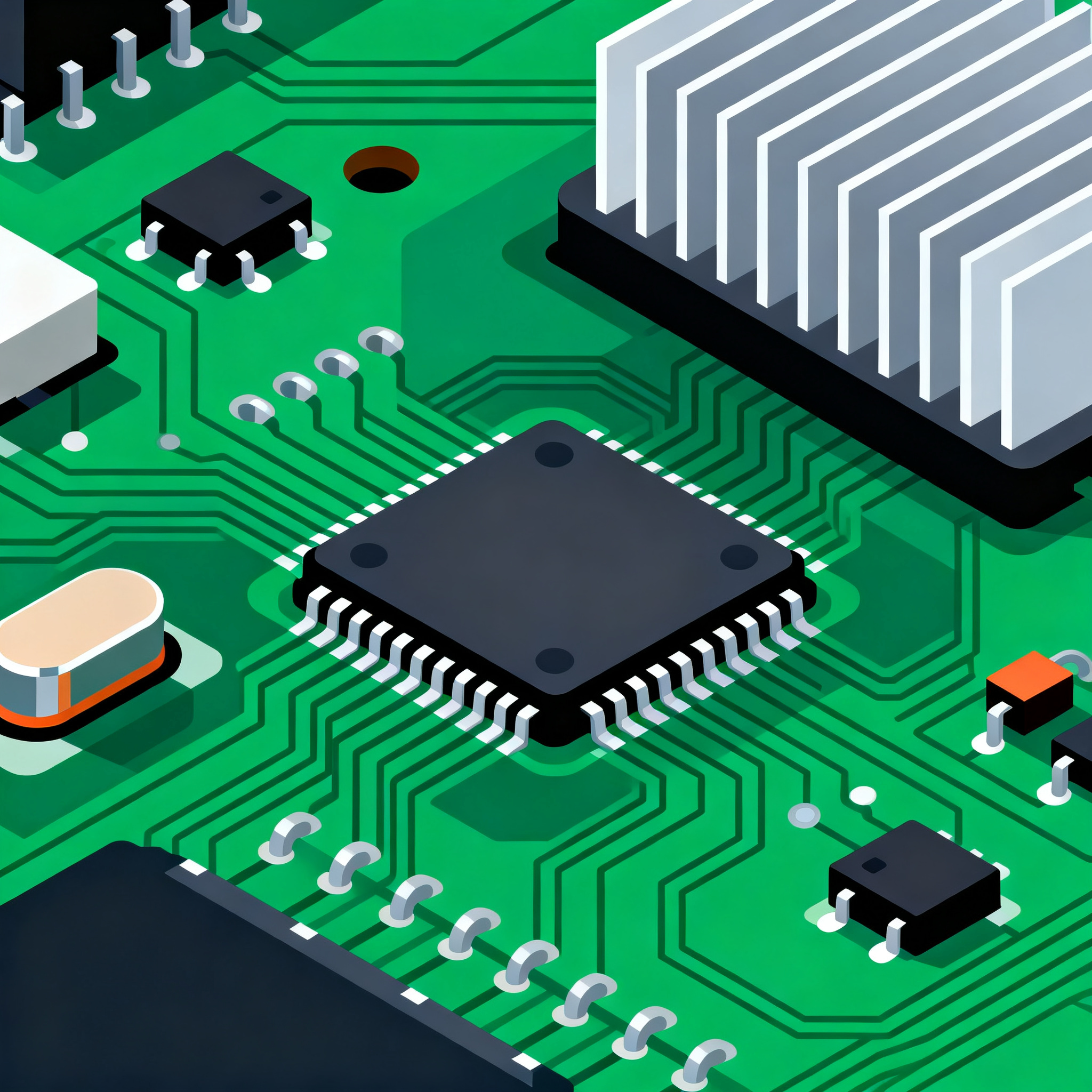
Effective Thermal Management Strategies for High-Power PCBs: A Practical Guide
Effective Thermal Management Strategies for High-Power PCBs table { border-collapse: collapse; width: 100%; margin: 20px 0; } th, td { border: 1px solid #ddd; padding: 8px; } th { background: #f0f0f0;...
Introduction
In the rapidly advancing field of electronics, effective thermal management is crucial for high-power PCBs (Printed Circuit Boards). As devices become more powerful and compact, managing the heat they generate is essential to ensure reliability, performance, and longevity. This guide explores the strategies for managing thermal output in high-power PCBs, focusing on component specifications, datasheets, selection criteria, and application circuits.
Technical Overview
Thermal management in PCBs involves several core concepts and principles. The architecture of high-power PCBs must be designed to dissipate heat efficiently, which requires understanding the thermal properties of materials and the heat generated by various components. Key strategies include using heat sinks, thermal vias, and high-conductivity materials. Additionally, the layout and placement of components are vital to optimize heat dissipation pathways.
High-power PCBs often incorporate integrated circuits (ICs) that operate at high frequencies and power levels. These ICs require detailed attention to their thermal specifications, as outlined in their datasheets, to ensure they function within safe temperature ranges. Understanding the electrical characteristics and application circuits is essential for selecting the right components and designing effective thermal management systems.
Detailed Specifications
When selecting components for high-power PCBs, several specifications are critical. These include CPU speed, memory capacity, available peripherals, power requirements, and packaging. Each of these factors influences the thermal management strategy, as they determine the amount of heat generated and the space available for heat dissipation solutions.
| Specification | Details | Importance |
|---|---|---|
| CPU Speed | 3.5 GHz | Determines processing power and heat generation |
| Memory | 16 GB DDR4 | Impacts data handling and thermal load |
| Peripherals | USB, HDMI, Ethernet | Influences connectivity and power draw |
| Power Supply | 12V, 5A | Defines the power input and thermal output |
| Package Type | BGA | Affects thermal conduction and mounting |
| Operating Temperature | -40°C to 85°C | Specifies safe operating range |
| Storage Temperature | -55°C to 125°C | Determines storage conditions |
| Thermal Resistance | 1.5 °C/W | Indicates heat dissipation efficiency |
| Max Junction Temperature | 150°C | Critical for preventing thermal failure |
| Package Size | 15x15 mm | Impacts PCB layout and cooling solutions |
Key Takeaways from the Specifications
The core specifications highlight the importance of understanding each component's role in thermal management. CPU speed and memory capacity directly influence the heat generated during operation. Power supply and thermal resistance specifications are crucial for designing power systems that can handle the thermal load efficiently. Package type and size affect how heat is conducted away from the IC, while operating and storage temperatures define the environmental conditions under which the device can reliably function. These specifications guide the selection of materials and cooling solutions to ensure optimal performance.
| Characteristic | Value | Significance |
|---|---|---|
| Operating Voltage | 1.2V to 3.3V | Determines power efficiency and compatibility |
| Max Current | 500 mA | Specifies current handling capability |
| Input Impedance | 50 Ohms | Influences signal integrity |
| Output Impedance | 50 Ohms | Affects load matching |
| Rise Time | 0.5 ns | Impacts signal speed and quality |
| Fall Time | 0.5 ns | Critical for high-speed signal transmission |
| Propagation Delay | 2 ns | Determines timing accuracy |
| Input Capacitance | 3 pF | Affects signal frequency response |
| Output Capacitance | 5 pF | Influences load driving capability |
| I/O Voltage Levels | 0V to 3.3V | Defines logic compatibility |
| Thermal Shutdown | 175°C | Provides protection against overheating |
| ESD Protection | 2 kV | Ensures robustness against electrostatic discharge |
Practical Implications
The electrical characteristics of high-power PCBs provide insight into their operational limits and capabilities. Operating voltage and max current values are essential for ensuring power systems are compatible and efficient. Impedance values affect how signals are transmitted and received, impacting overall system performance. Rise and fall times, along with propagation delay, are critical for high-speed applications where timing is crucial. Features like thermal shutdown and ESD protection enhance reliability by safeguarding against common operational hazards.
| Application | Configuration | Considerations |
|---|---|---|
| Consumer Electronics | High-speed processors | Focus on compact cooling solutions |
| Automotive | Ruggedized components | Ensure wide temperature range operation |
| Industrial Control | High power output | Robust thermal management required |
| Telecommunications | High-frequency signals | Minimize signal loss and interference |
| Medical Devices | Low power consumption | Prioritize reliability and safety |
| Aerospace | Lightweight materials | Critical for weight-sensitive applications |
| Data Centers | Efficient power distribution | Optimize for high-density environments |
Application Guidelines
The application comparison table illustrates how different use cases require tailored thermal management strategies. Consumer electronics demand compact solutions due to space constraints, while automotive applications need components that can withstand extreme temperatures. Industrial control systems often require robust thermal management due to high power output. In telecommunications, minimizing signal loss is crucial, whereas medical devices prioritize safety and reliability. Aerospace applications focus on lightweight materials to meet weight restrictions, and data centers optimize for power efficiency in densely packed environments.
Design Considerations
Effective thermal management design involves several practical guidelines. First, component placement is crucial. High-power components should be strategically located to optimize airflow and minimize thermal resistance. Using thermal vias and heat sinks can significantly enhance heat dissipation. Material selection is also vital; high-conductivity substrates and thermal interface materials improve heat transfer. Additionally, considering the ambient temperature and environmental conditions during the design phase ensures that the PCB can operate efficiently under real-world conditions.
Designers must also consider the power budget and ensure that the power distribution network can handle the thermal load. This involves selecting components with appropriate power ratings and integrating thermal management solutions that match the application's requirements. Finally, leveraging simulation tools to model thermal performance can identify potential hotspots and allow for design adjustments before production.
Step-by-Step Implementation
- Define Requirements: Establish the thermal management needs based on the application's power and environmental conditions.
- Select Components: Choose components with suitable thermal specifications and power ratings.
- Design Layout: Optimize the PCB layout for effective heat dissipation, considering component placement and airflow.
- Choose Materials: Select high-conductivity substrates and thermal interface materials to enhance heat transfer.
- Integrate Cooling Solutions: Implement heat sinks, thermal vias, and other cooling technologies as needed.
- Simulate Thermal Performance: Use thermal simulation tools to identify and mitigate potential hotspots.
- Prototype and Test: Build a prototype PCB and conduct thermal testing to validate the design.
- Iterate and Optimize: Refine the design based on test results to achieve optimal thermal performance.
Common Issues & Solutions
- Overheating Components: Use heat sinks and thermal vias to improve heat dissipation.
- Insufficient Airflow: Redesign the enclosure or add fans to enhance airflow.
- Thermal Interface Material Degradation: Select high-quality materials and ensure proper application.
- Hotspots in PCB: Adjust component placement and optimize the layout for better heat distribution.
- Power Supply Instability: Ensure power components have adequate thermal management to prevent overheating.
- Signal Integrity Issues: Use impedance matching and proper shielding to maintain signal quality.
Applications & Use Cases
High-power PCBs are integral to numerous applications across various industries. In consumer electronics, they power devices like smartphones and laptops, where compact and efficient cooling solutions are essential. Automotive applications rely on high-power PCBs for engine control units and infotainment systems, requiring robust designs that withstand harsh environmental conditions. In industrial settings, high-power PCBs drive machinery and control systems, necessitating reliable thermal management for continuous operation. Telecommunications equipment, such as routers and switches, use high-power PCBs to handle high-frequency signals, where minimizing interference and signal loss is critical.
Selection & Sourcing Guide
When selecting components for high-power PCBs, it's essential to source from reputable suppliers who provide detailed specifications and datasheets. Websites like IC Online offer a wide range of components with comprehensive information to assist in making informed decisions. Consider factors such as power ratings, thermal characteristics, and manufacturer reliability when selecting components. Additionally, collaborating with PCB manufacturers that adhere to industry standards, such as those outlined by IPC, ensures quality and consistency in production.
FAQ
- What is the importance of thermal management in PCBs? Proper thermal management ensures reliability, performance, and longevity of electronic components by preventing overheating.
- How do I select the right heat sink for my application? Consider the component's thermal specifications, available space, and required heat dissipation capacity when selecting a heat sink.
- What are thermal vias, and how do they help? Thermal vias are conductive pathways that transfer heat from the component side of the PCB to other layers, enhancing heat dissipation.
- Can I use simulation tools for thermal management? Yes, thermal simulation tools help identify potential hotspots and allow for design optimization before production.
- What materials are best for thermal management? High-conductivity materials, such as copper and aluminum, are commonly used to enhance heat transfer in PCBs.
- How does component placement affect thermal management? Strategic placement of high-power components optimizes airflow and minimizes thermal resistance, improving heat dissipation.
- What is the role of thermal interface materials? Thermal interface materials improve heat transfer between components and heat sinks, reducing thermal resistance.
- How do I ensure my PCB design meets industry standards? Follow IPC standards for PCB design, assembly, and quality inspection to ensure compliance and reliability.
- What are common thermal management mistakes to avoid? Avoid insufficient cooling solutions, poor component placement, and using low-quality materials that degrade over time.
- How can I improve the thermal performance of my existing PCB? Consider adding heat sinks, optimizing airflow, and using higher quality thermal interface materials to enhance performance.
Conclusion
Effective thermal management is a critical aspect of designing high-power PCBs. By understanding component specifications, electrical characteristics, and application requirements, designers can develop solutions that ensure reliable performance and longevity. With careful consideration of design strategies, implementation steps, and common issues, engineers can create PCBs that meet the demands of modern electronic applications. Utilizing resources like IPC standards and sourcing guides ensures quality and consistency in PCB production.