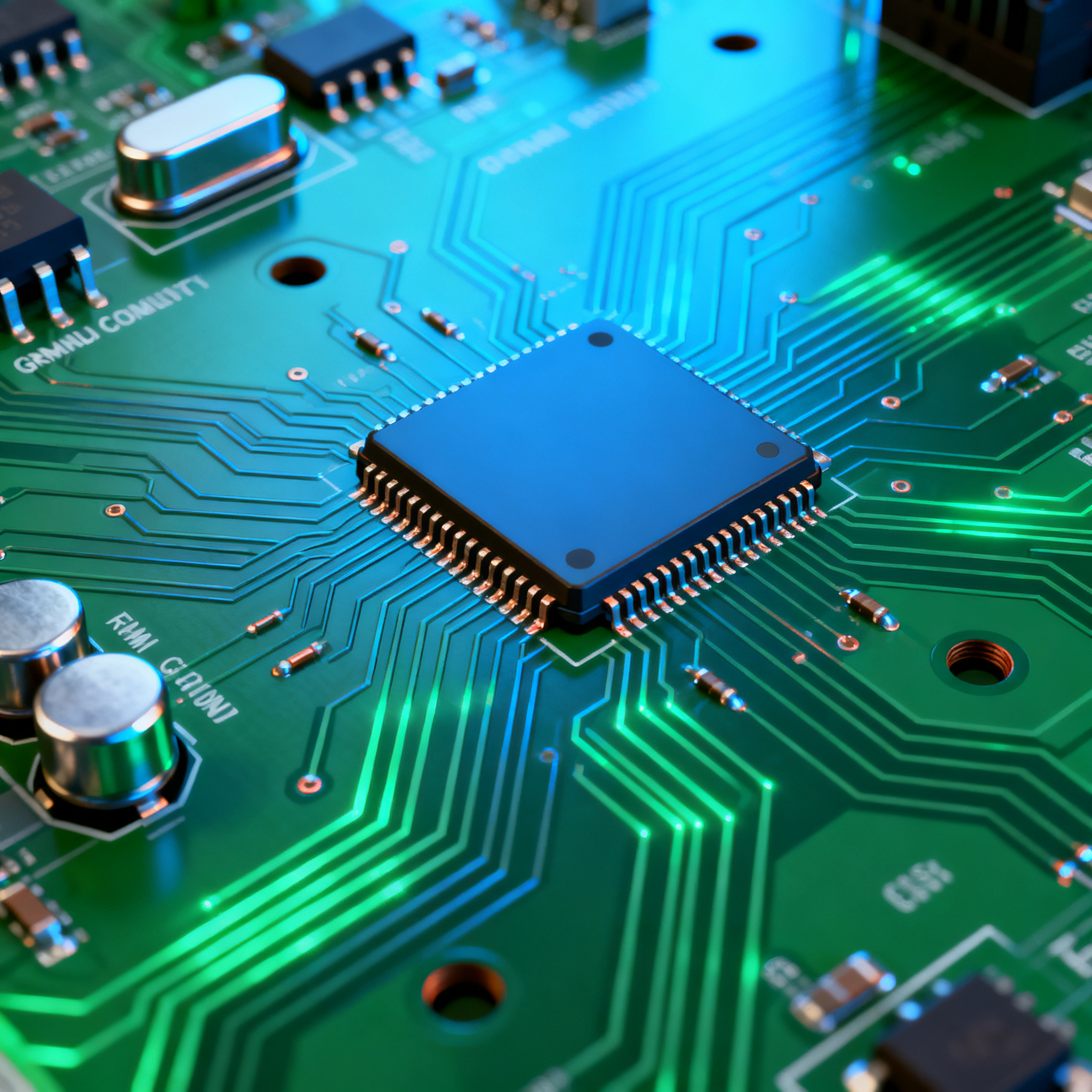
Designing PCB Layouts for EMI Compliance: Tips for High-Performance Circuits
Designing PCB Layouts for EMI Compliance: Tips for High-Performance Circuits Introduction In today's rapidly evolving electronics industry, designing printed circuit boards (PCBs) that are compliant w...
Introduction
In today's rapidly evolving electronics industry, designing printed circuit boards (PCBs) that are compliant with electromagnetic interference (EMI) standards is crucial. As electronic devices become more complex and compact, the potential for EMI issues increases, which can affect performance and lead to regulatory non-compliance. This article provides insights into designing PCB layouts for EMI compliance, focusing on high-performance circuits with an emphasis on component specifications, datasheets, selection criteria, and application circuits.
Technical Overview
EMI compliance in PCB design is a significant concern for engineers aiming to ensure that electronic devices function correctly without causing or being affected by electromagnetic interference. This involves understanding the core concepts of EMI, which include electromagnetic compatibility (EMC), signal integrity, and power integrity. The architecture of a PCB can significantly influence its EMI characteristics, with factors such as trace routing, grounding, and component placement playing critical roles.
To achieve EMI compliance, designers must adhere to established standards, such as those provided by the IPC (Institute for Printed Circuits), which offer guidelines on PCB design and manufacturing. Key principles include minimizing loop areas in signal paths, using proper grounding techniques, and employing shielding where necessary. The selection of components with appropriate specifications, as detailed in datasheets, is also crucial for minimizing EMI and ensuring reliable circuit performance.
Detailed Specifications
When designing a PCB for EMI compliance, several specifications are critical. These include component ratings, such as voltage and current limits, as well as frequency response and thermal characteristics. Understanding these specifications helps in selecting components that meet the required performance metrics and ensures that the PCB operates within safe and efficient limits.
| Parameter | Description | Specification |
|---|---|---|
| Operating Voltage | Maximum voltage the component can handle | 3.3V - 5V |
| Operating Current | Current capacity of the component | 10mA - 100mA |
| Frequency Range | Range of frequencies the component can operate | DC - 3GHz |
| Power Dissipation | Maximum power the component can dissipate | 0.25W - 1W |
| Temperature Range | Operating temperature limits | -40°C to 85°C |
| Impedance | Characteristic impedance of the component | 50Ω |
| ESD Protection | Electrostatic discharge protection level | 2kV |
| Package Type | Physical packaging of the component | SMD, THT |
| Solderability | Ability to be soldered | IPC-A-610 Compliant |
| RoHS Compliance | Restriction of Hazardous Substances | Yes |
Key Takeaways from the Specifications
The specifications outlined in Table 1 provide a comprehensive overview of the essential parameters that must be considered when selecting components for a PCB design aimed at EMI compliance. The operating voltage and current ratings ensure that components can handle the required electrical loads without failure. The frequency range is crucial for high-performance circuits, especially in RF applications, where maintaining signal integrity is paramount. Power dissipation and thermal characteristics help in managing heat, preventing component damage, and ensuring reliability. Additionally, parameters such as impedance and ESD protection are vital for maintaining signal integrity and protecting against electrostatic discharge, respectively.
| Metric | Value | Unit |
|---|---|---|
| Insertion Loss | 0.5 | dB |
| Return Loss | 20 | dB |
| Thermal Resistance | 30 | °C/W |
| Isolation | 40 | dB |
| VSWR | 1.2 | |
| Phase Noise | -100 | dBc/Hz |
| Ripple | 0.1 | dB |
| Linearity | 0.02 | % |
| Efficiency | 85 | % |
Practical Implications
The performance metrics in Table 2 are critical for evaluating the electrical and thermal characteristics of components in a PCB design. Insertion loss and return loss are key indicators of how well a component maintains signal strength and minimizes reflections, which are essential for high-frequency applications. Thermal resistance provides insights into heat dissipation capabilities, crucial for preventing overheating. Isolation and VSWR (Voltage Standing Wave Ratio) metrics help assess how effectively a component can separate signals and maintain impedance matching, respectively. Understanding these metrics allows engineers to make informed decisions about component selection and layout design, ultimately improving the overall performance and EMI compliance of the PCB.
| Use Case | Configuration | Notes |
|---|---|---|
| Wireless Communication | Single-ended | Requires low insertion loss |
| Data Transmission | Differential Pair | High return loss needed |
| Power Management | Parallel | Focus on thermal resistance |
| Signal Processing | Series | Low phase noise critical |
| RF Amplification | Push-pull | High isolation required |
| Sensor Interfaces | Star | Low ripple preferred |
| Audio Systems | Bridge | Ensure high linearity |
Application Guidelines
The application matrix in Table 3 illustrates various use cases and configurations for PCBs designed with EMI compliance in mind. For wireless communication systems, a single-ended configuration with low insertion loss is essential to maintain signal integrity. In data transmission applications, differential pairs are preferred due to their high return loss, which minimizes signal reflections. Power management systems benefit from parallel configurations that focus on thermal resistance to handle heat dissipation effectively. Understanding these configurations and their respective requirements allows designers to tailor their PCB layouts to specific applications, ensuring optimal performance and compliance with EMI standards.
Design Considerations
Designing PCBs for EMI compliance involves several practical guidelines that engineers must follow to achieve optimal results. One of the primary considerations is trace routing, which should be done in a way that minimizes loop areas and avoids crossing signal paths. Proper grounding techniques, such as using a solid ground plane and ensuring short return paths, are crucial for reducing noise and interference. Additionally, component placement should be strategic, with high-frequency components placed closer to connectors to minimize trace lengths.
Shielding is another critical aspect of EMI-compliant design. By using metal enclosures or conductive coatings, designers can prevent electromagnetic fields from interfering with sensitive components. It's also essential to consider the use of decoupling capacitors to stabilize power supply lines and reduce voltage fluctuations.
- Utilize multilayer PCBs to separate power and ground planes, enhancing EMI performance.
- Implement differential signaling for high-speed data lines to reduce electromagnetic emissions.
- Avoid sharp angles in trace routing to minimize signal reflections.
- Use ferrite beads and chokes to suppress high-frequency noise on power lines.
- Ensure all connectors and cables are properly shielded and grounded.
- Regularly consult IPC standards and guidelines to stay updated on best practices.
Step-by-Step Implementation
- Define Requirements: Begin by identifying the EMI standards your PCB must comply with, considering the operating environment and regulatory requirements.
- Select Components: Choose components with suitable specifications, focusing on those with low EMI emissions and high immunity levels.
- Design Schematic: Create a schematic that incorporates EMI-reducing techniques, such as differential signaling and decoupling capacitors.
- Layout Design: Develop the PCB layout, emphasizing trace routing, grounding, and component placement to minimize interference.
- Simulation: Use simulation tools to model EMI behavior and identify potential issues before manufacturing.
- Prototype Testing: Assemble a prototype and conduct EMI testing to validate design effectiveness and identify areas for improvement.
- Refinement: Make necessary adjustments to the design based on test results, focusing on optimizing performance and compliance.
- Final Production: Once satisfied with the design, proceed with final production, ensuring all components and processes adhere to IPC standards.
Common Issues & Solutions
Despite careful design, EMI issues can still arise during PCB development. Here are some common problems and their solutions:
- Excessive Noise: Use additional filtering components, such as ferrite beads, to suppress unwanted noise.
- Signal Integrity Issues: Optimize trace routing and impedance matching to reduce reflections and signal loss.
- Ground Loop Problems: Implement a single-point grounding system to eliminate ground loops and reduce interference.
- Thermal Management Challenges: Use heat sinks and thermal vias to improve heat dissipation and prevent overheating.
- Component Interference: Reevaluate component placement and shielding to minimize electromagnetic coupling between components.
- Regulatory Non-compliance: Conduct thorough EMI testing and consult with regulatory experts to ensure compliance with industry standards.
Applications & Use Cases
EMI-compliant PCB designs are critical in various applications, including:
- Consumer Electronics: Ensuring reliable operation of devices such as smartphones, tablets, and laptops.
- Automotive Systems: Preventing interference in safety-critical applications like ADAS (Advanced Driver Assistance Systems).
- Medical Devices: Maintaining precision and accuracy in sensitive equipment like ECG machines and MRI scanners.
- Industrial Automation: Reducing interference in complex systems used in manufacturing and process control.
- Telecommunications: Improving signal integrity and reducing dropouts in communication infrastructure.
Selection & Sourcing Guide
For sourcing components that meet EMI compliance requirements, consider using reputable suppliers and distributors. A useful resource for finding components is IC Online, which offers a wide range of options and detailed datasheets to assist in the selection process.
FAQ
- What is EMI compliance? EMI compliance refers to the adherence to standards that limit electromagnetic interference to ensure electronic devices operate correctly without affecting other devices.
- Why is EMI important in PCB design? EMI is crucial because it affects the performance and reliability of electronic circuits, especially in high-frequency and sensitive applications.
- How can I reduce EMI in my PCB design? Use proper grounding, shielding, and component placement techniques, and select components with suitable specifications.
- What tools are available for EMI simulation? Tools like Ansys HFSS, CST Studio Suite, and Keysight ADS are popular for EMI simulation and analysis.
- What are common EMI standards? Common standards include CISPR, FCC Part 15, and IEC 61000, which define limits for electromagnetic emissions.
- Can EMI affect wireless communication? Yes, EMI can cause signal degradation and interference in wireless communication systems, impacting performance.
- What role do decoupling capacitors play in EMI reduction? Decoupling capacitors stabilize voltage levels, reducing voltage spikes and noise, which helps in EMI reduction.
- How does trace routing impact EMI? Poor trace routing can create loop areas and increase crosstalk, leading to higher EMI levels.
- Is EMI testing necessary for all PCBs? EMI testing is essential for PCBs intended for use in environments where regulatory compliance is required.
- What is the difference between EMI and EMC? EMI refers to the interference itself, while EMC (Electromagnetic Compatibility) is the ability of a device to operate without causing or being affected by EMI.
Conclusion
Designing PCB layouts for EMI compliance is a critical aspect of developing high-performance electronic circuits. By understanding key specifications, performance metrics, and application guidelines, engineers can create designs that meet regulatory standards and ensure reliable operation. Through careful consideration of design principles, component selection, and practical implementation steps, EMI issues can be minimized, resulting in robust and compliant electronic devices.