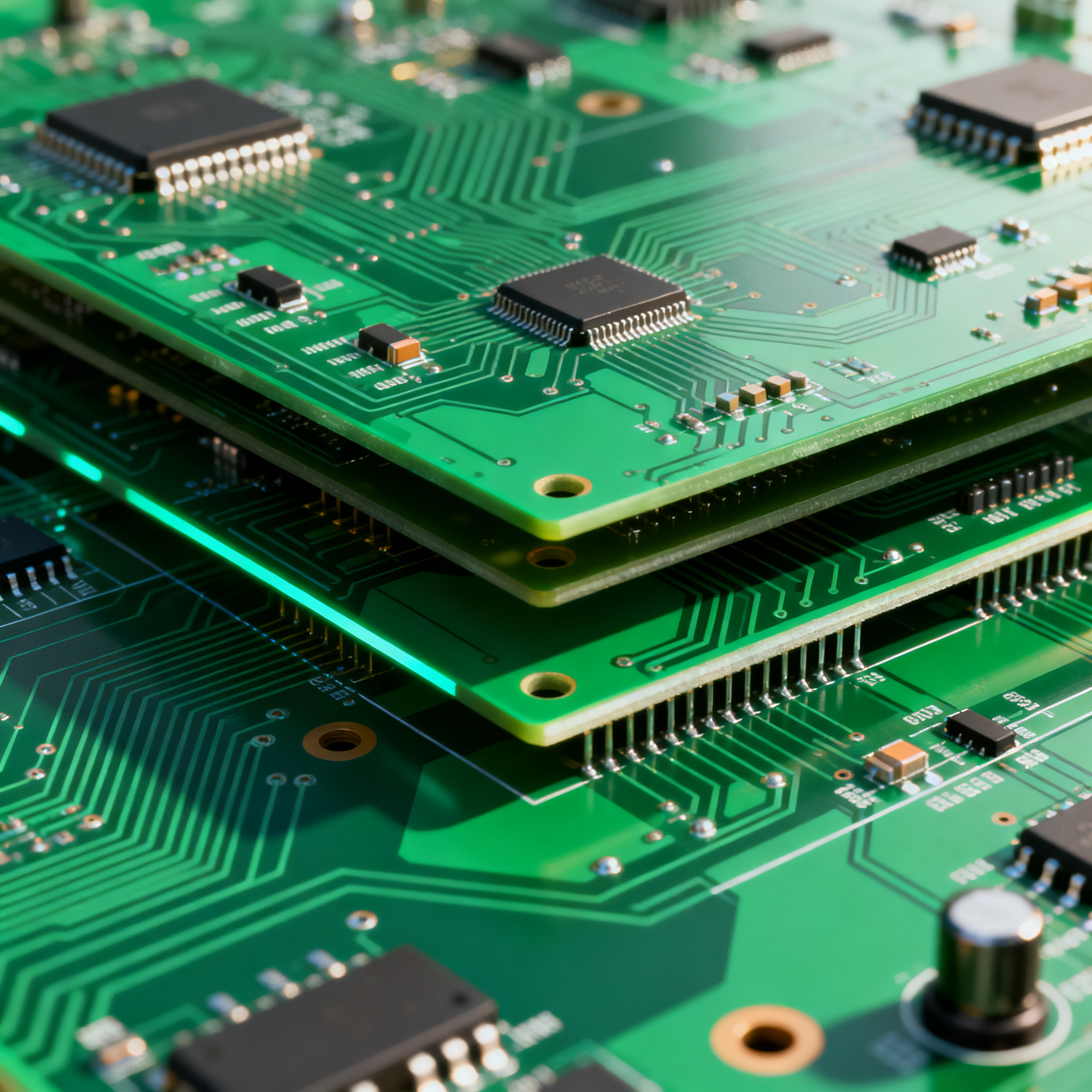
Design for Manufacturability in 6-Layer PCBs: Practical Tips for Cost-Effective Production
Design for Manufacturability in 6-Layer PCBs Introduction In the ever-evolving field of electronics, the demand for efficient and cost-effective production of printed circuit boards (PCBs) is at an al...
Introduction
In the ever-evolving field of electronics, the demand for efficient and cost-effective production of printed circuit boards (PCBs) is at an all-time high. The 6-layer PCB design is particularly significant due to its balance of complexity and cost, offering enhanced performance for various applications. Understanding the intricacies of designing for manufacturability in this context is crucial for engineers aiming to optimize production costs while maintaining high-quality standards. This article delves into practical tips and insights for achieving cost-effective production in 6-layer PCBs, focusing on component specifications, selection criteria, and application circuits.
Technical Overview
Designing a 6-layer PCB involves a nuanced understanding of the architecture and principles that govern its functionality. These PCBs typically include dedicated power and ground planes, which enhance signal integrity and reduce electromagnetic interference (EMI). The additional layers facilitate the routing of complex circuits and provide the necessary space for advanced components like IC chips, memory modules, and connectivity interfaces. The design must adhere to industry standards such as IPC-2221, which outlines the general requirements for PCB design and performance. Moreover, leveraging resources from PCB manufacturing experts like PCBWay can provide valuable insights into design rules and manufacturing capabilities, ensuring that the final product meets both functional and economic objectives.
The architecture of a 6-layer PCB typically consists of the following layers:
- Top Layer: Used for component placement and routing of critical signals.
- Inner Layer 1: Dedicated to power distribution.
- Inner Layer 2: Ground plane to minimize EMI.
- Inner Layer 3: Additional routing layer for signal paths.
- Inner Layer 4: Used for ground or power connections.
- Bottom Layer: Component placement and routing.
This configuration supports complex designs by providing ample routing channels and reducing crosstalk between signals. The choice of materials, such as high-frequency laminates and low-loss dielectrics, also plays a critical role in the PCB's performance.
Detailed Specifications
When selecting components for a 6-layer PCB, understanding the core specifications is essential. These specifications, which include CPU speed, memory capacity, peripheral interfaces, power requirements, and package types, determine the board's overall performance and compatibility with various applications. Detailed specifications ensure that the chosen components meet the desired operational criteria and fit within the physical constraints of the PCB design.
| Specification | Description | Value/Options |
|---|---|---|
| CPU Speed | Maximum clock frequency of the processor | 1.8 GHz |
| Memory | Onboard RAM capacity | 4 GB DDR4 |
| Peripherals | Available peripheral interfaces | USB 3.0, I2C, SPI |
| Power Supply | Operating voltage range | 3.3V to 5V |
| Package Type | IC package configuration | LQFP, BGA |
| Operating Temperature | Temperature range for operation | -40°C to 85°C |
| Storage Temperature | Temperature range for storage | -55°C to 125°C |
| Power Consumption | Typical power usage | 2.5W |
| Dimensions | Physical size of the IC | 15mm x 15mm |
| Pin Count | Number of pins on the IC | 64 pins |
| Data Rate | Maximum data transfer rate | 5 Gbps |
Key Takeaways from the Specifications
The core specifications table outlines critical parameters that influence the performance and compatibility of components used in 6-layer PCBs. Understanding CPU speed and memory capacity is vital for applications requiring high processing power and data handling capabilities. The availability of peripherals like USB and I2C interfaces ensures flexibility in connecting various devices, enhancing the PCB's versatility. Power supply specifications and package types dictate the design's power efficiency and integration complexity. These specifications must align with the intended application and environmental conditions, such as operating and storage temperatures, to ensure reliability and longevity. By carefully evaluating these parameters, engineers can make informed decisions that optimize performance and cost-effectiveness.
| Characteristic | Description | Value/Options |
|---|---|---|
| Operating Voltage | Nominal voltage for operation | 3.3V |
| Maximum Current | Peak current draw | 500 mA |
| Input Voltage Range | Acceptable input voltage range | 3.0V to 5.5V |
| Output Voltage | Regulated output voltage | 3.3V |
| Timing Accuracy | Accuracy of timing signals | ±2% |
| Input Capacitance | Capacitance at input pins | 5 pF |
| Output Capacitance | Capacitance at output pins | 10 pF |
| Rise Time | Time taken for signal to rise | 5 ns |
| Fall Time | Time taken for signal to fall | 5 ns |
| I/O Voltage Levels | Voltage levels for input/output | 0V to 3.3V |
| Propagation Delay | Delay in signal transmission | 10 ns |
Practical Implications
The electrical characteristics table provides insights into the operational parameters that affect the performance and stability of components in 6-layer PCBs. Operating voltage and maximum current are crucial for ensuring that the components function within safe and efficient limits. The input and output voltage levels, along with timing accuracy, play a significant role in maintaining signal integrity and preventing data corruption. Rise and fall times, as well as propagation delay, impact the speed and responsiveness of the circuit, which are critical in high-speed applications. Understanding these characteristics allows engineers to design circuits that are robust, reliable, and capable of meeting the demands of various applications, from consumer electronics to industrial automation.
| Application | Configuration | Benefits |
|---|---|---|
| Consumer Electronics | Standard 6-layer PCB with BGA | Compact design, high performance |
| Automotive Systems | Enhanced thermal management | Reliability in extreme conditions |
| Industrial Automation | Robust power and ground planes | EMI reduction, signal integrity |
| Telecommunications | High-density interconnects | Improved data transmission |
| Medical Devices | Custom layer stack-up | Precision and reliability |
| Aerospace | Lightweight materials | Weight reduction, high durability |
| Networking Equipment | Advanced routing techniques | Increased bandwidth |
| Wearable Technology | Flexible PCB options | Comfort and adaptability |
Application Guidelines
The application comparison table highlights the versatility of 6-layer PCBs across various industries. Each application benefits from specific configurations that cater to its unique requirements. For instance, consumer electronics often utilize compact designs with high-performance BGA packages, while automotive systems prioritize enhanced thermal management to withstand extreme conditions. Industrial automation applications focus on robust power and ground planes to ensure signal integrity and reduce EMI. In telecommunications, high-density interconnects are crucial for effective data transmission. The choice of configuration and materials directly impacts the performance, reliability, and cost-effectiveness of the PCB in its intended application, making it essential for engineers to align design choices with application-specific needs.
Design Considerations
When designing a 6-layer PCB, several key considerations must be addressed to ensure manufacturability and performance. First and foremost, adhering to IPC standards such as IPC-2221 and IPC-A-610 is essential for achieving high-quality and reliable designs. These standards provide guidelines for layout, material selection, and assembly processes, helping to avoid common pitfalls and ensure compatibility with manufacturing capabilities.
Material selection is another critical factor. The choice of substrate materials, such as FR-4 or high-frequency laminates, affects the board's thermal and electrical performance. Additionally, considering the thermal management requirements of the PCB is crucial, especially for applications involving high power or dense component placement. Implementing thermal vias, heat sinks, and appropriate layer stack-ups can mitigate thermal issues and enhance reliability.
Design for testability (DFT) should also be integrated into the design process. This involves incorporating test points and accessible connections to facilitate post-production testing and debugging. By ensuring that the PCB design accommodates efficient testing, engineers can reduce production costs and improve yield rates.
Finally, collaboration with PCB manufacturers during the design phase can provide valuable insights into manufacturability constraints and cost-saving opportunities. Engaging with experts from PCBWay or Nova PCBA can help identify potential issues early in the design process and optimize the design for cost-effective production.
Step-by-Step Implementation
Implementing a 6-layer PCB design involves several detailed steps that ensure a successful outcome. Here is a step-by-step guide to help engineers navigate the design process:
- Define Requirements: Begin by gathering all necessary specifications and requirements for the PCB, including component selection, performance criteria, and application-specific needs.
- Create Schematic: Develop a detailed schematic diagram that outlines the circuit design, including all components, connections, and power distribution networks.
- Select Materials: Choose suitable materials for the PCB substrate and layers, considering factors such as thermal conductivity, dielectric constant, and cost.
- Design Layout: Use PCB design software to create the layout, placing components strategically to optimize space and minimize signal interference.
- Layer Stack-Up: Define the layer stack-up, ensuring appropriate placement of power and ground planes to enhance signal integrity and thermal management.
- Routing: Route signal paths, paying attention to trace width, spacing, and via placement to meet electrical and mechanical constraints.
- Design for Manufacturability: Review the design for manufacturability, ensuring compliance with IPC standards and consulting with manufacturers to address potential issues.
- Prototype and Test: Produce a prototype of the PCB and conduct thorough testing to validate performance, identify defects, and make necessary adjustments.
- Finalize Design: Incorporate feedback from testing and finalize the design, preparing it for production.
- Production and Assembly: Work with a reputable PCB manufacturer and assembly service to produce and assemble the final product, ensuring quality control and testing throughout the process.
Common Issues & Solutions
Even with meticulous planning, common issues can arise during the design and production of 6-layer PCBs. Here are some typical problems and their solutions:
- Signal Integrity Issues: To address signal integrity problems, ensure proper placement of ground planes and use controlled impedance traces for high-speed signals.
- Thermal Management Challenges: Implement thermal vias and heat sinks to dissipate heat effectively, and consider using materials with higher thermal conductivity.
- Component Placement Conflicts: Optimize component placement by considering mechanical constraints and ensuring adequate spacing between components to prevent interference.
- Manufacturing Defects: Collaborate with manufacturers early in the design process to identify potential manufacturability constraints and incorporate DFM (Design for Manufacturability) principles.
- Testing and Debugging Difficulties: Incorporate test points and accessible connections in the design to facilitate troubleshooting and testing during production.
- Cost Overruns: Optimize the design for cost-effectiveness by selecting appropriate materials and components, and working closely with manufacturers to identify cost-saving opportunities.
Applications & Use Cases
6-layer PCBs find applications across a wide range of industries, each with unique requirements and challenges. In consumer electronics, these PCBs enable compact and high-performance designs, supporting devices such as smartphones, tablets, and gaming consoles. Automotive systems benefit from enhanced thermal management and reliability, making them suitable for engine control units and infotainment systems.
In industrial automation, 6-layer PCBs provide robust power and ground planes, ensuring signal integrity in environments with high EMI. Telecommunications applications leverage high-density interconnects for improved data transmission, supporting networking equipment and communication devices. Medical devices and aerospace applications prioritize precision, reliability, and lightweight materials, making 6-layer PCBs an ideal choice for these demanding sectors.
Selection & Sourcing Guide
Selecting and sourcing the right components for a 6-layer PCB is a critical step in the design process. Engineers should consider factors such as performance, compatibility, and cost when choosing components. Utilizing resources like IC Online can streamline the sourcing process, providing access to a wide range of components and datasheets to facilitate informed decision-making.
FAQ
Here are some frequently asked questions about designing and manufacturing 6-layer PCBs:
- What are the benefits of using a 6-layer PCB? The main benefits include improved signal integrity, reduced EMI, and the ability to handle complex circuit designs.
- How do I choose the right materials for my PCB? Consider factors such as thermal performance, dielectric properties, and cost. Consult with manufacturers for material recommendations.
- What are common design challenges with 6-layer PCBs? Challenges include signal integrity, thermal management, and manufacturability. Address these through careful design and collaboration with manufacturers.
- How can I ensure my PCB design is manufacturable? Adhere to IPC standards, incorporate DFM principles, and engage with manufacturers early in the design process.
- What tools are recommended for PCB design? Popular tools include Altium Designer, Eagle, and KiCad, each offering features for layout, routing, and simulation.
- How do I test my PCB design? Use test points and accessible connections for easy troubleshooting and validation of the design's performance.
- How can I reduce production costs for my PCB? Optimize the design for cost-effectiveness by selecting appropriate materials, components, and collaborating with manufacturers to identify cost-saving opportunities.
- What are the typical applications of 6-layer PCBs? Applications include consumer electronics, automotive systems, industrial automation, telecommunications, medical devices, and aerospace.
- How do I handle thermal management in my PCB design? Implement thermal vias, heat sinks, and select materials with higher thermal conductivity to manage heat effectively.
- Where can I source components for my PCB? Utilize resources like IC Online for component sourcing and datasheet access.
Conclusion
Designing for manufacturability in 6-layer PCBs requires a comprehensive understanding of component specifications, electrical characteristics, and application-specific requirements. By adhering to industry standards, optimizing design for performance and cost-effectiveness, and collaborating with manufacturers, engineers can achieve high-quality PCB designs that meet the demands of various industries. The insights and practical tips provided in this article serve as a valuable guide for navigating