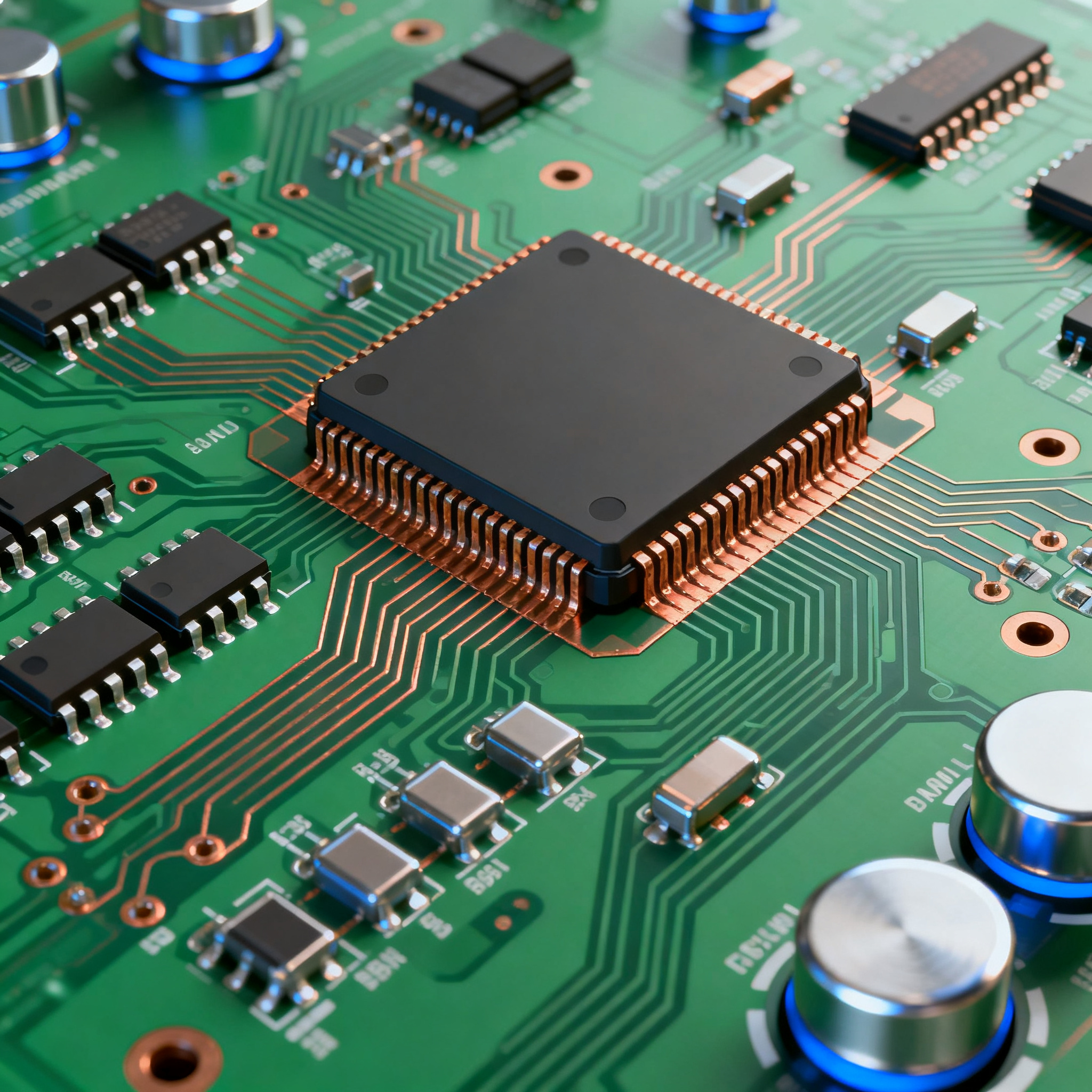
Design for Manufacturability: Essential Tips for Streamlining Your PCB Layout
Introduction In the fast-paced world of electronics, the design for manufacturability (DFM) of printed circuit boards (PCBs) is crucial for ensuring product quality, reducing costs, and speeding up ti...
Introduction
In the fast-paced world of electronics, the design for manufacturability (DFM) of printed circuit boards (PCBs) is crucial for ensuring product quality, reducing costs, and speeding up time to market. As the demand for more complex and compact electronic devices increases, PCB designers face the challenge of optimizing layouts to meet stringent performance and reliability standards. By focusing on circuit topology, component calculations, performance analysis, and design trade-offs, engineers can streamline the PCB layout process, ensuring that the final product is both efficient and manufacturable. This article delves into essential tips and strategies for achieving an optimal PCB design that meets both functional and manufacturability requirements.
Technical Overview
Design for manufacturability (DFM) is a critical aspect of PCB design that involves creating circuit layouts that are easy to produce without compromising performance. A well-optimized PCB design considers several core concepts, including circuit topology, component placement, and routing strategies. Circuit topology refers to the arrangement of components and their interconnections on the PCB, which affects signal integrity and overall performance. Component calculations involve determining the appropriate values and types of components to meet desired electrical specifications, such as resistance, capacitance, and inductance. Performance analysis is essential for evaluating parameters like gain, bandwidth, noise, and power consumption, ensuring that the PCB meets its intended functionality. Finally, design trade-offs must be considered to balance competing requirements, such as cost, size, and performance. By understanding these principles, engineers can create PCB designs that are both effective and manufacturable.
Detailed Specifications
When designing a PCB, several specifications are crucial for ensuring optimal performance and manufacturability. These specifications include component values, calculations, and formulas that determine the functionality and reliability of the circuit. By carefully selecting and calculating these parameters, engineers can ensure that the PCB meets its intended performance while remaining cost-effective and easy to manufacture. The following table outlines essential design parameters for PCB layout.
| Parameter | Value/Formula | Description |
|---|---|---|
| Resistor Value (R) | 10kΩ | Standard resistor value for pull-up/down configurations. |
| Capacitor Value (C) | 100nF | Decoupling capacitor for noise reduction. |
| Inductor Value (L) | 10μH | Inductor used in LC filters for signal smoothing. |
| Voltage (V) | 5V | Standard operating voltage for digital circuits. |
| Current (I) | 20mA | Typical current for LED indicators. |
| Power (P) | P = IV | Power calculation formula: P = Voltage x Current. |
| Frequency (f) | 1MHz | Operating frequency for clock signals. |
| Impedance (Z) | Z = √(R² + (XL - XC)²) | Impedance calculation for AC circuits. |
| Gain (Av) | Av = Vout/Vin | Voltage gain for amplifiers. |
| Bandwidth (BW) | BW = f2 - f1 | Frequency range over which the circuit operates effectively. |
| Signal-to-Noise Ratio (SNR) | SNR = 20log(Vsignal/Vnoise) | Ratio of signal power to noise power in decibels. |
| Thermal Resistance (θJA) | 40°C/W | Junction-to-ambient thermal resistance for heat dissipation. |
Key Takeaways from the Specifications
The design parameters outlined in the table provide a foundation for creating a functional and manufacturable PCB layout. Resistor, capacitor, and inductor values are critical for ensuring proper signal conditioning and noise reduction. Voltage and current specifications help determine the power requirements of the circuit, while impedance calculations ensure signal integrity in AC circuits. Gain and bandwidth are essential for amplifying and processing signals within the desired frequency range. Additionally, the thermal resistance parameter is crucial for managing heat dissipation, preventing component failure due to overheating. By understanding and applying these specifications, engineers can design PCBs that meet performance requirements while being optimized for manufacturability.
| Performance Parameter | Value | Significance |
|---|---|---|
| Gain | 10 dB | Indicates the amplification level of the circuit. |
| Bandwidth | 20 MHz | Frequency range over which the circuit effectively operates. |
| Noise Figure | 3 dB | Measure of the degradation of the signal-to-noise ratio. |
| Power Consumption | 500 mW | Total power used by the circuit during operation. |
| Signal Integrity | 95% | Percentage of signal preservation through the circuit. |
| Latency | 5 ns | Time delay between input and output signals. |
| Efficiency | 85% | Ratio of output power to input power. |
| Thermal Performance | 60°C | Operating temperature under load conditions. |
| Reliability | 99.9% | Probability of failure-free operation over time. |
| EMI Compliance | Yes | Conformance to electromagnetic interference standards. |
Practical Implications
The performance analysis table highlights key parameters that are vital for evaluating the effectiveness of a PCB design. Gain and bandwidth are crucial for ensuring that the circuit can amplify and process signals across the desired frequency range. A low noise figure is essential for maintaining a high signal-to-noise ratio, which is critical for applications requiring signal clarity. Power consumption and efficiency indicate the circuit's energy requirements and operational cost-effectiveness. Thermal performance and reliability are important for ensuring long-term operation without overheating or failure. Finally, EMI compliance ensures that the circuit does not interfere with other electronic devices, making it suitable for real-world applications. By analyzing these performance parameters, engineers can make informed decisions to optimize their PCB designs.
| Configuration | Pros | Cons |
|---|---|---|
| Single-Sided PCB | Low cost, simple design | Limited routing space, lower performance |
| Double-Sided PCB | Increased routing options, moderate cost | More complex manufacturing |
| Multilayer PCB | High performance, compact design | Higher cost, complex manufacturing |
| Flexible PCB | Versatile, lightweight | Costly materials, lower durability |
| Rigid-Flex PCB | Flexible and durable, space-saving | Complex design process |
| HDI PCB | High density, improved performance | Expensive fabrication |
| Metal Core PCB | Excellent heat dissipation | Heavier, more expensive |
| RF PCB | Optimized for high-frequency signals | Requires specialized materials |
Application Guidelines
The design trade-offs table presents different PCB configurations, each with its advantages and disadvantages. Single-sided PCBs are cost-effective and simple but offer limited routing space and performance. In contrast, double-sided and multilayer PCBs provide more routing options and higher performance but come with increased complexity and cost. Flexible and rigid-flex PCBs offer versatility and space-saving benefits, making them ideal for compact and dynamic applications. However, they require careful material selection and design processes. HDI and metal core PCBs are suitable for high-performance and heat-intensive applications but involve higher fabrication costs. By understanding these trade-offs, engineers can select the appropriate PCB configuration based on application requirements and budget constraints.
Design Considerations
When designing a PCB for manufacturability, several practical guidelines can help ensure a streamlined process. First, adhere to industry standards such as IPC-A-610 and IPC-2221, which provide guidelines for PCB design, assembly, and inspection. These standards help ensure quality and reliability throughout the manufacturing process. Second, prioritize component placement and routing to minimize trace lengths and avoid signal integrity issues. Use appropriate trace widths and spacing to handle current loads and reduce the risk of crosstalk. Third, incorporate design rule checks (DRCs) to identify potential design violations early in the process. Fourth, consider the use of ground planes and power planes to enhance signal integrity and thermal performance. Finally, collaborate closely with manufacturers to understand their capabilities and limitations, ensuring that the design aligns with their processes and equipment. By following these guidelines, engineers can create PCB designs that are both efficient and manufacturable.
Step-by-Step Implementation
Implementing a PCB design for manufacturability involves several key steps. First, define the circuit's requirements and specifications, including electrical, thermal, and mechanical constraints. Next, create a schematic diagram that outlines the circuit topology and component connections. Use simulation tools to verify the circuit's performance and make necessary adjustments. Once the schematic is complete, proceed to the layout phase, focusing on component placement and routing strategies. Use design rule checks (DRCs) to ensure compliance with industry standards and manufacturer capabilities. After completing the layout, generate Gerber files and other necessary documentation for manufacturing. Collaborate with the manufacturer to review the design and address any potential issues. Finally, conduct thorough testing and validation of the prototype to ensure it meets the desired performance and reliability standards. By following these steps, engineers can create a manufacturable PCB design that meets all functional and operational requirements.
Common Issues & Solutions
During the PCB design and manufacturing process, several common issues may arise. One issue is signal integrity problems, which can be addressed by optimizing trace routing and using ground planes. Another issue is thermal management, which can be improved by incorporating heat sinks and thermal vias. Component placement errors can lead to assembly difficulties, so it's essential to follow placement guidelines and use design rule checks. EMI interference is another concern, which can be mitigated by proper shielding and filtering techniques. Finally, manufacturing defects such as solder bridges can be minimized by maintaining precise solder mask alignment and using appropriate pad sizes. By identifying and addressing these issues early in the design process, engineers can ensure a successful PCB manufacturing outcome.
Applications & Use Cases
PCBs designed for manufacturability are used in a wide range of applications across various industries. In consumer electronics, they are used in smartphones, tablets, and wearable devices, where compact size and reliability are paramount. In the automotive industry, PCBs are employed in engine control units, infotainment systems, and advanced driver assistance systems (ADAS). Industrial applications include automation equipment, robotics, and power management systems, where durability and performance are critical. In the medical field, PCBs are used in diagnostic equipment, patient monitoring devices, and implantable medical devices. By optimizing PCB designs for manufacturability, engineers can ensure their successful integration into these diverse applications.
Selection & Sourcing Guide
When selecting and sourcing components for a PCB design, it's essential to consider several factors to ensure compatibility and performance. First, assess the electrical specifications, such as voltage, current, and power ratings, to match the design requirements. Second, consider the component's physical dimensions and package type to ensure proper fit on the PCB layout. Third, evaluate the component's availability and lead time to avoid delays in the manufacturing process. Additionally, consider the component's cost and reliability to balance performance with budget constraints. For sourcing components, resources like IC Online provide a comprehensive selection of electronic components from reputable suppliers. By carefully selecting and sourcing components, engineers can enhance the manufacturability and reliability of their PCB designs.
FAQ
- What is design for manufacturability (DFM) in PCB design? DFM involves creating PCB layouts that are easy to produce without compromising performance, focusing on factors like circuit topology, component placement, and routing strategies.
- Why are IPC standards important in PCB design? IPC standards provide guidelines for PCB design, assembly, and inspection, ensuring quality and reliability throughout the manufacturing process.
- How can I improve signal integrity in my PCB design? Optimize trace routing, use ground planes, and follow design rule checks to minimize signal integrity issues.
- What are the benefits of using multilayer PCBs? Multilayer PCBs offer increased routing options, higher performance, and compact designs, making them suitable for complex applications.
- How do I manage thermal performance in a PCB design? Incorporate heat sinks, thermal vias, and proper component placement to enhance thermal management and prevent overheating.
- What are common manufacturing defects in PCBs? Common defects include solder bridges, misaligned solder masks, and signal integrity issues, which can be minimized through careful design and review processes.
- What is the role of design rule checks (DRCs) in PCB design? DRCs help identify potential design violations early in the process, ensuring compliance with industry standards and manufacturer capabilities.
- How can I ensure EMI compliance in my PCB design? Use proper shielding and filtering techniques to minimize electromagnetic interference and meet compliance standards.
- What are the advantages of using HDI PCBs? HDI PCBs offer high density, improved performance, and are ideal for applications requiring compact and high-speed designs.
- How do I select the right PCB configuration for my application? Consider factors such as performance requirements, cost, size constraints, and manufacturing complexity to choose the appropriate PCB configuration.
Conclusion
Designing PCBs for manufacturability is a critical aspect of the electronics industry, ensuring that products are both efficient and easy to produce. By focusing on key design parameters, performance analysis, and trade-offs, engineers can create optimized PCB layouts that meet stringent performance and reliability standards. By adhering to industry guidelines, collaborating with manufacturers, and carefully selecting components, engineers can streamline the design process and achieve successful manufacturing outcomes. Ultimately, a well-designed PCB not only enhances product quality but also reduces costs and accelerates time to market, driving success in the competitive electronics industry.