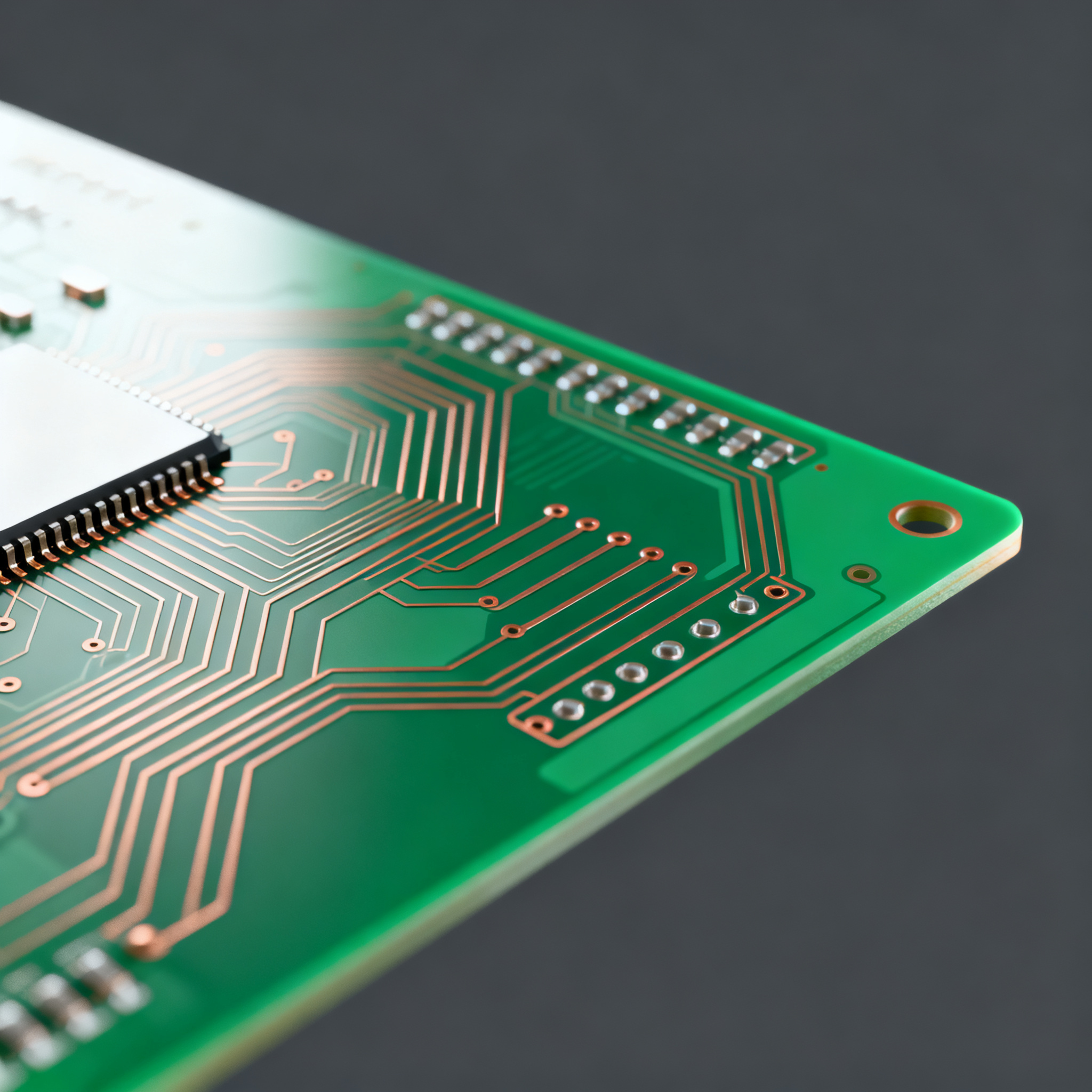
Custom PCB Cost Analysis: A Practical Guide to Budgeting Your Next Project
Custom PCB Cost Analysis: A Practical Guide to Budgeting Your Next Project table { border-collapse: collapse; width: 100%; margin: 20px 0; } th, td { border: 1px solid #ddd; padding: 8px; } th { backg...
Introduction
In the rapidly evolving electronics industry, the demand for custom printed circuit boards (PCBs) is increasing due to the need for specialized and efficient designs. Understanding the cost analysis of custom PCBs is crucial for engineers and businesses to budget effectively and ensure the successful execution of projects. This guide aims to provide a comprehensive overview of the cost factors, component specifications, and practical considerations necessary for budgeting your next custom PCB project.
Technical Overview
The design and manufacturing of custom PCBs involve several technical considerations. The architecture of a PCB includes layers of copper and insulating material, which are etched and laminated to create circuits. Key principles include signal integrity, power distribution, and thermal management. Understanding these concepts is essential in designing a PCB that meets performance requirements and minimizes production costs.
Core concepts such as impedance control, trace routing, and component placement play significant roles in PCB design. Engineers must also adhere to industry standards such as those set by IPC to ensure quality and reliability. By considering these technical aspects, engineers can create efficient designs that meet both functional and economic objectives.
Detailed Specifications
When designing a custom PCB, several specifications need to be considered to ensure the board meets its intended application. These include CPU speed, memory capacity, peripheral interfaces, power requirements, and package type. Selecting the right components based on these specifications is crucial for achieving the desired performance and cost objectives.
| Specification | Value | Notes |
|---|---|---|
| CPU Speed | 1.2 GHz | High performance for demanding applications |
| Memory | 512 MB | Sufficient for general-purpose tasks |
| Peripherals | USB, SPI, I2C | Supports multiple interfaces |
| Power | 3.3V, 5V | Dual voltage options for flexibility |
| Package | QFN | Compact size for space savings |
| Temperature Range | -40°C to 85°C | Wide range for industrial use |
| Operating System | Embedded Linux | Open-source and customizable |
| Connectivity | Wi-Fi, Bluetooth | Wireless communication capabilities |
| Clock Speed | 400 MHz | Stable operation |
| Storage | 8 GB eMMC | Ample storage for embedded systems |
Key Takeaways from the Specifications
The core specifications table highlights the essential features required for designing a custom PCB. CPU speed and memory are critical for processing capabilities, while peripheral interfaces determine the board's connectivity options. Power requirements and packaging influence the board's physical design and energy efficiency. Understanding these specifications helps engineers select components that align with the project's functional and budgetary goals.
| Characteristic | Value | Notes |
|---|---|---|
| Operating Voltage | 3.3V | Standard for low-power applications |
| Max Current | 500 mA | Ensures sufficient power delivery |
| Input Leakage Current | 1 µA | Low leakage for power efficiency |
| Output High Voltage | 2.9V | Compatible with most logic levels |
| Output Low Voltage | 0.4V | Standard for digital circuits |
| Clock Frequency | 50 MHz | Suitable for high-speed operations |
| Propagation Delay | 5 ns | Low delay for fast signal processing |
| Input Capacitance | 5 pF | Minimal impact on signal integrity |
| Output Drive Current | 20 mA | Supports multiple loads |
| Power Dissipation | 150 mW | Efficient thermal management |
Practical Implications
The electrical characteristics table provides insight into the component's power and signal specifications. Operating voltage and current are crucial for ensuring compatibility with the power supply. Timing parameters like propagation delay and clock frequency affect the system's performance and speed. By understanding these characteristics, engineers can design circuits that meet the application's power and performance requirements while optimizing for cost and efficiency.
| Application | Configuration | Notes |
|---|---|---|
| IoT Devices | Low Power, Wi-Fi | Optimized for energy efficiency |
| Industrial Control | High Performance, Robust | Designed for harsh environments |
| Consumer Electronics | Compact, Cost-Effective | Focus on affordability |
| Automotive | High Reliability, CAN Bus | Meets automotive standards |
| Medical Devices | Precision, Low Noise | Ensures patient safety |
| Telecommunications | High Bandwidth, Low Latency | Supports fast data transfer |
Application Guidelines
Application comparison highlights how different configurations cater to specific use cases. For IoT devices, low power and Wi-Fi connectivity are prioritized for extended battery life. Industrial control systems require high performance and robustness to withstand harsh conditions. Understanding these application-specific requirements enables engineers to customize PCB designs that meet the unique demands of each sector, ensuring optimal functionality and cost-effectiveness.
Design Considerations
Designing a custom PCB involves several critical considerations to ensure the board meets both functional and economic objectives. Key factors include:
- Component Selection: Choose components that balance performance and cost. Consider availability and lead times to prevent delays.
- Layer Stack-Up: Determine the number of layers required for signal routing and power distribution while minimizing costs.
- Trace Routing: Optimize trace widths and spacing to maintain signal integrity and minimize crosstalk.
- Thermal Management: Implement heat sinks, thermal vias, and copper pours to dissipate heat effectively.
- Regulatory Compliance: Ensure the design adheres to industry standards such as IPC and meets regulatory requirements.
- Prototyping: Develop prototypes to test and validate the design before full-scale production.
By carefully considering these design elements, engineers can create efficient, reliable, and cost-effective PCBs that meet the project's requirements and budget constraints.
Step-by-Step Implementation
- Define Requirements: Clearly outline the project specifications, including performance, size, and environmental conditions.
- Select Components: Choose appropriate components based on the specifications and availability. Refer to datasheets for detailed information.
- Create Schematic: Design the circuit schematic using CAD software, incorporating all necessary components and connections.
- Design PCB Layout: Use PCB design software to arrange components and route traces, ensuring optimal signal integrity and power distribution.
- Review Design: Conduct a thorough design review to check for errors, compliance with standards, and manufacturability.
- Prototype and Test: Manufacture prototypes and conduct testing to validate the design and identify any issues.
- Iterate Design: Refine the design based on prototype testing results, making necessary adjustments to improve performance and reliability.
- Finalize Production: Once satisfied with the design, proceed with full-scale production, ensuring quality control throughout the process.
Common Issues & Solutions
- Signal Integrity Problems: Use proper trace routing and impedance control to minimize crosstalk and reflections.
- Thermal Management Challenges: Incorporate thermal vias, heat sinks, and copper pours to enhance heat dissipation.
- Power Supply Noise: Implement decoupling capacitors and proper grounding techniques to reduce noise and interference.
- Component Availability: Plan for alternative components and suppliers to mitigate supply chain disruptions.
- Manufacturing Defects: Work closely with manufacturers to ensure adherence to design specifications and quality standards.
- Regulatory Compliance: Stay updated on industry standards and regulations to ensure compliance throughout the design and manufacturing process.
Applications & Use Cases
Custom PCBs are utilized in a wide range of applications, each with specific requirements. In consumer electronics, cost-effectiveness and compact size are prioritized. Industrial control systems demand robustness and high performance to withstand harsh environments. Automotive applications require high reliability and compliance with automotive standards. By understanding the unique demands of each use case, engineers can design PCBs that meet specific functional and economic objectives.
Selection & Sourcing Guide
Selecting the right components and sourcing them efficiently is crucial for successful PCB projects. Utilize resources like IC Online to access a wide range of components, datasheets, and supplier information. Consider factors such as lead times, pricing, and availability to ensure timely and cost-effective procurement.
FAQ
- What is the importance of CPU speed in PCB design? CPU speed determines the processing capability and performance of the PCB, crucial for applications requiring high computational power.
- How does memory capacity affect PCB functionality? Memory capacity impacts the board's ability to store and process data, affecting the overall performance and efficiency.
- Why are peripheral interfaces important in PCB design? Peripheral interfaces determine the board's connectivity options, enabling communication with other devices and systems.
- What are the key considerations for power requirements? Power requirements influence the board's energy efficiency, compatibility with power supplies, and overall performance.
- How does package type affect PCB design? Package type impacts the board's physical size, layout, and thermal management, influencing the overall design and cost.
- What is the significance of operating voltage in electrical characteristics? Operating voltage determines the board's compatibility with power supplies and impacts energy efficiency and performance.
- How do timing parameters affect PCB performance? Timing parameters like clock frequency and propagation delay influence the board's speed and data processing capabilities.
- What are the benefits of prototyping in PCB design? Prototyping allows for testing and validation of the design, identifying issues and making necessary adjustments before full-scale production.
- How can engineers ensure regulatory compliance? Staying updated on industry standards and regulations ensures compliance throughout the design and manufacturing process.
- What are the challenges of sourcing components? Component availability, lead times, and pricing are common challenges, requiring strategic planning and alternative sourcing options.
Conclusion
In conclusion, understanding the cost analysis and technical specifications of custom PCBs is essential for successful project execution. By considering factors such as component selection, electrical characteristics, and application-specific requirements, engineers can design cost-effective and efficient PCBs. Utilizing resources like IC Online for component sourcing further enhances the project's success. With careful planning and adherence to industry standards, custom PCBs can meet the functional and economic objectives of any project.