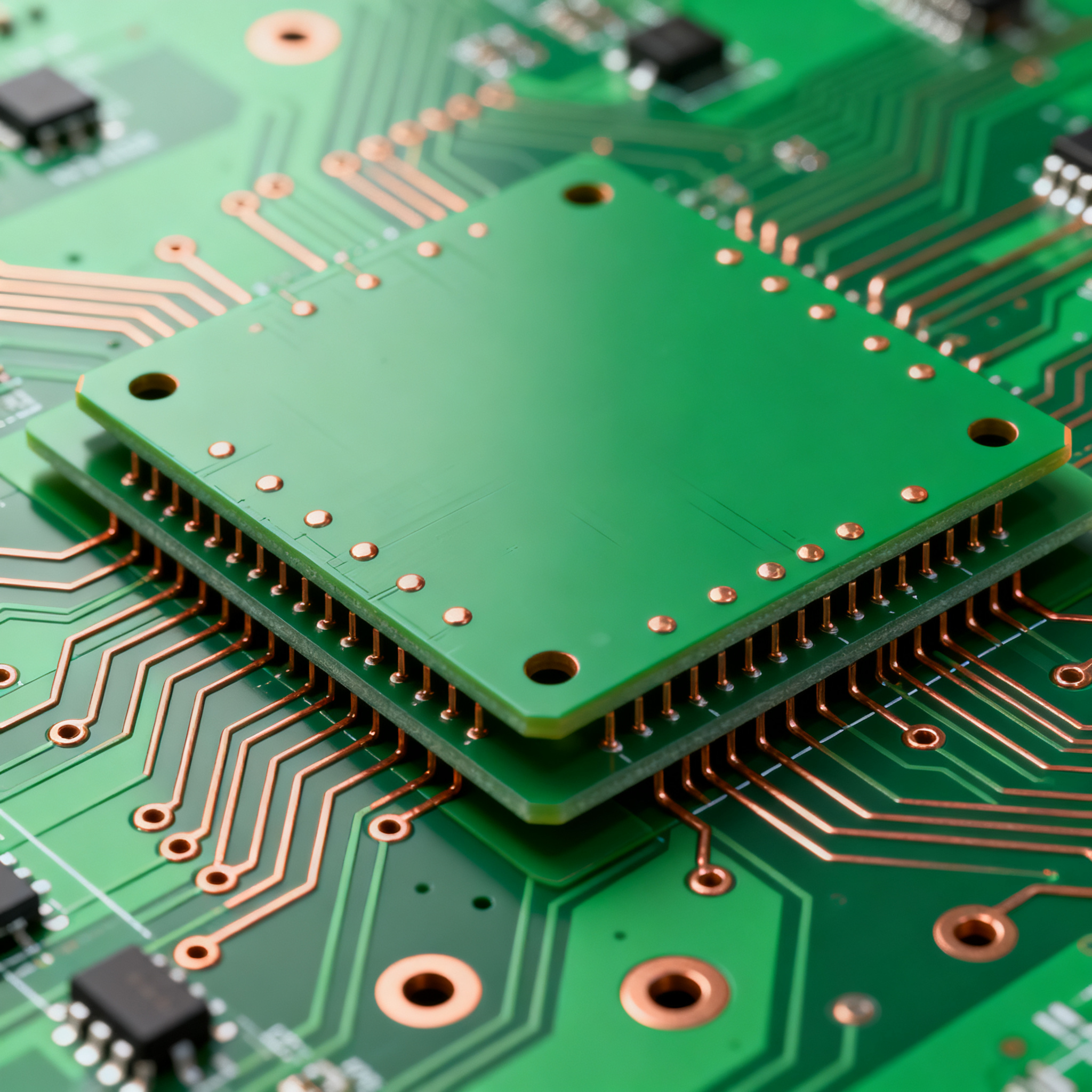
Cost Optimization Tips for Multilayer PCB Projects: Balancing Quality and Budget
Cost Optimization Tips for Multilayer PCB Projects Introduction In today's fast-paced electronics industry, the demand for compact and efficient designs has made multilayer PCBs a cornerstone of moder...
Introduction
In today's fast-paced electronics industry, the demand for compact and efficient designs has made multilayer PCBs a cornerstone of modern electronics. Balancing the quality of these complex designs with budget constraints can be challenging. However, by understanding and implementing strategic cost optimization techniques, engineers can achieve the perfect balance between performance and expense. This article delves into essential practices for optimizing costs in multilayer PCB projects, focusing on PCB layout rules, stackup design, signal integrity, and manufacturing considerations.
Technical Overview
Multilayer PCBs are a sophisticated solution to the ever-growing need for compact and high-performance electronic devices. These PCBs consist of multiple layers of conductive copper and insulating material laminated together. The complexity of multilayer designs enables the integration of advanced features while maintaining a compact form factor. Core concepts such as signal integrity, impedance control, and thermal management are vital in the design of multilayer PCBs. Understanding the architecture and principles of these boards is crucial for optimizing both performance and cost.
Signal integrity ensures that signals are transmitted without distortion, which is critical in high-speed applications. Impedance control is another key aspect, particularly in RF and microwave circuits, where precise impedance matching is required. Thermal management involves the efficient dissipation of heat generated by electronic components to maintain reliability and performance. By addressing these core principles, engineers can design multilayer PCBs that meet both technical and budgetary requirements.
Detailed Specifications
When working on multilayer PCB projects, understanding specific design specifications is crucial. These specifications include trace width, spacing, via sizes, and clearances, which significantly impact the board's performance and cost. Adhering to industry standards, such as those provided by IPC, ensures quality and reliability. The following table outlines key PCB design rules that engineers should consider during the design phase.
| Design Parameter | Standard Value | Importance |
|---|---|---|
| Trace Width | 0.15 mm | Determines current capacity |
| Trace Spacing | 0.2 mm | Prevents short circuits |
| Via Diameter | 0.3 mm | Ensures reliable connections |
| Via Hole Size | 0.2 mm | Supports signal integrity |
| Annular Ring | 0.05 mm | Improves mechanical strength |
| Clearance to Edge | 0.5 mm | Prevents edge shorts |
| Power Plane Clearance | 0.2 mm | Reduces parasitic capacitance |
| Solder Mask Clearance | 0.1 mm | Ensures proper soldering |
| Component Pad Size | 0.5 mm | Supports component placement |
| Minimum Hole Size | 0.1 mm | Accommodates small vias |
Key Takeaways from the Specifications
The specifications outlined in the table above are vital for ensuring the reliability and performance of multilayer PCBs. Trace width and spacing are directly linked to the board's current carrying capacity and the potential for short circuits, respectively. Vias, both in diameter and hole size, play a crucial role in maintaining signal integrity and ensuring reliable interconnections across layers. The annular ring adds mechanical strength, which is particularly important in high-vibration environments. Furthermore, clearances, whether to edges or power planes, help prevent shorts and reduce unwanted capacitance. By adhering to these specifications, engineers can design PCBs that meet performance requirements while avoiding costly redesigns.
| Layer Configuration | Application | Benefits |
|---|---|---|
| 2-Layer | Basic consumer electronics | Cost-effective |
| 4-Layer | Communication devices | Improved EMI control |
| 6-Layer | Industrial controls | Enhanced signal integrity |
| 8-Layer | Advanced computing | Complex routing capabilities |
| 10-Layer | Military applications | High reliability |
| 12-Layer | High-performance RF | Superior impedance control |
| 16-Layer | Data centers | Maximum signal integrity |
Practical Implications
Choosing the right layer stackup configuration is crucial in balancing cost and performance. A 2-layer board is typically sufficient for basic consumer electronics, offering a cost-effective solution. However, as the application complexity increases, additional layers are required to manage EMI, signal integrity, and routing challenges. For instance, a 4-layer board provides better EMI control, while a 6-layer configuration enhances signal integrity, making it suitable for industrial controls. Advanced computing and military applications often require 8 to 10 layers to accommodate complex routing and ensure high reliability. By selecting the appropriate stackup, engineers can optimize performance while managing costs effectively.
| Material | Dielectric Constant (Dk) | Loss Tangent (Df) |
|---|---|---|
| FR-4 | 4.5 | 0.02 |
| Rogers 4350B | 3.48 | 0.0037 |
| Rogers 4003C | 3.55 | 0.0027 |
| Isola FR408 | 3.75 | 0.009 |
| Nelco N7000-2 | 3.6 | 0.002 |
| Arlon 85N | 3.5 | 0.003 |
| Panasonic Megtron 6 | 3.3 | 0.002 |
| DuPont Pyralux | 3.4 | 0.0025 |
| Ventec VT-47 | 3.75 | 0.004 |
Application Guidelines
Selecting the right material for a multilayer PCB is critical for ensuring performance and cost-effectiveness. FR-4 is a popular choice for general applications due to its affordability and decent dielectric properties. However, for high-frequency applications, materials like Rogers 4350B and Rogers 4003C are preferred due to their lower dielectric constant and loss tangent, which minimize signal loss and distortion. For applications requiring high thermal stability, materials like Panasonic Megtron 6 and DuPont Pyralux offer excellent performance. By understanding the material properties, engineers can make informed decisions that align with the specific requirements of their projects.
Design Considerations
Effective design considerations are pivotal in optimizing costs for multilayer PCB projects. Key aspects include selecting appropriate materials, optimizing trace routing, and considering thermal management. Material selection should balance performance with cost, choosing options that meet dielectric and thermal requirements without unnecessary expense. Trace routing should minimize length and avoid unnecessary vias, which can increase complexity and cost. Thermal management is crucial, particularly in high-power applications, where inadequate heat dissipation can lead to component failure and increased maintenance costs. Furthermore, adhering to industry standards, such as IPC guidelines, ensures quality while avoiding costly redesigns. By focusing on these considerations, engineers can deliver high-quality, cost-effective PCB designs.
Step-by-Step Implementation
Implementing a successful multilayer PCB design involves several critical steps that ensure both performance and cost-effectiveness:
- Define Requirements: Clearly outline the project requirements and constraints, including electrical, mechanical, and thermal specifications.
- Select Materials: Choose materials that balance performance with cost, considering dielectric properties and thermal management needs.
- Design Layout: Create an initial layout, focusing on minimizing trace lengths and optimizing component placement to reduce parasitic effects.
- Stackup Configuration: Determine the appropriate layer stackup, considering the complexity of routing and signal integrity requirements.
- Conduct Simulations: Use simulation tools to verify signal integrity, thermal performance, and impedance matching.
- Prototype Fabrication: Manufacture a prototype using selected materials and configurations, adhering to industry standards.
- Testing and Validation: Thoroughly test the prototype to ensure it meets all design specifications and performance criteria.
- Iterate and Finalize: Based on testing results, make necessary adjustments to the design and finalize for production.
Common Issues & Solutions
Multilayer PCB projects often encounter common issues, but with the right strategies, these can be effectively addressed:
- Signal Integrity Problems: Use controlled impedance traces and adequate spacing to minimize crosstalk and reflections.
- Thermal Management Challenges: Implement thermal vias and heat sinks to dissipate heat efficiently.
- Manufacturing Defects: Adhere to IPC standards and conduct thorough inspections to ensure quality.
- Component Placement Errors: Utilize automated design tools to optimize component placement and routing.
- Cost Overruns: Regularly review design choices and material selections to ensure they align with budget constraints.
- Design Rule Violations: Use design rule checkers to identify and rectify violations early in the design process.
Applications & Use Cases
Multilayer PCBs are integral to various industries, each leveraging their unique benefits:
- Consumer Electronics: Smartphones and tablets utilize multilayer PCBs for compact designs and enhanced functionality.
- Automotive Industry: Advanced driver-assistance systems (ADAS) rely on robust multilayer PCBs for reliable performance.
- Telecommunications: High-speed networking equipment uses multilayer designs for superior signal integrity.
- Medical Devices: Diagnostic equipment benefits from the compactness and reliability of multilayer PCBs.
- Aerospace: Complex avionics systems utilize multilayer designs for enhanced reliability and performance.
Selection & Sourcing Guide
Selecting and sourcing components for multilayer PCBs requires careful consideration of both quality and cost. Engineers should prioritize suppliers who adhere to industry standards and offer reliable components. For a comprehensive selection of electronic components, visit IC Online. This platform provides a wide range of options, ensuring that you can find the right components for your specific needs while staying within budget.
FAQ
- What is the advantage of using multilayer PCBs? Multilayer PCBs offer increased functionality and compactness, allowing for more complex circuits in smaller spaces.
- How do I choose the right stackup configuration? Consider the application's complexity, signal integrity requirements, and cost constraints when selecting a stackup configuration.
- What factors affect PCB manufacturing costs? Material selection, layer count, and design complexity are key factors influencing manufacturing costs.
- How can I ensure signal integrity in multilayer PCBs? Use proper trace width, spacing, and impedance control to maintain signal integrity.
- What role does thermal management play in PCB design? Effective thermal management prevents overheating, ensuring reliability and performance.
- Why is material selection important in PCB design? Material properties affect dielectric performance, thermal stability, and overall cost.
- How do I verify my PCB design before manufacturing? Conduct simulations to test signal integrity, thermal performance, and impedance matching.
- What are common issues in multilayer PCB design? Common issues include signal integrity problems, thermal challenges, and manufacturing defects.
- How can I optimize costs in multilayer PCB projects? Optimize costs by selecting appropriate materials, minimizing design complexity, and adhering to industry standards.
- What is the significance of IPC standards in PCB design? IPC standards ensure quality, reliability, and manufacturability in PCB designs.
Conclusion
Multilayer PCB projects present both challenges and opportunities for cost optimization. By understanding the intricacies of design specifications, material properties, and stackup configurations, engineers can create high-performance, cost-effective solutions. Adhering to industry standards and employing strategic design considerations are crucial in balancing quality with budget. Through careful planning and execution, multilayer PCB projects can meet the demands of modern electronics, delivering reliable and efficient designs that drive innovation forward.