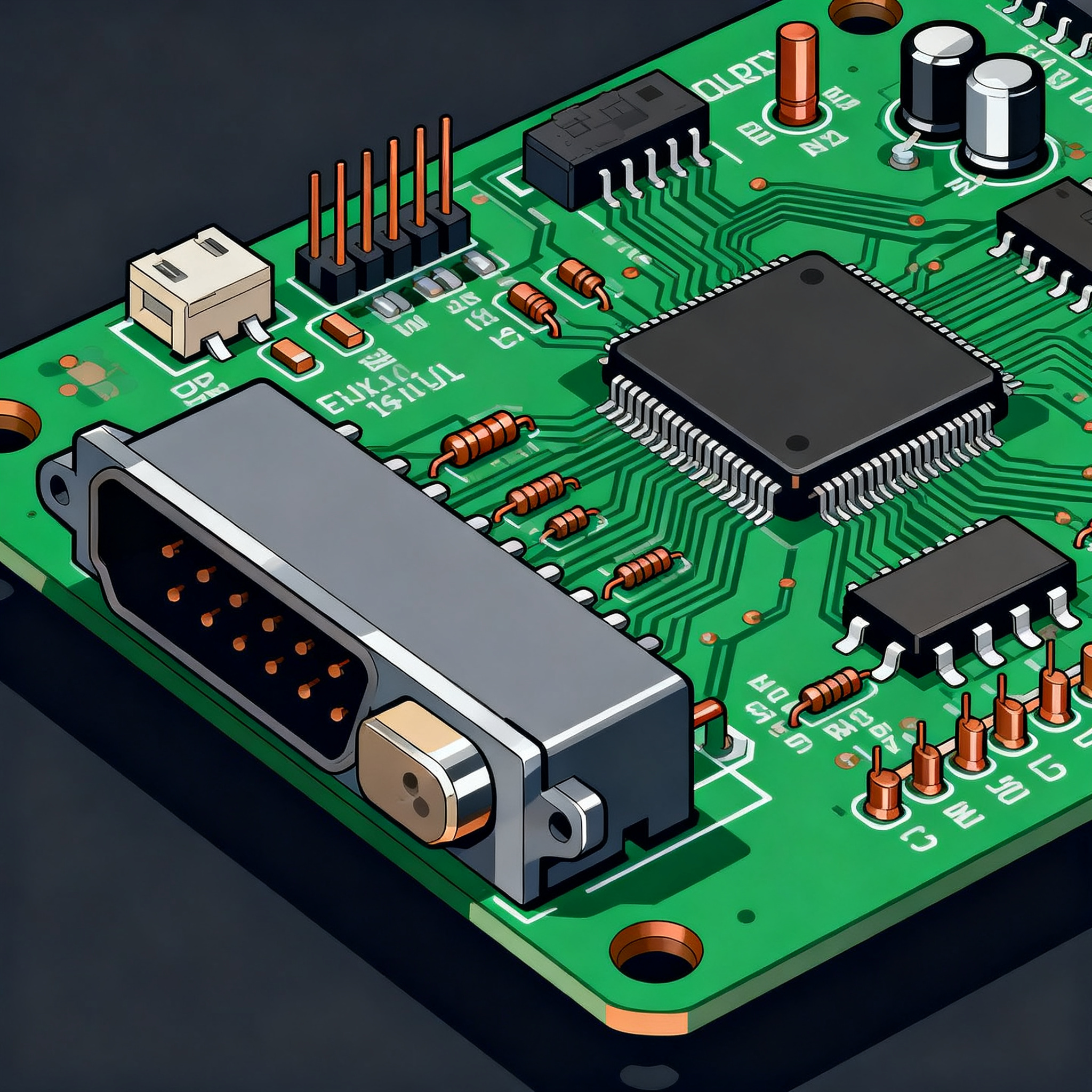
Automotive Control Module PCB Assembly: A Practical Guide with Real-World Examples
Automotive Control Module PCB Assembly: A Practical Guide with Real-World Examples Introduction In the rapidly evolving automotive industry, the role of control modules is becoming increasingly critic...
Introduction
In the rapidly evolving automotive industry, the role of control modules is becoming increasingly critical. These modules are the nerve centers of modern vehicles, managing everything from engine performance to safety features. As vehicles grow more complex, the design and assembly of automotive control module PCBs become vital for ensuring reliability and performance. This guide delves into the intricacies of PCB assembly for automotive control modules, offering practical insights and real-world examples to aid engineers and manufacturers.
Technical Overview
Automotive control modules are integral to the electronic systems of vehicles, acting as the brain that coordinates various functions. These modules typically consist of a microcontroller or processor, memory, and a range of peripherals to interface with sensors and actuators. The architecture of these modules is designed to handle high-speed data processing and real-time control tasks. Key principles include robustness to withstand harsh automotive environments, low power consumption for efficiency, and scalability to accommodate future upgrades. Understanding these core concepts is crucial for designing effective control modules.
Detailed Specifications
When selecting components for automotive control modules, several specifications are paramount. These include CPU speed, memory capacity, peripheral interfaces, power requirements, and packaging. Each specification impacts the module's performance, reliability, and integration into the vehicle system. Below is a table detailing the core specifications of typical automotive control modules.
| Specification | Detail | Notes |
|---|---|---|
| CPU Speed | 1 GHz | High processing power for real-time tasks |
| Memory | 512MB RAM, 4GB Flash | Ample storage for software and data |
| Peripherals | CAN, LIN, SPI, I2C | Essential for automotive communication |
| Power Supply | 3.3V, 5V | Standard automotive voltage levels |
| Package | LQFP-144 | Surface-mount package for compact design |
| Operating Temperature | -40°C to 125°C | Suitable for automotive environments |
| ADC Resolution | 12-bit | High accuracy for sensor readings |
| PWM Channels | 8 | Control of various actuators |
| GPIO Pins | 48 | Flexible I/O options |
| Watchdog Timer | Yes | Ensures system reliability |
Key Takeaways from the Specifications
The specifications detailed above highlight the critical aspects of designing a robust automotive control module. CPU speed and memory are pivotal for handling complex algorithms and storing large amounts of data. The inclusion of multiple peripheral interfaces like CAN and LIN is essential for seamless communication with other vehicle systems. Power supply specifications ensure compatibility with standard automotive power levels, while the operating temperature range guarantees performance in diverse conditions. These specifications guide engineers in selecting suitable components that meet the stringent demands of automotive applications.
| Characteristic | Value | Notes |
|---|---|---|
| Supply Voltage | 3.3V, 5V | Typical operating voltages |
| Supply Current | 200 mA | Low power consumption |
| Input Voltage Range | 0-5V | Compatible with sensor outputs |
| Output Current | 20 mA per pin | Sufficient for driving LEDs and small loads |
| Clock Frequency | 16 MHz | Determines processing speed |
| ADC Input Impedance | 10 kΩ | Minimizes loading on sensors |
| Propagation Delay | 10 ns | Fast response for real-time control |
| Standby Current | 10 µA | Minimizes battery drain |
| Operating Frequency | 1 GHz | High-speed operation |
| Temperature Coefficient | 10 ppm/°C | Ensures stability across temperatures |
Practical Implications
The electrical characteristics table provides insights into the operational parameters of automotive control modules. Understanding supply voltage and current is crucial for power management, ensuring the module operates efficiently without overloading the vehicle's electrical system. Input and output specifications are vital for interfacing with sensors and actuators, while clock frequency affects the module's processing capabilities. These parameters help engineers design systems that are both reliable and efficient, balancing performance with power consumption.
| Application | Configuration | Benefits |
|---|---|---|
| Engine Control | High-speed CPU, robust ADC | Improved fuel efficiency |
| Transmission Control | Multiple PWM channels | Smooth gear shifts |
| Infotainment System | Large memory, fast I/O | Enhanced user experience |
| ADAS | High processing power, multiple interfaces | Increased safety features |
| Body Control | Flexible GPIO, reliable power supply | Efficient management of comfort features |
| Telematics | Low power, robust communication | Real-time vehicle tracking |
Application Guidelines
The application comparison table outlines various use cases for automotive control modules. Each application has specific configuration requirements that optimize performance for its intended function. For instance, engine control modules benefit from high-speed CPUs and robust ADCs to enhance fuel efficiency. In contrast, infotainment systems require large memory and fast I/O for a seamless user experience. Understanding these configurations allows engineers to tailor control modules to meet the unique demands of different automotive systems, ensuring optimal performance and reliability.
Design Considerations
Designing automotive control modules involves several critical considerations to ensure functionality and durability. Engineers must account for the harsh automotive environment, including temperature extremes, vibration, and electromagnetic interference. Component selection is crucial, with a focus on reliability, availability, and cost. The design must also consider scalability for future upgrades and integration with other vehicle systems. Robust testing and validation processes are essential to confirm the module's performance under various conditions. Adhering to industry standards, such as those from IPC, ensures the module meets quality and safety requirements.
Step-by-Step Implementation
- Define the module's functional requirements based on the vehicle's needs.
- Select suitable components, considering specifications, availability, and cost.
- Design the PCB layout, ensuring compliance with IPC standards for reliability.
- Prototype the module, using quick-turn assembly services for rapid iteration.
- Conduct thorough testing, including environmental and electrical stress tests.
- Refine the design based on testing feedback, optimizing for performance and cost.
- Prepare comprehensive technical documentation for manufacturing and maintenance.
- Implement quality control measures during production to ensure consistency.
Common Issues & Solutions
- Issue: Overheating components in high-temperature environments.
- Solution: Use heat sinks and thermal management strategies.
- Issue: Electromagnetic interference affecting signal integrity.
- Solution: Implement shielding and grounding techniques.
- Issue: Component failure due to vibration.
- Solution: Use vibration-resistant packaging and mounting techniques.
- Issue: Power supply instability.
- Solution: Employ robust power management circuits and filtering.
- Issue: Firmware bugs causing system malfunctions.
- Solution: Conduct rigorous software testing and validation.
Applications & Use Cases
Automotive control modules are employed in a wide range of applications within vehicles. Engine control modules optimize fuel injection and ignition timing for improved efficiency. Transmission control modules manage gear shifts for smooth operation. Advanced Driver Assistance Systems (ADAS) utilize high-speed processing to enhance safety features like lane-keeping and collision avoidance. Infotainment systems provide entertainment and navigation capabilities, while telematics systems enable real-time vehicle tracking and diagnostics. Each application demands specific configurations and optimizations to meet its unique requirements.
Selection & Sourcing Guide
When selecting components for automotive control modules, engineers must consider factors such as performance, cost, and availability. It is crucial to source components from reputable suppliers to ensure quality and reliability. Online resources like IC Online provide comprehensive databases of electronic components, facilitating easy comparison and selection. Additionally, working with trusted assembly services like Nova PCBA can streamline the manufacturing process, ensuring quick turnaround and high-quality results.
FAQ
- What is the role of a control module in a vehicle? Control modules manage and coordinate various electronic functions within a vehicle, such as engine performance, safety features, and infotainment systems.
- Why are specifications important in control module design? Specifications determine the module's capabilities, performance, and compatibility with other vehicle systems, ensuring it meets the required standards.
- How does environment affect control module design? Automotive environments are harsh, with extreme temperatures, vibration, and electromagnetic interference, necessitating robust design and testing processes.
- What are common communication interfaces used in control modules? Common interfaces include CAN, LIN, SPI, and I2C, which facilitate communication between the module and other vehicle systems.
- How can engineers ensure the reliability of control modules? Reliability can be ensured through rigorous testing, adherence to industry standards, and careful component selection.
- What is the significance of the operating temperature range? The operating temperature range indicates the conditions under which the module can function reliably, critical for automotive applications.
- How do power supply specifications affect module design? Power supply specifications determine the module's compatibility with the vehicle's electrical system and its overall energy efficiency.
- What are the benefits of using quick-turn assembly services? Quick-turn assembly services allow for rapid prototyping and iteration, speeding up the development process and reducing time to market.
- How can software bugs in control modules be addressed? Rigorous software testing and validation can identify and fix bugs, ensuring reliable module operation.
- Why is technical documentation important? Comprehensive documentation facilitates manufacturing, maintenance, and troubleshooting, ensuring the module's long-term success.
Conclusion
Automotive control module PCB assembly is a complex but crucial aspect of modern vehicle design. By understanding core specifications, electrical characteristics, and application requirements, engineers can create reliable, high-performance modules that enhance vehicle functionality and safety. This guide provides a comprehensive overview of the design, implementation, and testing process, equipping professionals with the knowledge needed to succeed in this dynamic field.