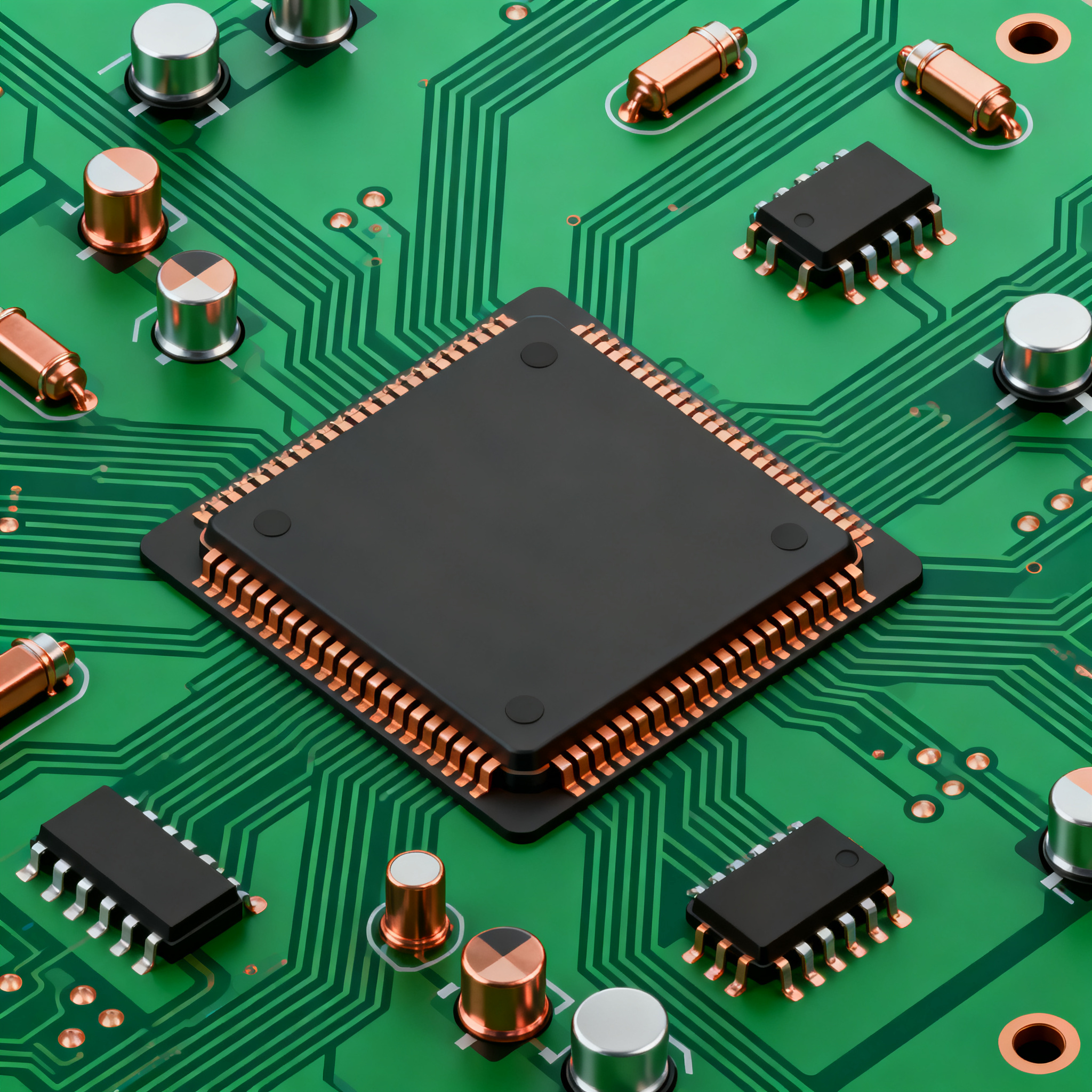
2026 PCB Manufacturing Industry Trends: Innovations Shaping the Future of Electronics
2026 PCB Manufacturing Industry Trends: Innovations Shaping the Future of Electronics body { font-family: Arial, sans-serif; line-height: 1.6; margin: 20px; } table { border-collapse: collapse; width:...
Introduction
The PCB manufacturing industry is rapidly evolving, driven by technological advancements and the increasing demands of modern electronics. As we approach 2026, new innovations are shaping the future of PCB design and manufacturing, pushing the boundaries of what is possible. Understanding these trends is crucial for engineers, designers, and manufacturers who strive to remain competitive in a dynamic market. This article delves into the latest trends in the PCB industry, focusing on IC chips, their specifications, and their applications.
Technical Overview
Printed Circuit Boards (PCBs) are the backbone of modern electronic devices, providing mechanical support and electrical connections for components. The architecture of PCBs has evolved significantly, with multilayer designs becoming standard to accommodate complex circuits. Key principles include signal integrity, power distribution, and thermal management. Innovations such as flexible PCBs, high-density interconnects (HDI), and advanced materials are enhancing performance and reliability. These advancements are crucial for applications ranging from consumer electronics to aerospace systems.
Detailed Specifications
Understanding the specifications of IC chips used in PCB design is essential for selecting the right components and ensuring optimal performance. Key specifications include CPU speed, memory capacity, power requirements, and package type. These parameters influence the overall functionality, efficiency, and cost-effectiveness of the final product.
| Specification | Details | Comments |
|---|---|---|
| CPU Speed | 2.0 GHz | High performance for demanding applications |
| Memory | 4 GB DDR4 | Suitable for multitasking and data-intensive tasks |
| Peripherals | USB 3.0, HDMI, SPI | Versatile connectivity options |
| Power | 5V, 2A | Efficient power consumption |
| Package | LGA 1151 | Compact and widely adopted |
| Temperature Range | -40°C to 85°C | Wide range for industrial applications |
| Storage | 64 GB eMMC | Ample storage for embedded systems |
| Graphics | Integrated GPU | Supports HD video playback |
| Network | Gigabit Ethernet | High-speed network connectivity |
| Audio | 24-bit DAC | High-quality audio output |
| Security | TPM 2.0 | Enhanced security features |
Key Takeaways from the Specifications
The core specifications of IC chips provide insight into their performance and suitability for various applications. A CPU speed of 2.0 GHz ensures high performance, while 4 GB of DDR4 memory supports multitasking. The inclusion of USB 3.0 and HDMI peripherals enhances connectivity options. Power requirements are efficient at 5V, 2A, making these chips suitable for portable devices. The LGA 1151 package offers compactness and compatibility with a range of motherboards. Understanding these specifications helps in selecting components that meet the specific needs of a project.
| Characteristic | Value | Notes |
|---|---|---|
| Operating Voltage | 1.8V - 3.3V | Compatible with low-power systems |
| Standby Current | 5 µA | Minimizes power consumption in idle mode |
| Active Current | 150 mA | Efficient during active operation |
| Input Logic Level | 0.8V (Low), 2.0V (High) | Standard logic levels for compatibility |
| Output Drive Current | 25 mA | Supports high-current applications |
| Clock Frequency | 50 MHz | Suitable for high-speed data processing |
| Propagation Delay | 10 ns | Ensures fast signal transmission |
| Input Capacitance | 5 pF | Low capacitance for high-speed operation |
| Output Impedance | 50 Ω | Matches standard transmission line impedance |
| Thermal Resistance | 20°C/W | Effective thermal management |
| Noise Margin | 0.4V | High tolerance to noise |
Practical Implications
The electrical characteristics of IC chips are critical for ensuring reliable performance in various applications. Operating voltages between 1.8V and 3.3V make these chips suitable for low-power systems. The standby current of 5 µA helps conserve energy during idle periods, while an active current of 150 mA ensures efficiency during operation. With a clock frequency of 50 MHz, these chips can handle high-speed data processing. The thermal resistance of 20°C/W indicates effective thermal management, which is crucial for maintaining performance and longevity.
| Application | Configuration | Benefits |
|---|---|---|
| Consumer Electronics | Standard Configuration | Cost-effective and widely used |
| Industrial Automation | Rugged Design | Durability in harsh environments |
| Automotive | High Reliability | Ensures safety and performance |
| Medical Devices | Precision Components | Accuracy and reliability are critical |
| Telecommunications | High-Speed Network | Supports fast data transfer |
| Aerospace | Lightweight Materials | Reduces weight and enhances efficiency |
| Wearable Tech | Compact Form Factor | Enhanced portability and comfort |
| IoT Devices | Low Power Consumption | Extends battery life |
Application Guidelines
IC chips are used across a wide range of applications, each with specific requirements. For consumer electronics, standard configurations offer cost-effectiveness and wide usage. Industrial automation demands rugged designs for durability, while automotive applications prioritize high reliability for safety. In medical devices, precision components are crucial for accuracy. The telecommunications sector benefits from high-speed networks, while aerospace applications focus on lightweight materials. Wearable tech requires compact form factors for portability, and IoT devices benefit from low power consumption to extend battery life.
Design Considerations
When designing PCBs, several factors must be considered to ensure optimal performance and reliability. These include:
- Signal Integrity: Proper routing and impedance matching are essential to maintain signal quality.
- Power Distribution: Efficient power delivery minimizes voltage drops and ensures stable operation.
- Thermal Management: Adequate heat dissipation prevents overheating and prolongs component life.
- Material Selection: Choosing the right substrate materials affects thermal and electrical properties.
- Layer Stackup: Multilayer designs enhance functionality but require careful planning.
- Design for Manufacturability (DFM): Ensuring designs are easy to manufacture reduces costs and errors.
- Compliance: Adhering to industry standards like IPC-A-610 ensures quality and reliability.
Considering these factors during the design phase can significantly enhance the performance and longevity of the final product.
Step-by-Step Implementation
- Define Requirements: Start by clearly defining the project requirements, including performance, size, and cost constraints.
- Select Components: Choose appropriate IC chips and other components based on specifications and application needs.
- Create Schematic: Develop a detailed schematic diagram to outline the electrical connections and component placement.
- Design PCB Layout: Use PCB design software to create the layout, ensuring optimal routing and layer stackup.
- Perform Simulations: Conduct simulations to verify signal integrity, thermal performance, and power distribution.
- Prototype and Test: Fabricate a prototype PCB and conduct thorough testing to identify and rectify any issues.
- Finalize Design: Incorporate feedback from testing into the final design and prepare for mass production.
- Documentation: Prepare comprehensive documentation, including datasheets and assembly instructions, to support manufacturing and assembly.
Common Issues & Solutions
Even with meticulous planning, issues can arise during PCB design and manufacturing. Here are some common problems and their solutions:
- Signal Integrity Issues: Use proper routing techniques and impedance matching to maintain signal quality.
- Power Distribution Problems: Implement power planes and decoupling capacitors to ensure stable power delivery.
- Thermal Overheating: Incorporate heat sinks, thermal vias, and adequate spacing to manage heat effectively.
- Manufacturing Defects: Conduct design for manufacturability checks and work closely with manufacturers to minimize errors.
- Component Mismatch: Verify component specifications and compatibility during the selection process to avoid mismatches.
- Compliance Issues: Ensure adherence to industry standards and regulations to avoid compliance-related setbacks.
Applications & Use Cases
PCBs and IC chips are integral to a wide range of applications, each with unique demands. In consumer electronics, they enable the development of smartphones, tablets, and laptops. Industrial automation relies on robust PCBs for machinery control and monitoring. Automotive applications use PCBs in engine management and infotainment systems. Medical devices require precise PCBs for diagnostic equipment. Telecommunications depend on high-performance PCBs for network infrastructure. Aerospace applications benefit from lightweight, reliable PCBs for avionics systems.
Selection & Sourcing Guide
Choosing the right components is crucial for successful PCB design. Consider factors such as performance, cost, availability, and compatibility when selecting IC chips. Utilize resources like IC Online to explore a wide range of components and find the best options for your project. Collaborate with reputable suppliers and manufacturers to ensure quality and reliability.
FAQ
- What are the key factors to consider when selecting IC chips? Consider performance, power requirements, package type, and compatibility with other components.
- How can I ensure signal integrity in my PCB design? Use proper routing techniques, impedance matching, and shielding to maintain signal quality.
- What is the importance of thermal management in PCB design? Effective thermal management prevents overheating, ensuring reliability and longevity.
- How do I choose the right materials for my PCB? Consider factors like thermal conductivity, electrical properties, and mechanical strength when selecting materials.
- What are the benefits of using multilayer PCBs? Multilayer PCBs offer increased functionality, improved performance, and reduced size.
- How can I minimize manufacturing defects in my PCB design? Conduct design for manufacturability checks and collaborate closely with manufacturers.
- What are some common applications of PCBs? PCBs are used in consumer electronics, industrial automation, automotive systems, medical devices, telecommunications, and aerospace.
- How do I ensure compliance with industry standards? Adhere to standards like IPC-A-610 and IPC-2221 during the design and manufacturing process.
- What role do IC chips play in modern electronics? IC chips provide essential functions such as processing, memory storage, and connectivity in electronic devices.
- How can I stay updated on the latest trends in PCB manufacturing? Follow industry publications, attend conferences, and engage with online resources to stay informed about new developments.
Conclusion
The PCB manufacturing industry is on the cusp of significant advancements, driven by innovations in IC chips and design technologies. Understanding the specifications, electrical characteristics, and applications of these components is essential for engineers and designers aiming to create cutting-edge electronic products. By staying informed about industry trends and adhering to best practices, professionals can leverage these innovations to deliver high-performance, reliable solutions that meet the evolving demands of the market.